

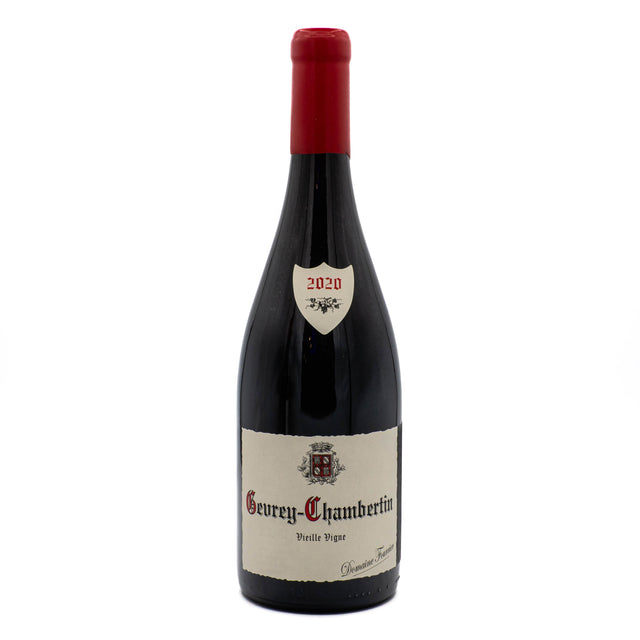
Domaine Fourrier Gevrey-Chambertin Vieilles Vignes 2020
We have 2 in stock (Inventory is live and accurate)
Summer Shipping Advisory: Orders may be temporarily held during periods of extreme heat to ensure wine arrives in optimal condition.
View current shipping weather map →
The Land
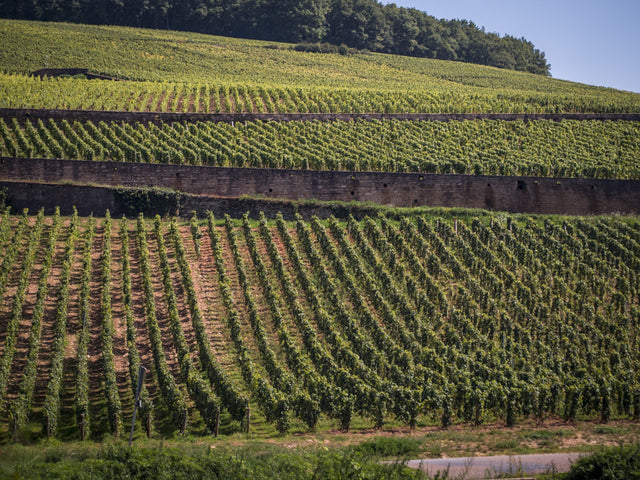
A lot of village-level Gevrey-Chambertin comes from one or two blocks on the flatter ground east of the D974. Fourrier's Vieilles Vignes comes from roughly 15 small parcels scattered across the village appellation, and that spread is the point. Clay-rich parcels near the plain give weight and dark fruit, while chalkier sites higher up give structure and lift, and blending them produces a wine that tastes like the village as a whole rather than one corner of it. The soils here are limestone and clay over the same Jurassic bedrock that runs under Chambertin. Gevrey is the northernmost of the great Côte de Nuits villages, and its Pinot Noir carries more tannin and darker fruit than Chambolle or Vosne to the south.
The Wine
This cuvée makes up about a third of the domaine's production, and it is built from vines planted mostly between the 1920s and the 1950s. The fruit is almost fully destemmed, cold soaked for four or five days, and fermented on native yeasts with punch-downs two to four times a day. It ages in mostly used barrels on its fine lees and is never racked; the carbon dioxide left from fermentation protects the wine in place of extra handling, and it is bottled unfined and unfiltered. 2020 was hot and very dry in the Côte de Nuits, and the small millerande berries gave little juice but real concentration. Harvest at Fourrier began September 1. The Domaine Fourrier Gevrey-Chambertin Vieilles Vignes 2020 shows dark cherry and blackberry, a silky, layered texture, graphite minerality and a long, driving finish.
The People
The domaine Jean-Marie Fourrier runs today was begun by his great-great-uncle Fernand Pernot, who assembled Gevrey vineyards from the 1930s, and carried on by his father Jean-Claude. Jean-Marie trained with Henri Jayer on the 1989 vintage alongside Emmanuel Rouget, and worked for Véronique Drouhin in Oregon. He took charge in 1994 at 23. What he brought home from Jayer was less a recipe than a priority list: vineyard first, cellar second. The domaine stopped using herbicides in the mid-1990s and keeps yields low through pruning rather than dropping fruit. In the cellar, new oak never passes 20% on any wine. That consistency is why the Vieilles Vignes, a village wine, has long been one of the most sought-after bottlings in Gevrey.
Food Pairing
Gevrey's darker fruit and firmer tannin want red meat or something earthy. Braise beef short ribs in red wine with carrots and pearl onions until they fall apart; the tannin cuts the fat and the fruit matches the sauce. A thick pork chop, pan-roasted with sage and served with a mustard pan sauce, is a quicker weeknight version. Mushroom bourguignon over buttered egg noodles gives the graphite side of the wine something savory to lean on. A slice of Abbaye de Cîteaux or other washed-rind cheese finishes the meal. This is village Burgundy that eats like premier cru, the bottle for a winter Sunday when you want to cook something slow.
We ship wine to most states with a $100 minimum order for shipping. We don't ship spirits nor beer.
Weather shipping advisory: Orders placed during times of extreme heat or extreme cold will be held for no charge until more favorable weather returns.
Burgundy, in eastern France, encompasses several subregions, but it is the Côte d'Or that is home to many of the world's most expensive and revered wines. The region, primarily a single east-facing slope, has mixed limestone soils that vary dramatically from village to village and even vineyard to vineyard. White wines, crafted from Chardonnay, range from rich and opulent to lean and intensely mineral, while Pinot Noir produces silky, perfumed red wines of exceptional finesse and complexity. Centuries of winemaking tradition have resulted in every plot being meticulously recognized and scrutinized, making the Côte d'Or a true capital of terroir.
Burgundy - Cote d'Or

Pinot Noir is a thin-skinned, notoriously difficult-to-grow, low-yielding grape that finds its ancestral home in Burgundy, France, where it produces some of the world's most elegant and nuanced wines. While Burgundy remains its spiritual heartland, Pinot Noir has since traveled the globe, finding success in other cooler climates, notably in California, Oregon, New Zealand, and Germany. This grape is a challenge for any grower, as it requires specific conditions to show its best, and yet the wines it produces are capable of such a captivating and singular character.