

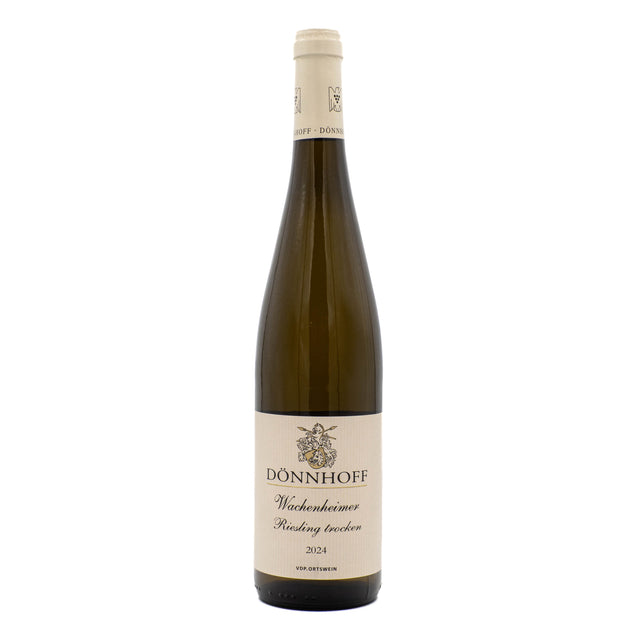
Dönnhoff Wachenheimer Riesling Trocken 2024
We have 12 in stock (Inventory is live and accurate)
The Land
The most celebrated name in the Nahe made this wine from grapes grown in the Pfalz. In late April 2024, frost tore through Dönnhoff's Nahe vineyards and destroyed much of the crop, so the family did something without precedent in the estate's history: they took on roughly one hectare of Riesling in Wachenheim an der Weinstraße, farmed by Dr. Bürklin-Wolf, in the Gerumpel and Rechbächel vineyards of the Mittelhaardt. The soils here are yellow and red Triassic sandstone rather than the volcanic and slate mosaic of Oberhausen, and that colored-sandstone warmth shows in the glass — riper yellow fruit, broader texture — while the Haardt range shelters the vines from Atlantic weather.
The Wine
This is Dönnhoff's first Pfalz Riesling ever — a one-vintage document of the 2024 frost year. The grapes were harvested by hand in Wachenheim, then trucked to the cellar in Oberhausen and handled exactly as the Nahe fruit: a light crush, two hours of low-pressure pressing, overnight settling, and fermentation in a combination of stainless steel and large used oak casks. Bottled as a bone-dry VDP Ortswein, it opens with yellow plum, red apple, and citrus over a distinct sandstone stoniness, then turns saline and juicy mid-palate — medium-bodied, more textured than crystalline, with ripe acidity carrying tart apple and yellow plum through a long finish. Give it air; it unwinds slowly.
The People
The Dönnhoff family has farmed in Oberhausen an der Nahe since 1750. Helmut Dönnhoff built the estate's reputation over four decades, turning sites like the Niederhäuser Hermannshöhle into shorthand for great German Riesling, and his son Cornelius has led the cellar since 2007. Their response to losing a crop says a lot about how they work: rather than stretch thin fruit, they borrowed a vineyard from a like-minded colleague — Bürklin-Wolf, whose Wachenheim vines are farmed organically — and applied their own harvest crews and winemaking to it. The result is a collector's oddity that drinks like a serious dry Riesling from the Pfalz with a Nahe accent.
Food Pairing
Pork schnitzel with lemon and capers — the wine's ripe acidity does the same work the lemon does, cutting the fried crust. Roasted chicken thighs with fennel, garlic, and white wine pan juices, where the yellow-plum fruit meets the caramelized fennel. Trout in brown butter with almonds, since the saline finish flatters freshwater fish. Or a plate of Comté and soft pretzels, because dry Riesling and salt were made for each other. A frost-year wine that will never be made again — worth opening while the story is still fresh.
We ship wine to most states with a $100 minimum order for shipping. We don't ship spirits nor beer.
Weather shipping advisory: Orders placed during times of extreme heat or extreme cold will be held for no charge until more favorable weather returns.
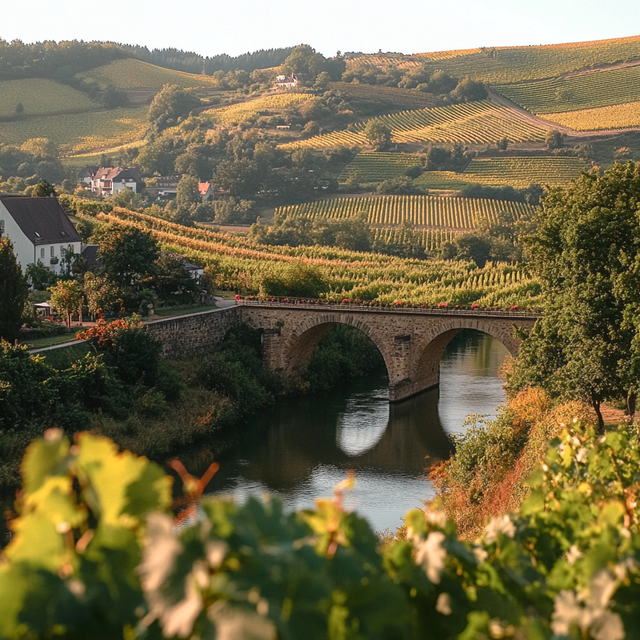
The Nahe, a German wine region nestled between the Rheingau, Rheinhessen, and Mosel, is known for its remarkable diversity and elegance. While Riesling is its flagship grape, the Nahe's varied terroir is its defining feature. Volcanic porphyry, slate, quartzite, loam, and gravel soils contribute to a wide spectrum of wine styles, all unified by a distinct minerality and vibrant acidity. Nahe Rieslings, often dry or off-dry, are celebrated for their finesse, balance, and compelling expression of their diverse origins. This region, while sometimes overlooked, offers a compelling and nuanced perspective on German Riesling, marked by both elegance and a unique mineral complexity
Germany - Nahe

Riesling is a truly noble grape, known for its incredibly high acidity and a flavor profile that can range from bone dry to lusciously sweet. Germany is its heartland, and it's responsible for some of the world's most age-worthy examples, but Riesling also thrives in Austria, where it usually is dry. In Alsace, it takes on a slightly richer texture, while in parts of Australia, like the Clare and Eden Valleys, it displays a uniquely powerful and lime-tinged aromatic profile. This is a grape that has no problem showcasing its origins, and it's a fantastic example of how one variety can show many different expressions, each with its own unique appeal.