

Dreissigacker Riesling Trocken 2025
We have 10 in stock (Inventory is live and accurate)
The Land
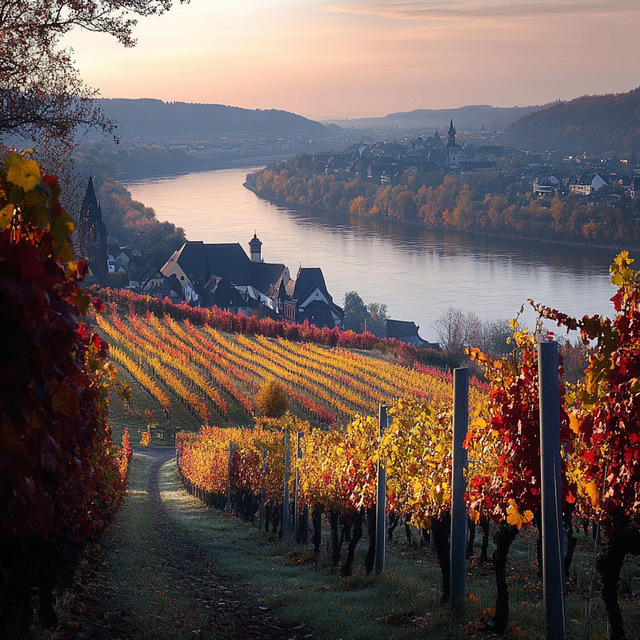
Dreissigacker's estate Riesling is a blend of two villages that pull in opposite directions. Bechtheim, the estate's home, is the warmer of the pair: Geyersberg, on weathered limestone, is counted among the warmest sites in Rheinhessen, and Rosengarten, on loess loam over limestone rock, gives ripe, concentrated fruit. Westhofen, a few miles south, is harsher and windier, and its mineral-rich soils slow ripening and add precision. Combining fruit from both gives a dry Riesling from Rheinhessen with ripeness from one village and tension from the other. Limestone runs through nearly all of it, which is why these wines finish chalky and saline rather than broad.
The Wine
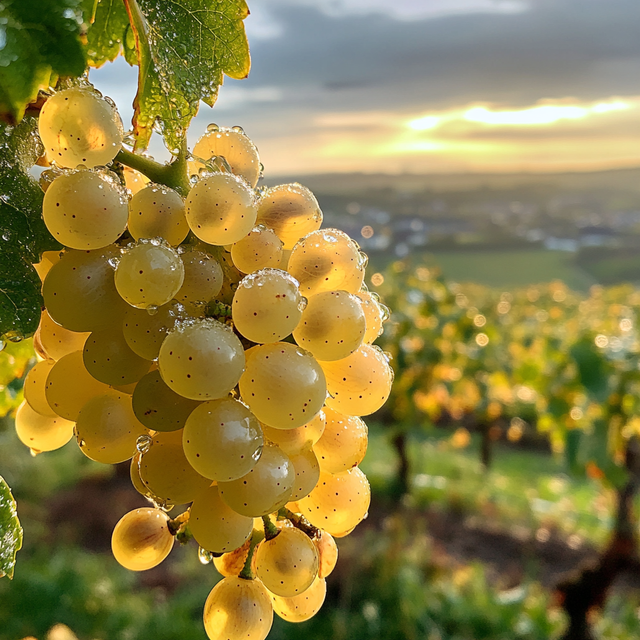
Dreissigacker Riesling Trocken 2025 is 100 percent Riesling. In recent vintages the estate has hand-picked into small containers, trodden the grapes by foot so the juice sits on its skins before a slow press over several hours, settled the must naturally, and moved it by gravity alone. Fermentation is spontaneous, partly with whole berries, about 90 percent in stainless steel and 10 percent in a large Doppelstück cask, followed by six months on full lees and more time on fine lees before bottling. That lees contact adds a creamy layer under the acidity. 2025 in Rheinhessen ran early and small: drought after May, heavy rain and local hail in late July, a dry August that kept the grapes clean, and a main harvest that started in early September, which regional officials called extremely early. Yields fell about a quarter. Expect lime, white peach, and green apple, a spicy, saline middle, and a stony finish.
The People
Jochen Dreissigacker took over his parents' winery roughly two decades ago, and while he has modernized it steadily, the cellar thinking is low-intervention. The goal is to bottle each wine as unaltered as possible, which is why there are no pumps: wine moves by gravity from press to tank to bottle. The estate frames its work as a team effort under the banner #Team30Acker, a play on the family name, which reads in German as "thirty fields." The farming is biodynamic since 2019, after an organic conversion in 2007, with compost built on site. The estate Riesling is where that approach is easiest to taste: the same hands and the same gravity-fed cellar as the single-vineyard bottlings from Westhofen.
Food Pairing
This is a weeknight Riesling with enough acid to handle real cooking. Thai green papaya salad with lime, fish sauce, and chiles works because the wine's acidity and touch of fruit calm the heat. Pork schnitzel with lemon and a warm potato salad dressed in vinegar and mustard is the regional match, acid against breading. Salmon tartare with shaved green asparagus, the estate's own suggestion, plays freshness against richness. Steamed mussels with garlic, shallots, and parsley pick up the wine's salinity. Keep a bottle cold in the fridge door for any Tuesday that needs a lift.
We ship wine to most states with a $100 minimum order for shipping. We don't ship spirits nor beer.
Weather shipping advisory: Orders placed during times of extreme heat or extreme cold will be held for no charge until more favorable weather returns.
Rheinhessen, Germany's largest wine region by volume, is experiencing a quality revolution, led by producers like Weingut Keller. Once known for bulk wine, it's now gaining recognition for its dry Rieslings, particularly from the famed Roter Hang (Red Slope). This area, with its unique red clay and slate soils, is a source of intensely mineral and age-worthy wines. Rheinhessen, with its rolling hills and varied soils, also produces a diverse range of styles beyond the Roter Hang, often richer and broader than Mosel or Saar wines, while retaining vibrant acidity. The region is quickly establishing itself as a source of high-quality dry Riesling, showcasing a compelling and evolving side of German winemaking.
Germany - Rheinhessen

Riesling is a truly noble grape, known for its incredibly high acidity and a flavor profile that can range from bone dry to lusciously sweet. Germany is its heartland, and it's responsible for some of the world's most age-worthy examples, but Riesling also thrives in Austria, where it usually is dry. In Alsace, it takes on a slightly richer texture, while in parts of Australia, like the Clare and Eden Valleys, it displays a uniquely powerful and lime-tinged aromatic profile. This is a grape that has no problem showcasing its origins, and it's a fantastic example of how one variety can show many different expressions, each with its own unique appeal.