

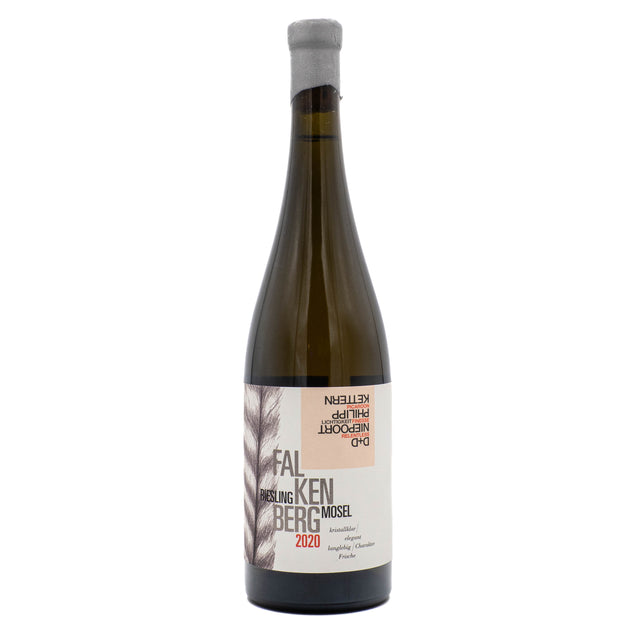
Fio Falkenberg Riesling Trocken 2020
We have 7 in stock (Inventory is live and accurate)
The Land
Piesport's steep amphitheater of slate is famous for lush, fruity Riesling — which is precisely what this wine is not. The Falkenberg is one of the historic top sites of Piesport in the Middle Mosel, alongside Goldtröpfchen and Josephsberg, its old vines rooted in Devonian slate on slopes severe enough that everything is worked by hand. Fio's parcels are trained on single poles, the pre-modern Mosel method also used in the Douro, and farmed without herbicides, pesticides, or chemical fertilizers; sheep graze between the vines to manage weeds. Slate holds the day's heat and releases it overnight, ripening fruit fully while the 2020 vintage's cool September nights locked in acidity.
The Wine
One hundred percent Riesling, spontaneously fermented in very old Mosel fuder, then left on the full lees for 18 months without sulfur before bottling unfined and unfiltered, with a small SO2 addition only at bottling — and then held at least two more years in bottle before release. That patience is why a 2020 is arriving now, and why it tastes the way it does: ripe citrus and flint over wet slate and smoke, a dense, compact palate with lees-fed texture and a light tannic grip, finishing long, dry, and stony. The 2020 Mosel vintage ran hot and dry through summer, triggering a harvest that began in late August, but September's cooler nights preserved the cut this wine is built on.
The People
Fio — "thread" in Portuguese — ties together the Kettern family, winegrowers in Piesport for several hundred years, and Dirk Niepoort of Port fame, working with his sons Daniel and Marco. The blueprint for Falkenberg was a bottle: a 1997 Fritz Haag Auslese Trocken served to Dirk and Philipp Kettern at lunch, made by Dirk's late mentor Wilhelm Haag. They set out to build a dry Mosel Riesling with, in Kettern's words, "structure and power and viscosity with time, not alcohol" — a Grosses Gewächs in ambition, achieved through years in fuder and bottle rather than ripeness. Wines are released only when the family judges them ready.
Food Pairing
Smoked trout rillettes on rye toast, where the wine's flint and smoke line up with the fish. Roast chicken with a riesling-and-thyme pan sauce, since the lees texture gives the wine enough body to stand beside the drippings. Pork belly braised with sauerkraut and caraway — acidity against fat, the oldest pairing logic there is. Or seared scallops with brown butter, matching the wine's density and salt. This is the bottle for the night you cook slowly and eat late, from a producer that refuses to hurry anything.
We ship wine to most states with a $100 minimum order for shipping. We don't ship spirits nor beer.
Weather shipping advisory: Orders placed during times of extreme heat or extreme cold will be held for no charge until more favorable weather returns.
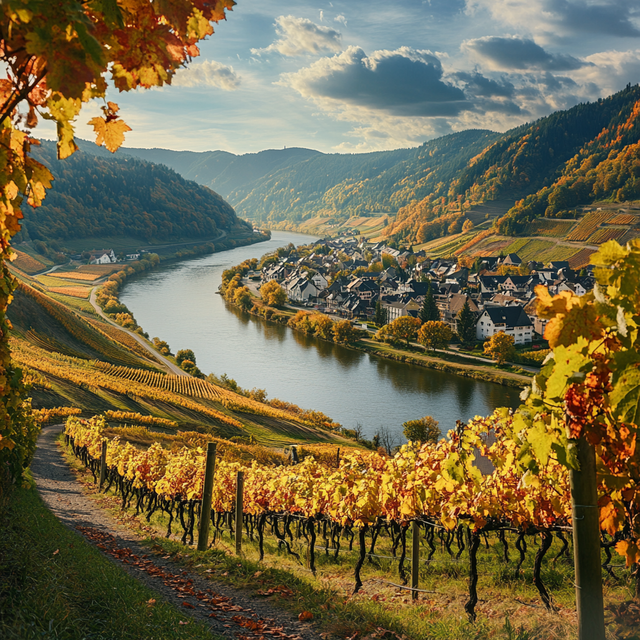
The Mosel, a stunning river valley in Germany, is a region synonymous with Riesling. The area's steep, slate slopes create a unique terroir that imparts a distinct minerality and high acidity to the wines. Mosel Rieslings range from bone dry to intensely sweet, showcasing the grape's versatility and the region's incredible potential for producing complex, age-worthy wines. The wines of the Mosel are known for their aromatic complexity and their incredibly graceful nature, and are a benchmark for all Riesling made throughout the world.
Germany - Mosel

Riesling is a truly noble grape, known for its incredibly high acidity and a flavor profile that can range from bone dry to lusciously sweet. Germany is its heartland, and it's responsible for some of the world's most age-worthy examples, but Riesling also thrives in Austria, where it usually is dry. In Alsace, it takes on a slightly richer texture, while in parts of Australia, like the Clare and Eden Valleys, it displays a uniquely powerful and lime-tinged aromatic profile. This is a grape that has no problem showcasing its origins, and it's a fantastic example of how one variety can show many different expressions, each with its own unique appeal.