

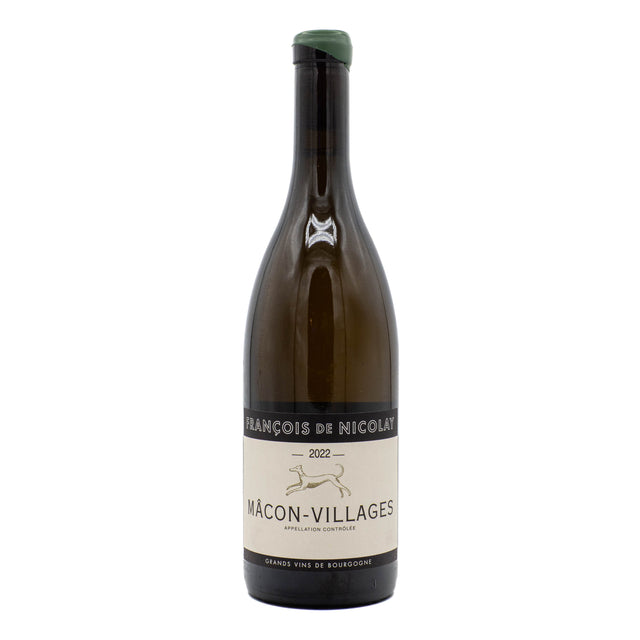
Francois de Nicolay Mâcon-Villages Blanc 2022
We have 12 in stock (Inventory is live and accurate)
The Land
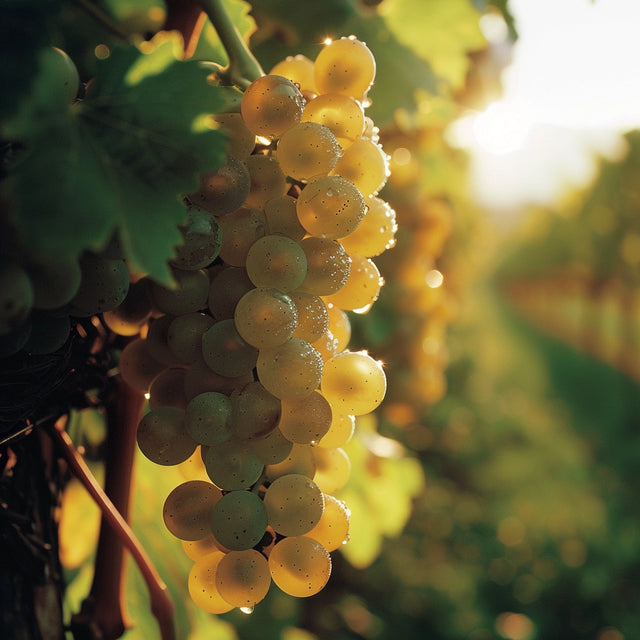
The Mâconnais is where Burgundy loosens its collar: rolling limestone-and-clay hills south of the Côte d'Or, warmer and sunnier than Meursault, where Chardonnay ripens fully without heroic effort. That warmth is exactly what a no-additive white needs — fruit picked ripe and clean enough to survive élevage without a safety net. The grapes for this Mâcon-Villages come from growers who are certified biodynamic or in conversion, because de Nicolay will only buy fruit farmed well enough to ferment on its own. The wine is then raised 100 kilometers north in his cellar in Savigny-lès-Beaune.
The Wine
This is white Burgundy with nothing added at all — no cultured yeast, no sulfur, no fining, no filtration — which remains a rarity at any price. De Nicolay purchases whole grapes, ferments them spontaneously, and raises the wine in neutral barrels without pumping over, bottling by hand at 13 percent alcohol. The 2022 vintage gave the Mâconnais a warm, dry summer and a ripe, healthy crop that kept more freshness than anyone expected in September. In the glass: pear and white peach, a floral topnote, then a round, saline mid-weight texture that finishes with chalky grip rather than butter. Because it carries no added sulfur, keep it cool and drink it over its youth — this is Chardonnay from the Mâconnais as pure juice, not as technique.
The People
François de Nicolay co-directs Domaine Chandon de Briailles, his family's estate in Savigny-lès-Beaune since 1834, holding vines in Corton Grand Cru and Pernand-Vergelesses and certified organic and biodynamic — Ecocert and Demeter — since 2011. His personal négociant label, Maison François de Nicolay, applies the same convictions to purchased fruit: whole grapes or fresh must only, from organic and biodynamic growers, vinified without additives of any kind. Where most négociant wine is a volume business, his is a farming filter — the label exists so that well-grown Mâconnais fruit can become naturally made Burgundy at a price the Côte d'Or no longer allows.
Food Pairing
Roast chicken with tarragon cream sauce is the classic move — the wine's roundness meets the cream while its acidity resets each bite. Seared scallops with brown butter and lemon pick up the saline finish. Leeks vinaigrette with a jammy egg makes a bistro-perfect starter, the chalky grip cutting the mustard. A wedge of Chaource or ripe Brie closes it out, soft fat against fresh Chardonnay. The kind of white Burgundy that turns a Tuesday roast chicken into the reason you cooked at all.
We ship wine to most states with a $100 minimum order for shipping. We don't ship spirits nor beer.
Weather shipping advisory: Orders placed during times of extreme heat or extreme cold will be held for no charge until more favorable weather returns.
The Chalonnaise and Mâconnais, located in the southern part of Burgundy, are regions known for their approachable and characterful wines, both red and white. The Mâconnais is especially celebrated for its Chardonnay, producing white wines with a rounded texture and a core of bright fruit and minerality. The Chalonnaise, though also known for Chardonnay, sees great use of Pinot Noir and Aligoté, with a focus on freshness and vibrancy. While often overshadowed by the Côte d'Or, these regions offer a unique blend of tradition and value, showcasing a diversity of terroirs and styles, while still maintaining the overall character and grace that is Burgundy.
Burgundy - Chalonnaise & Maconnais

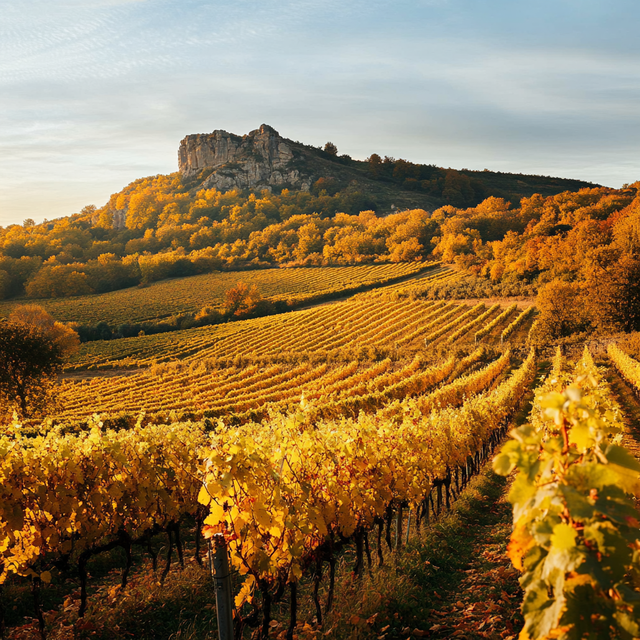
Chardonnay, one of the world's most versatile and beloved white grape varieties, showcases a remarkable spectrum of styles, from the lean, mineral-driven expressions of Chablis in France to the rich, buttery, and oak-aged versions from California's Napa Valley. Its adaptability extends to cooler climates such as Burgundy, where it achieves elegance and complexity, and to regions like Australia's Yarra Valley, known for producing vibrant and fruit-forward renditions. This grape's ability to reflect its terroir, coupled with winemaking techniques, results in a wide array of profiles, including unoaked, crisp varieties with apple and citrus notes, to full-bodied wines with tropical fruit flavors and creamy textures.