

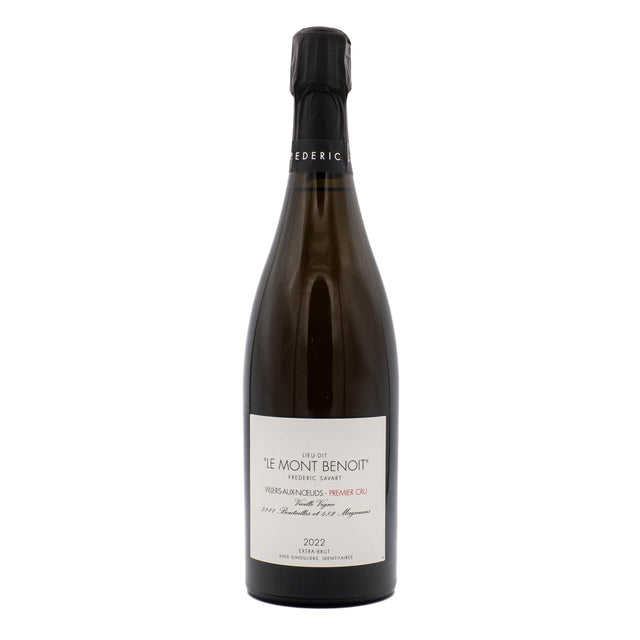
Frederic Savart 1er Cru Mont Benoit Champagne 2022
We have 1 in stock (Inventory is live and accurate)
Summer Shipping Advisory: Orders may be temporarily held during periods of extreme heat to ensure wine arrives in optimal condition.
View current shipping weather map →
The Land
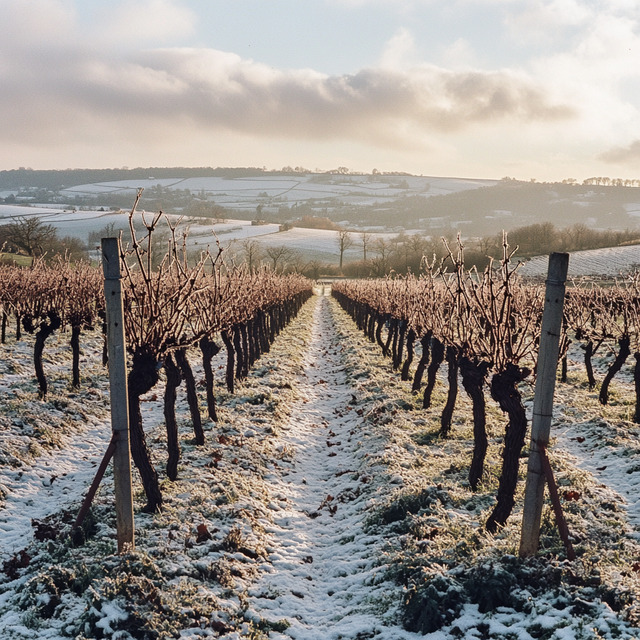
Le Mont Benoit is not in Ecueil, and it is not Savart's home village. It sits in Villers-aux-Noeuds, a tiny premier cru of just 28 hectares of vines on the lower, north-facing shoulder of the Montagne de Reims, the first Champagne village you meet coming south out of Reims. The lieu-dit was made famous by Emmanuel Brochet, who farms old vines on the same slope, and the fact that two of the region's most serious growers bottle it separately tells you something. The parcel faces southeast, which buys back the warmth the village's overall exposure gives away, and the soil is clay, silt and limestone rather than the sand of Ecueil. That argilo-calcaire base is what gives this wine its structure and its chalk-driven finish.
The Wine
Le Mont Benoit is 95% Pinot Noir and 5% Chardonnay from the single Villers-aux-Noeuds parcel, fermented and raised in barrel and dosed at 3 g/L, an extra-brut. Savart uses 350 to 500-liter casks with moderate toast and gives his parcel selections roughly ten months in wood, enough to build texture without turning the wine woody. The 5% Chardonnay is not decoration. It lifts the aromatics and stretches the finish on a wine that would otherwise be all shoulders. Red apple, blood orange, crushed stone, dried flowers and a little toasted grain, then a firm, mineral, chalky drive through the middle and a saline, taut close. 2022 was a solar vintage in Champagne: a hot, dry summer relieved by well-timed rain, the earliest recorded harvest start on August 20 running to mid-September, clean fruit, and a 12,000 kg per hectare yield that finally let growers rebuild reserves emptied by 2021.
The People
Frederic Savart runs four hectares, three in Ecueil and one in Villers-aux-Noeuds, which is where this parcel comes from. His grandfather Rene started the estate in 1947, his father Daniel bought most of the land in the mid-1980s, and Frederic, who had signed with Stade de Reims as a footballer before choosing the vines instead, came back in 1993 and took charge in 2005. He left the cooperative in 2001. The slower change was giving up estate blending in favor of bottling parcels on their own, which is how Le Mont Benoit became its own wine. Farming is built around prevention rather than treatment, with cover crops and no insecticides. There is no organic or biodynamic certification on the estate.
Food Pairing
This is the most structured of Savart's parcel wines and it pairs like a white Burgundy with bones. Roast a chicken hard, carve it onto a plate with the pan juices and a spoonful of dijon, and the wine's chalky grip cuts straight through. Veal escalope with mushrooms and cream is the classic Champenois answer, and the argilo-calcaire minerality keeps the cream from flattening the wine. Oysters with nothing but lemon push the saline finish further. Or a wedge of aged Comte at the end, the nuttiness meeting the toasted-grain side of the barrel. Open this when you want Champagne that people stop and argue about.
We ship wine to most states with a $100 minimum order for shipping. We don't ship spirits nor beer.
Weather shipping advisory: Orders placed during times of extreme heat or extreme cold will be held for no charge until more favorable weather returns.
Champagne is the northernmost major wine region in France, defined by its cool climate, chalky soils, and centuries-old tradition of sparkling wine production. Centered around the towns of Reims and Épernay, the region is divided into key subzones like the Montagne de Reims, Vallée de la Marne, and Côte des Blancs, each favoring different grapes—Pinot Noir, Meunier, and Chardonnay respectively. The region’s signature chalk and limestone soils provide excellent drainage and impart a distinctive mineral character to the wines. While méthode champenoise was refined here in the 17th century, Champagne’s global prestige grew through the 19th and 20th centuries, cementing its role as the benchmark for sparkling wine worldwide.