

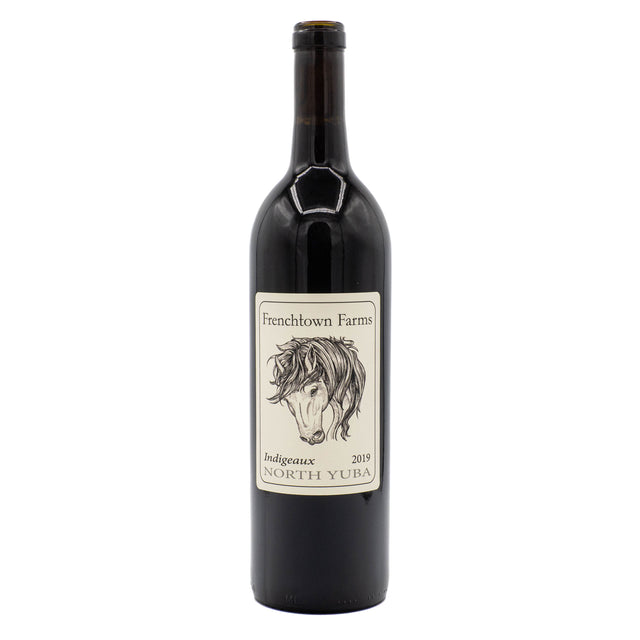
Frenchtown Farms "Indigeaux" 2019
We have 13 in stock (Inventory is live and accurate)
The Land
One of California's most singular Cabernet vineyards was planted by a doomsday cult. In the 1970s, the Fellowship of Friends carved terraces into a decomposed-granite bowl at Oregon House in the North Yuba AVA, Sierra Foothills, and named the site Renaissance. The vines that survive there today are own-rooted and dry-farmed, climbing terraces to roughly 2,300 feet. Granite drains fast and holds little water, so the vines dig deep and yield small, thick-skinned berries; foothill sunshine ripens them while elevation keeps nights cold enough to preserve acidity. It is Cabernet Sauvignon country unlike anywhere else in the state — mountain fruit with tension built in.
The Wine
Indigeaux is 60 percent Cabernet Sauvignon and 40 percent Merlot from Renaissance Vineyard. Aaron and Cara Mockrish hand-destemmed the fruit — no whole clusters here — and ran a maceration of several weeks in small open-top bins with gentle punchdowns, then pressed directly into old French oak. The wine rested on its gross lees for five years with monthly topping before bottling unfined and unfiltered with a 22 ppm sulfur addition. It lands at 13.4 percent alcohol. The 2019 season followed a soaking winter — 30 to 40 more inches of rain than 2018 — and stayed long and cool, delivering ripeness at modest sugars. Red currant, cedar, dried sage, and tobacco leaf run through a firm but settled tannin structure; the Merlot rounds the mid-section, and the finish is savory and dusty in the best mountain-Cabernet sense.
The People
Aaron and Cara Mockrish came to Oregon House to farm, not to make wine. A bottle of Clos Saron's Black Pearl redirected them, and they apprenticed with Gideon Beinstock, the longtime Renaissance winemaker turned natural-wine icon, working vineyard and cellar. Their first vintage under the Frenchtown Farms label came in 2015, and shortly afterward they secured blocks of old vines at Renaissance itself. They farm organically, without irrigation, and their winemaking has evolved deliberately — moving toward the patient destemming and long élevage that shaped this bottling.
Food Pairing
Butterflied leg of lamb rubbed with rosemary, garlic, and anchovy, grilled over coals — the tannin wants char and fat. A ribeye with blistered scallions works the same way. Mushroom ragù over soft polenta picks up the wine's dried-herb and forest-floor side without meat. A hunk of clothbound cheddar handles the structure after dinner. This is a Sierra Foothills Cabernet blend for people who cook slow food on fast weeknights — open it an hour early and let it stretch.
We ship wine to most states with a $100 minimum order for shipping. We don't ship spirits nor beer.
Weather shipping advisory: Orders placed during times of extreme heat or extreme cold will be held for no charge until more favorable weather returns.
Malbec may have originated in France—where it features in Bordeaux blends, thrives in Cahors, and even appears in parts of the Loire Valley—but it’s become synonymous with Argentinian wine culture. This grape typically delivers concentrated dark fruit flavors like blackberry and black plum, accented by a subtle peppery spice and delicate violet aromas. French Malbec tends to be more structured, while its Argentine counterpart emphasizes plush tannins and robust fruit. Across both Old World and New, Malbec captivates with its velvety depth and distinctive charm.