

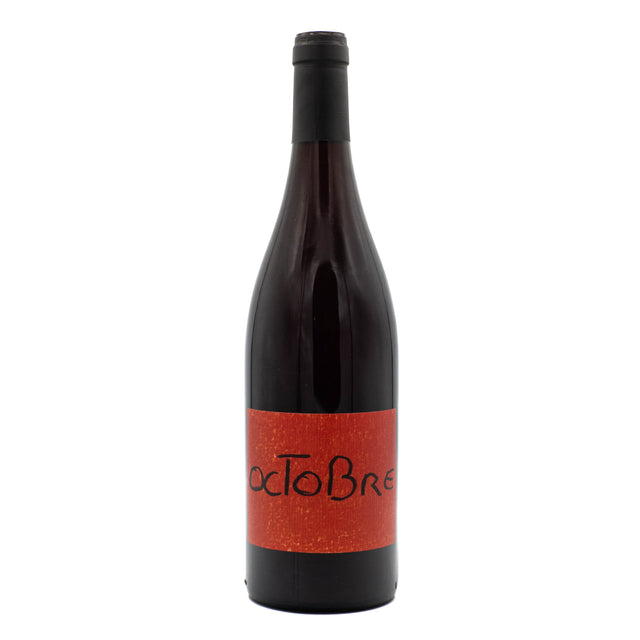
Les Foulards Rouges "Octobre" 2025
We have -1 in stock (Inventory is live and accurate)
The Land
Montesquieu-des-Albères sits where the Pyrenees make their final drop to the Mediterranean — about six miles from the sea and three from the Spanish border. The vines for Octobre grow on decomposed granitic gneiss in the Albères foothills, poor soil that limits vigor and concentrates fruit. This is one of the hottest, driest corners of France, but the tramontane wind funnels down off the mountains and the sea moderates the nights, so acidity survives the sunshine. Nicq bottles outside the appellation system as Vin de France, which frees him to make exactly the kind of drink-now red the appellation rules were never written for.
The Wine
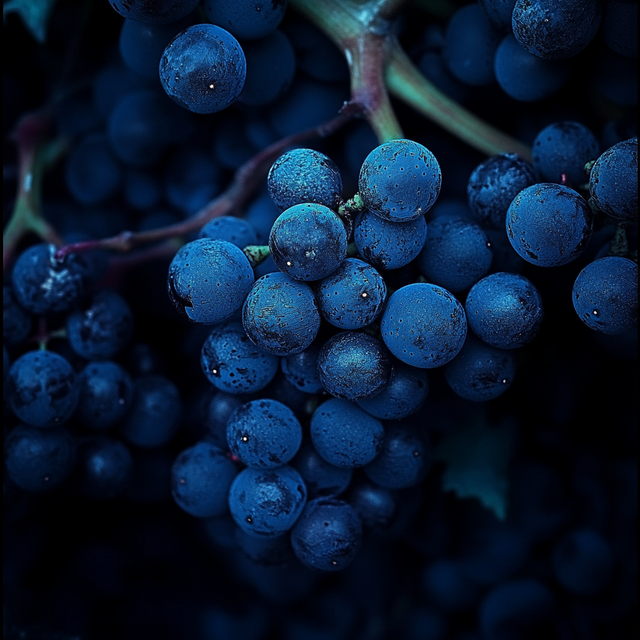
Octobre is Nicq's primeur: Grenache and Syrah, hand-harvested, fermented whole-cluster by carbonic maceration, rested briefly in used 500-liter barrels, and bottled in October just weeks after picking — no fining, no filtration, no added sulfur at any stage. It is the natural-wine world's answer to Beaujolais Nouveau, and for many American drinkers it is the first taste of each new French vintage. The 2025 season in Roussillon was tense: spring humidity brought mildew pressure, August turned hot and dry, and yields came in very low — but the surviving fruit held better acidity than recent scorching years. Expect crunchy pomegranate and sour cherry, cracked black pepper, and violets over a light, cool-textured palate weight that takes a 30-minute chill happily. Drink it young; that is the entire point.
The People
Before founding Les Foulards Rouges in Montesquieu-des-Albères in 2002, Jean-François Nicq spent 1989 to 2001 at the Vignerons d'Estézargues cooperative in the Gard, where he did something almost unheard of: he steered an entire co-op toward native-yeast fermentation and minimal sulfur. That track record made him one of the founding figures of natural wine in the Roussillon, and his cuvées now sell out on allocation across France and the US. He farms his old hillside vines organically and by hand, making wines meant for tables, not cellars.
Food Pairing
Serve it cool with a roast chicken showered in herbes de Provence — the wine's acidity cuts the skin's fat while the herbs echo the garrigue. Grilled merguez with charred peppers matches its pepper-spice register. An anchovy, olive, and caramelized-onion pissaladière plays salt against the wine's bright fruit. Or just open it with a charcuterie board while dinner is still in the oven. This is natural wine from Roussillon at its most useful: the bottle that disappears before anyone thought to save it.
We ship wine to most states with a $100 minimum order for shipping. We don't ship spirits nor beer.
Weather shipping advisory: Orders placed during times of extreme heat or extreme cold will be held for no charge until more favorable weather returns.
The Rhône Valley is a diverse and historic wine region, divided into two distinct areas. The Northern Rhône is the birthplace of Syrah, with steep, terraced vineyards that produce some of the world's most revered wines, such as those from Hermitage and Côte-Rôtie. The Southern Rhône is much more expansive, offering a wider range of styles, but typically based around Grenache-based blends, with wines from Châteauneuf-du-Pape known for their complexity and power. While the region is celebrated for its reds, it also produces incredible textured whites, and as a whole the region displays the spectrum of French wine and the incredible differences that can come from small geographic changes.
Rhone Valley

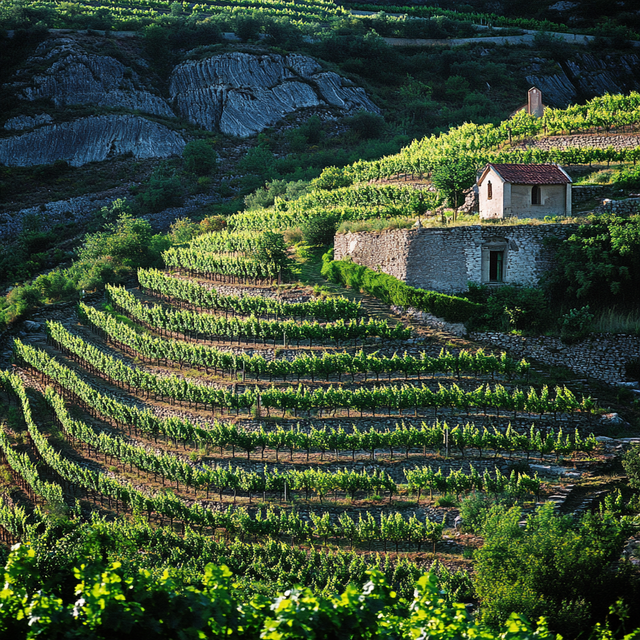
Syrah is a dark-skinned grape of French origin, specifically from the Northern Rhône Valley, where it produces some of the world's most powerful and complex wines. Known as Shiraz in Australia, Syrah is capable of displaying a wide range of aromas and flavors. Cool climate Syrahs tend to express floral notes like violets, along with savory elements like olives, while those grown in warmer climates like Australia are more likely to show black pepper and dark fruit notes such as plum. The grape's versatility allows it to adapt to various climates and soil types, but it maintains its unique characteristics no matter where it is planted.