

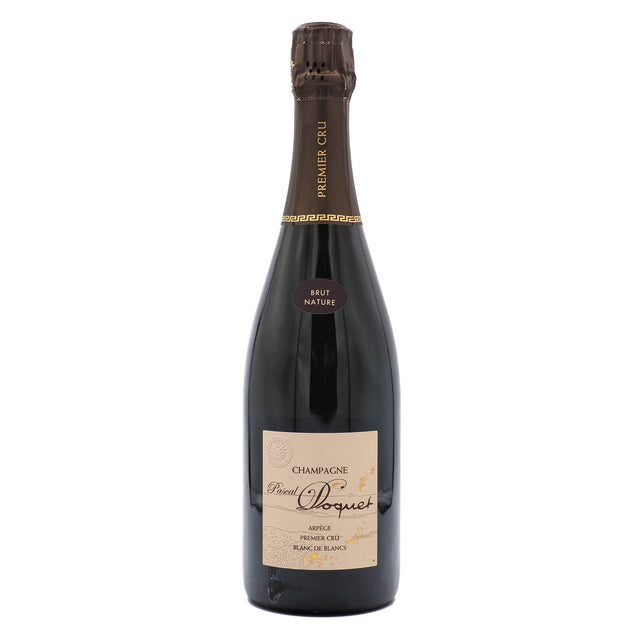
Pascal Doquet Champagne 1er Cru Arpège Blanc de Blancs Brut Nature
We have 7 in stock (Inventory is live and accurate)
Summer Shipping Advisory: Orders may be temporarily held during periods of extreme heat to ensure wine arrives in optimal condition.
View current shipping weather map →
The Land
Vertus is a premier cru rather than a grand cru for an unglamorous reason: at 542 hectares it is the largest commune in the Marne, and the boundary took in a lot of ground nobody considered noble. That size is also what makes it interesting. Topsoil here runs anywhere from 20 centimeters to more than two meters before you reach chalk, so the village is really three or four different places wearing one name. Arpège draws on the east and south-facing slopes of Vertus, on Villeneuve-Renneville, and on the southern face of Mont Aimé at Coligny: all premier cru, all Chardonnay, Campanian chalk under a layer of clay with bands of silex running through it. The silex is where the smoke comes from. The clay is why this has flesh that Le Mesnil never has.
The Wine
100% Chardonnay. Base wine blended with a perpetual reserve started in 2012, roughly two parts to one. Fermentation runs in enameled steel on indigenous yeasts, about a third of the volume raised in older oak barrels and the rest in tank, eight months on lees before tirage, then three to five years in bottle before disgorgement. Since 2016 even the second fermentation runs on indigenous yeast, which almost nobody in Champagne attempts. Current releases go out at zero dosage, so the wine has to be ripe enough to carry itself with nothing added at disgorgement. Older bottlings of this cuvée carried 3 to 3.5 grams and were labeled Extra Brut; check which one you have. Sweet almond and hazelnut, Granny Smith, Conference pear, lime and pineapple, brioche and vanilla cream, and beneath all of it a saline, stony line that pulls the finish out long.
The People
Pascal Doquet began working alongside his parents in 1982, took over the family house Doquet-Jeanmaire in 1995, and founded his own domaine in 2004 after splitting the company with his sister. He farms just under 8.7 hectares, 95% Chardonnay, about 65,000 bottles a year, 60% in the southern Côte des Blancs and 40% in the chalky Coteaux Vitryats. The conversion was gradual and documented: lutte raisonnée from 1995, all chemical treatments gone by 2000, herbicides dropped in 2001, organic conversion begun in September 2007, first certified harvest in 2010, certifier Ecocert. He is president of the Association des Champagnes Biologiques. His own summary of the work: it is the viticulture that makes the difference, not the vinification. His son Noé joined in 2017 as the fourth generation.
Food Pairing
The house pairing is a shellfish platter, and the logic holds: zero dosage plus chalk plus a saline finish is the exact combination that makes raw shellfish taste sweeter than it is. From there, sea bream sashimi with lime, sea bass tartare with herbs and cracked black pepper, or langoustines with nothing but butter and salt. Avoid anything with a sweet glaze; with no dosage there is nothing in the wine to meet it. This is a first-course Champagne, and it will make the first course better than it deserves to be.
We ship wine to most states with a $100 minimum order for shipping. We don't ship spirits nor beer.
Weather shipping advisory: Orders placed during times of extreme heat or extreme cold will be held for no charge until more favorable weather returns.
Champagne is the northernmost major wine region in France, defined by its cool climate, chalky soils, and centuries-old tradition of sparkling wine production. Centered around the towns of Reims and Épernay, the region is divided into key subzones like the Montagne de Reims, Vallée de la Marne, and Côte des Blancs, each favoring different grapes—Pinot Noir, Meunier, and Chardonnay respectively. The region’s signature chalk and limestone soils provide excellent drainage and impart a distinctive mineral character to the wines. While méthode champenoise was refined here in the 17th century, Champagne’s global prestige grew through the 19th and 20th centuries, cementing its role as the benchmark for sparkling wine worldwide.
Champagne

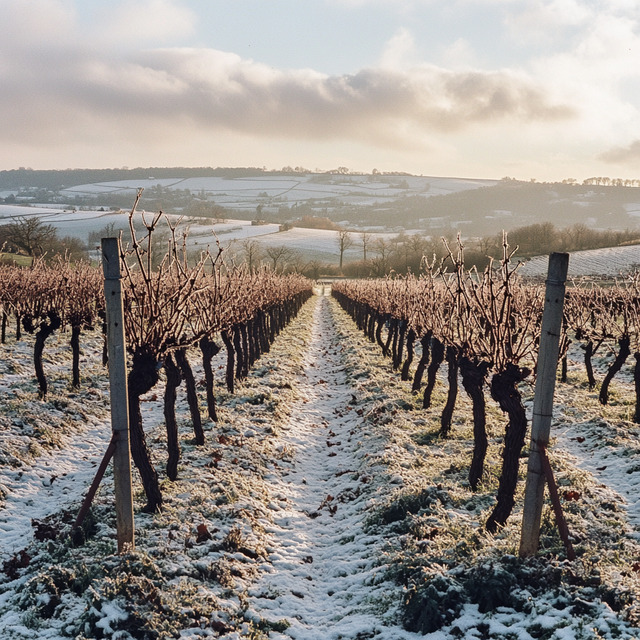
Chardonnay, one of the world's most versatile and beloved white grape varieties, showcases a remarkable spectrum of styles, from the lean, mineral-driven expressions of Chablis in France to the rich, buttery, and oak-aged versions from California's Napa Valley. Its adaptability extends to cooler climates such as Burgundy, where it achieves elegance and complexity, and to regions like Australia's Yarra Valley, known for producing vibrant and fruit-forward renditions. This grape's ability to reflect its terroir, coupled with winemaking techniques, results in a wide array of profiles, including unoaked, crisp varieties with apple and citrus notes, to full-bodied wines with tropical fruit flavors and creamy textures.