

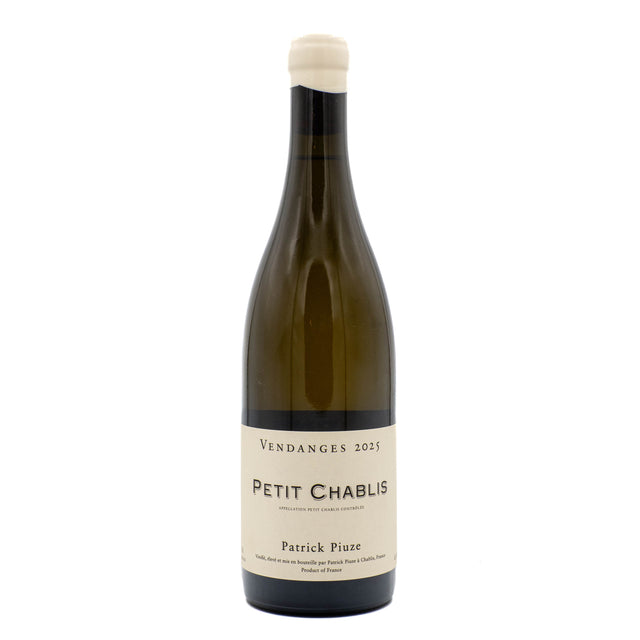
Patrick Piuze Petit Chablis 2025
We have 12 in stock (Inventory is live and accurate)
Summer Shipping Advisory: Orders may be temporarily held during periods of extreme heat to ensure wine arrives in optimal condition.
View current shipping weather map →
The Land
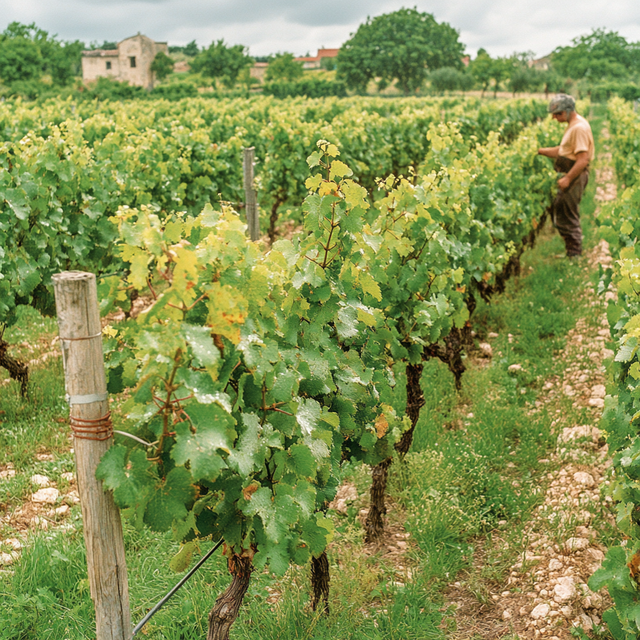
Petit Chablis is not lesser Chablis. It is different rock. Chablis sits on two Jurassic seabeds stacked one atop the other. The Kimmeridgian, formed more than 150 million years ago in a shallow warm sea, is a soft marl shot through with tiny Exogyra virgula oyster fossils, and it makes the hillsides where Chablis, premier cru and grand cru grow. Above it sits the Portlandian, some 135 million years old, laid down under deeper water where less clay reached the bottom, which left a much harder and purer limestone. When the Alpine uplift buckled the region 40 million years ago, the brittle Portlandian cracked while the softer Kimmeridgian absorbed the pressure, and erosion did the rest. Portlandian caps the plateaus. Piuze's parcel sits on that shelf, on the left bank near premier cru Vau de Vey. Harder stone, thinner soil, cooler air.
The Wine
Chardonnay, hand-picked, which almost never happens at this level. Fermentation is spontaneous, in old stainless steel that Piuze does not temperature-control, and malolactic runs its own course. No oak. The wine is bottled the following spring after a very gentle clay filtration. This is Chablis stripped to its frame: green apple skin, lemon pith, crushed shell, white pepper, and a chalky, almost powdery close rather than a fleshy one. 2025 ran early from start to finish in Chablis. Budburst came in the first days of April, flowering around May 26, and two heatwaves, one at the end of June and another from August 8 to 18 with temperatures near 40°C, shrank the berries and thickened their skins. Picking started August 18. Alcohol stayed moderate despite the heat and the acidity held.
The People
Ninety percent of Chablis is machine-harvested. Patrick Piuze fields a team of seventy pickers and does the whole thing by hand, from Petit Chablis to grand cru, and he treats that single decision as the foundation of everything else. He owns no vineyards. He buys fruit from seventeen growers across roughly 25 hectares, advises them in the vineyard, and bottles the results as separate cuvées rather than blending them away, eleven different village-level wines alone. His stated rule is to work only with old vines planted inside the original boundaries of Chablis. The farming across his sources is sustainable. A Petit Chablis that gets hand-harvested fruit and the same cellar attention as a cru is the clearest argument he makes.
Food Pairing
Start with oysters on the half shell, no mignonette, nothing between the wine and the salt. Then fried smelts or whitebait with lemon, where the chalky finish does the work of a squeeze of citrus. Steamed littlenecks with white wine, garlic and parsley work for the same reason. For something warmer, a goat cheese and leek tart, the acidity cutting the pastry while the tang of the chèvre meets the wine head-on. This is the bottle you keep cold and open without thinking about it on a Tuesday.
We ship wine to most states with a $100 minimum order for shipping. We don't ship spirits nor beer.
Weather shipping advisory: Orders placed during times of extreme heat or extreme cold will be held for no charge until more favorable weather returns.
Chablis, a village and region in northern Burgundy, is all about Chardonnay, making arguably the best unoaked versions in the world. The wines here are defined by a crisp acidity and a strong mineral backbone. The area's unique Kimmeridgian limestone soil, packed with marine fossils, gives the wines a distinctive flinty edge. One slope overlooking the village holds the seven Grand Cru vineyards, while Premier Cru sites are scattered along both sides of the Sereine River, which cuts the region in half. Chablis is the ultimate destination for highly mineral white wines.
Burgundy - Chablis


Chardonnay, one of the world's most versatile and beloved white grape varieties, showcases a remarkable spectrum of styles, from the lean, mineral-driven expressions of Chablis in France to the rich, buttery, and oak-aged versions from California's Napa Valley. Its adaptability extends to cooler climates such as Burgundy, where it achieves elegance and complexity, and to regions like Australia's Yarra Valley, known for producing vibrant and fruit-forward renditions. This grape's ability to reflect its terroir, coupled with winemaking techniques, results in a wide array of profiles, including unoaked, crisp varieties with apple and citrus notes, to full-bodied wines with tropical fruit flavors and creamy textures.
Chardonnay
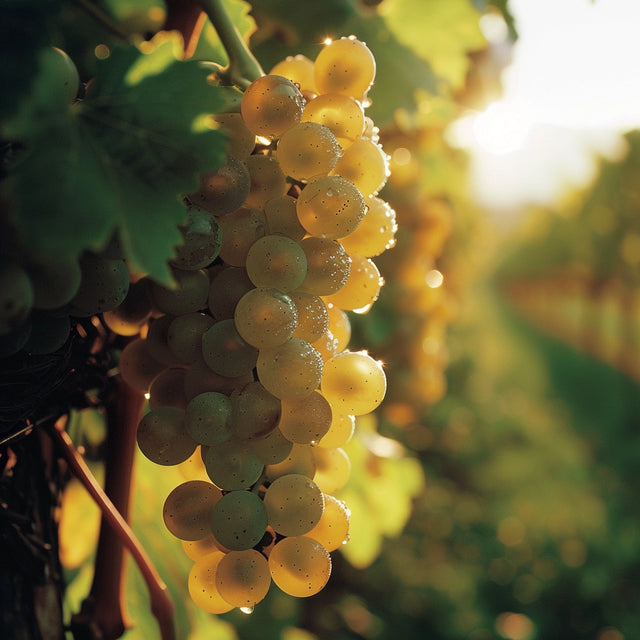
Practicing Organic vineyard farming involves growing grapes using organic methods—avoiding synthetic fertilizers, herbicides, pesticides, and fungicides—but without formal certification. Wineries adopting this approach prioritize environmental health, soil vitality, and biodiversity, using natural practices such as composting, cover cropping, and manual pest control. Many small wineries opt for practicing organic methods rather than pursuing official organic certification, primarily due to the significant cost, paperwork, and time commitment involved in certification processes. As a result, practicing organic is a popular choice among boutique and artisanal producers who remain committed to sustainable agriculture while managing budgetary constraints.