

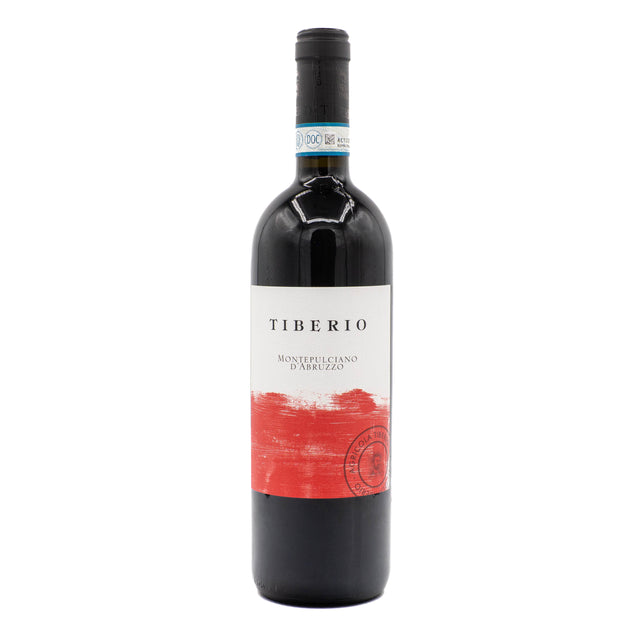
Tiberio Montepulciano d'Abruzzo 2022
We have 0 in stock (Inventory is live and accurate)
The Land
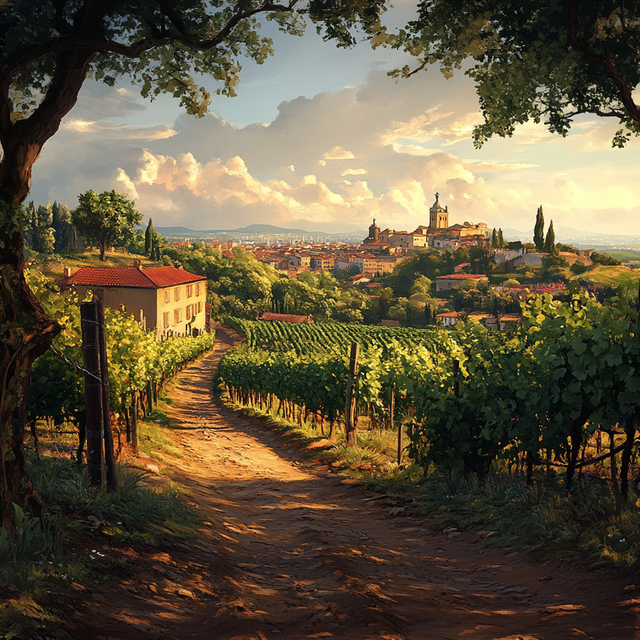
Abruzzo gets filed under southern Italy, and it should not be. Cugnoli sits in the province of Pescara at 330 to 380 meters, hemmed between the Gran Sasso and the Maiella, two of the highest massifs in the Apennines, with cold air pouring off the mountains at night and Adriatic breeze arriving from 23 miles east. Summer days hit 40 degrees Celsius and nights fall to 18. The Montepulciano for this wine grows on two estate plots at 350 meters totaling 15 hectares, planted in calcareous clay. Limestone matters for a grape as thick-skinned and darkly pigmented as Montepulciano, which turns heavy anywhere warm and low. Here it keeps its acid and its aromatics, and the wine stays lifted instead of sitting flat.
The Wine
One hundred percent Montepulciano off 63- and 20-year-old vines at 2,500 and 4,000 vines per hectare, cropped at 45 and 50 hectoliters, on pergola and Guyot. Hand-picked in October. Fifteen days of maceration and fermentation in temperature-controlled stainless steel on indigenous yeast, spontaneous malolactic in the same tanks, then stainless aging and three months in bottle. No oak. It shows 14.5 percent alcohol, 5.65 grams per liter acidity, pH 3.60, 29.9 grams dry extract. Deep ruby, sour red cherry, blueberry, violet, and flint, mouth-filling with smooth tannins and a long, fresh close. The 2022 ran warm, but spring rain had built soil reserves before the drought, vines shut down in parts of July and August, and cooler September rain restored balance ahead of a harvest a week early.
The People
Tiberio exists because of a vineyard, not a business plan. Riccardo Tiberio, then an export manager for an Abruzzo cantina, bought the Cugnoli property in 2000 after finding an eight-hectare block of old Trebbiano Abruzzese still standing, and added 31 hectares of plantable land around it. The first wines came out in 2004. In 2008 he handed the estate to his children: Antonio, a viticulture and enology graduate, in the vineyards, and Cristiana in the cellar, where she has held sole responsibility since 2011. Cristiana is a chemist by training with a doctorate in photochemistry, and she worked in Champagne and Australia before returning home. Every Tiberio planting comes from massal selections taken off the estate's oldest vines. No pesticides, no herbicides, and no certification, which is a deliberate choice on her part.
Food Pairing
Montepulciano with this much dry extract and no oak is a food wine before it is anything else. Start with arrosticini, the skewers of cubed lamb grilled fast over charcoal that are Abruzzo's own answer to this bottle; the fat and char meet the tannin exactly. Braised short ribs with tomato and rosemary work on the same terms. Pasta alla chitarra with a slow-cooked ragu of pork and beef is the regional pairing, and there is a reason it survived. For something faster, a pizza with real fennel sausage. This is the red you buy by the case and stop thinking about, which is a harder thing to find than a great bottle.
We ship wine to most states with a $100 minimum order for shipping. We don't ship spirits nor beer.
Weather shipping advisory: Orders placed during times of extreme heat or extreme cold will be held for no charge until more favorable weather returns.
Central Italy, excluding Tuscany, encompasses the varied regions of Lazio, Umbria, Marche, Abruzzo, and Emilia-Romagna, each contributing distinct expressions to the country’s wine landscape. The Apennine Mountains run through much of the area, creating dramatic elevation shifts that moderate the warm Mediterranean climate and preserve freshness in the wines. Verdicchio from Marche and Trebbiano from Abruzzo are among the standout white wines, while red wines from Montepulciano, Sangiovese, and Sagrantino show depth and regional character. Volcanic soils near Rome, limestone in Marche, and clay-rich hills in Umbria all contribute to a diverse range of terroirs. These regions blend ancient viticultural heritage with a growing wave of quality-focused producers.