

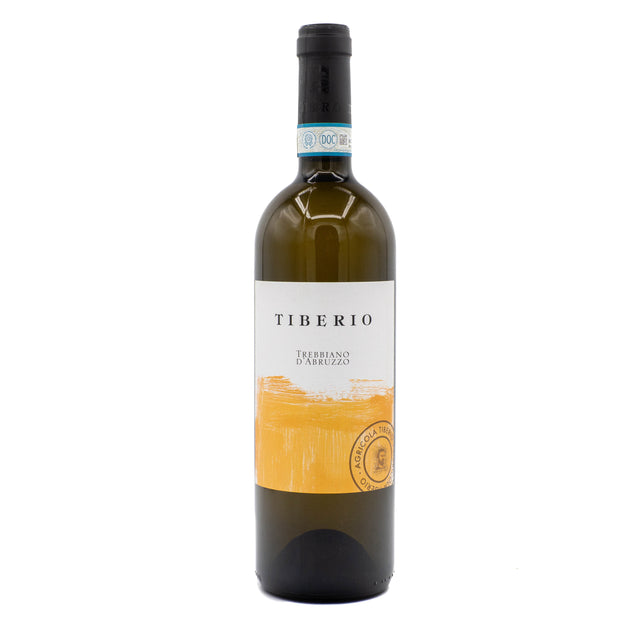
Tiberio Trebbiano d'Abruzzo 2024
We have 0 in stock (Inventory is live and accurate)
Summer Shipping Advisory: Orders may be temporarily held during periods of extreme heat to ensure wine arrives in optimal condition.
View current shipping weather map →
The Land
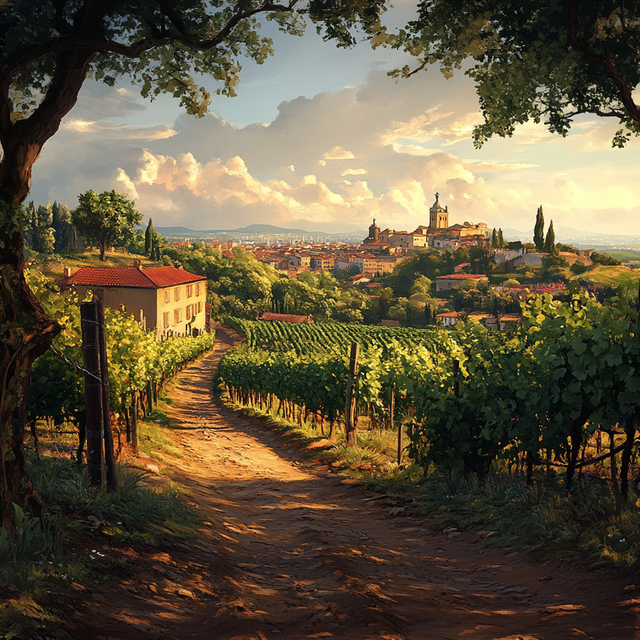
Trebbiano has a reputation as Italy's filler grape, and Abruzzo is where that reputation gets corrected. Tiberio farms 30 hectares at Cugnoli in the province of Pescara, 23 miles inland from the Adriatic, at 330 to 380 meters. The site sits between the Gran Sasso and the Maiella, close enough to a glacier that Cristiana Tiberio measures the distance in kilometers, and it draws both sea breeze off the coast and cold air draining down from the massif. Summer days can reach 40 degrees Celsius and fall to 18 at night. The vineyards for this wine sit at 350 meters on limestone with a gravel and sand subsoil. Calcareous soil plus a nightly temperature crash is what makes the acidity here structural rather than sharp.
The Wine
One hundred percent Trebbiano Abruzzese, from Tiberio's own massal selection, and the distinction matters. Most of what gets bottled as Trebbiano in Abruzzo is Trebbiano Toscano or Bombino Bianco, varieties routinely confused with Trebbiano Abruzzese until recently and genuinely different from it. The 2024 comes from two plots at 350 meters, three hectares averaging 69 years and five hectares averaging 13, trained on pergola abruzzese and Guyot, cropped at 30 and 35 hectoliters per hectare. Hand-picked in mid-September. The grapes are not crushed at all: free-run juice only, settled overnight, then fermented in temperature-controlled stainless steel on indigenous yeast with malolactic blocked. That yields 13 percent alcohol, 7.15 grams per liter total acidity, pH 3.35, and effectively no residual sugar. Apricot, pear, grapefruit, jasmine, orange blossom, and almond, then green apple, almond, and anise. The 2024 season was punishing inland: no winter snow, drought from spring through August, a late-April frost at Cugnoli, and rainfall around half the annual average. There is not much of it.
The People
Riccardo Tiberio bought the property in 2000 for one reason: an eight-hectare plot of old Trebbiano Abruzzese that had survived where almost nothing else had. He was an export manager for an Abruzzo cantina before that, and he added 31 hectares of plantable land around it. His children took over in 2008, with Antonio, a viticulture and enology graduate, running the vineyards and Cristiana running the cellar; she has been solely responsible for the wines since 2011. Cristiana trained as a chemist, took a doctorate in photochemistry, then walked away from it to work harvests in Champagne and Australia and spend time in the Mosel and Chablis. Every Tiberio vineyard is planted from massal selections taken off the estate's oldest vines. They use no pesticides and no herbicides, and farm organically without seeking certification.
Food Pairing
With 7.15 grams of acid and no malolactic softening, this is a white built for salt and oil. Grilled branzino with lemon and rosemary is the obvious start. Better is brodetto, the Abruzzese fish stew with tomato, garlic, and hot pepper, where the wine's almond and anise sit right next to the peperoncino. Fried artichokes with sea salt work because the acidity resets your palate between bites. Or spaghetti alle vongole: clams, garlic, white wine, parsley, nothing else. This is as compelling a white wine terroir as central Italy has, and it costs less than the dinner you will drink it with.
We ship wine to most states with a $100 minimum order for shipping. We don't ship spirits nor beer.
Weather shipping advisory: Orders placed during times of extreme heat or extreme cold will be held for no charge until more favorable weather returns.
Central Italy, excluding Tuscany, encompasses the varied regions of Lazio, Umbria, Marche, Abruzzo, and Emilia-Romagna, each contributing distinct expressions to the country’s wine landscape. The Apennine Mountains run through much of the area, creating dramatic elevation shifts that moderate the warm Mediterranean climate and preserve freshness in the wines. Verdicchio from Marche and Trebbiano from Abruzzo are among the standout white wines, while red wines from Montepulciano, Sangiovese, and Sagrantino show depth and regional character. Volcanic soils near Rome, limestone in Marche, and clay-rich hills in Umbria all contribute to a diverse range of terroirs. These regions blend ancient viticultural heritage with a growing wave of quality-focused producers.