

Piedmont Club: November 2026
Greetings Piedmont Club,
This month we're exploring two very different sides of Nebbiolo, both from the excellent 2023 vintage. We've got a beautifully approachable Roero from Giovanni Almondo and a serious single-vineyard Barbaresco from Sottimano. They're grown only a relatively short distance apart, but the differences in soil, elevation and winemaking make for a fascinating comparison. The Roero is ready to enjoy now, while the Barbaresco has plenty of years ahead of it. If you decide to open both, I certainly won't judge! 2023 will probably be overshadowed in the long run by 2021 and 2025, but from what I've had so far it has consistently produced beautifully aromatic and balanced Nebbiolo.
Wine #1: Giovanni Almondo Roero Rosso 2023
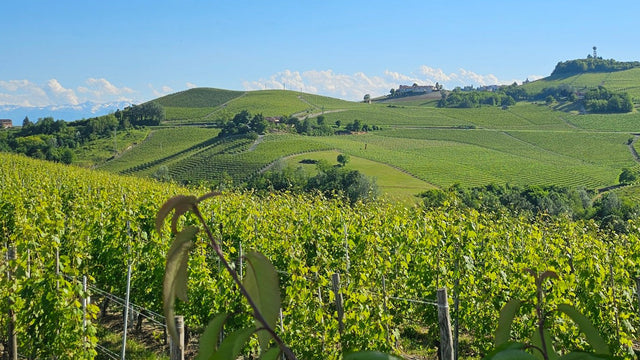
Roero sits across the Tanaro River from Barolo, and although the region is probably best known for its Arneis, I've always thought its Nebbiolo deserves more attention. The soils here are generally much sandier than those in Barolo and Barbaresco, remnants of an ancient seabed, and they tend to produce wines with a particularly aromatic, delicate character. There's plenty of structure, but often without quite the same imposing tannins we associate with Barolo.
The Almondo family has been farming around Montà for centuries, although the modern winery was established in the late 1970s. They're particularly well regarded for Arneis, but their reds are equally compelling. This Roero comes from three vineyards around Montà, with south-facing exposures and sandy, calcareous soils. It's aged for 18 months in large, untoasted Slavonian oak casks, which allows the Nebbiolo to develop without taking on much noticeable oak flavor. We're due to pick up some of the Arneis for the shop too - they are among the best.
The 2023 is wonderfully fragrant, with wild strawberry, raspberry, rose petals and a little mint and spice. There's a freshness and elegance here that makes it easy to enjoy young, although it's still unmistakably Nebbiolo. This is the kind of wine I'd happily open on a Tuesday with roast chicken, mushroom pasta or just about anything involving Parmigiano. Don't overthink it; this is delicious, classic Piedmont wine that's ready to drink.
Wine #2: Sottimano Barbaresco Pajorè 2023
Now we're getting into considerably more serious territory. Sottimano is one of my favorite producers in Barbaresco, making wines that balance traditional Nebbiolo character with an extraordinary amount of precision and purity. The family farms several important vineyards across the appellation, and Pajorè, located in the village of Treiso, is one of their most compelling sites.
Sottimano has undergone a fascinating stylistic evolution over the last couple decades. In the early 2000s, the wines were decidedly modern, with plenty of concentration and new French oak. Andrea Sottimano gradually moved away from that approach, eventually abandoning barriques in favor of larger oak barrels and traditional submerged-cap macerations. The wines today are more elegant, transparent and expressive of their individual vineyards, and I think they're better for it.
Treiso sits at the southern end of the Barbaresco appellation, with some of its highest-elevation vineyards. Pajorè is planted on calcareous marl and clay, quite different from the sandy soils of Roero. The combination of soil and elevation gives the wine tremendous aromatic detail, firm but refined tannins and a distinctly savory character. It's a wine that can be both elegant and powerful, which is a combination I find particularly appealing. It could be said that Treiso makes the most Barolo-esque wines of the Barbaresco region.
The 2023 Pajorè shows absolutely gorgeous aromatics without the massive wall of tannins a Barbaresco this age might make you expect. Unlike the Almondo, this is a wine I'd encourage you to cellar for at least a few years. If you can't resist opening it now, give it a generous decant and something substantial to eat. Braised beef, lamb or a mushroom-heavy dish would all be excellent.
Two wines, one grape, one vintage, and two very different expressions of Piedmont. This is exactly why Nebbiolo never gets old.
0 Comments
There are no comments for this article. Be the first one to leave a message!