


November ’26 Drink Better Wine Club: Holiday Food Pairing Recipes
November is when our kitchen shifts into cold weather food! The oven stays on, something is usually roasting or braising, and dinner turns into the main event of the evening. It’s also the month when everyone starts thinking about what to pour at the holiday table, so this month’s club covers a lot of ground: a big, generous red from Piedmont, a Morgon from one of the families that defined modern Beaujolais, and a dry and sparkling Riesling from Germany.
With Thanksgiving right around the corner, here’s the honest truth: you don’t need to cook anything special for these wines. All three will be great with whatever is already on your table this month, whether that’s a full Thanksgiving spread, a potluck Friendsgiving, or a holiday get-together where everyone brings a dish.
But if you’re looking for something to bring, or you want a great dinner on one of the other nights of November, I’ve included an optional recipe for each bottle. There’s a pot of red wine–braised short ribs over creamy Parmesan polenta for the kind of Sunday when you have nowhere to be, a caramelized onion, butternut squash, and Gruyère galette that would be very welcome at any Friendsgiving, and crispy pan-fried chicken cutlets with buttery mashed potatoes and lemon butter, because sparkling wine and anything crispy is one of the best pairings there is.
None of these are complicated. The short ribs take time, but the oven does most of the work, and the other two are very doable on a weeknight.
Let’s get to it!
For the Holiday Table
Von Winning Riesling Sekt Extra Brut NV. Open this first, while everyone is still in the kitchen. It’s dry, bright, and refreshing, and it’s great with all the salty, snacky things that come before the meal: cheese boards, chips and dip, deviled eggs, shrimp cocktail. It also has the acidity to carry right through dinner, especially with turkey, mashed potatoes, and gravy.
Jean-Paul & Charly Thevenet Morgon La Roche Pilée 2023. Beaujolais is the classic Thanksgiving red for a reason. Gamay has bright fruit, fresh acidity, and gentle tannin, so it gets along with everything on a crowded plate, from turkey and stuffing to cranberry sauce and sweet potatoes. Serve it slightly cool.
Aldo Conterno Langhe Rosso Quartetto 2022. This is the bottle for the red wine lovers at the table and for the richest dishes: dark meat, sausage stuffing, prime rib, or a holiday roast. Right out of the bottle is great!

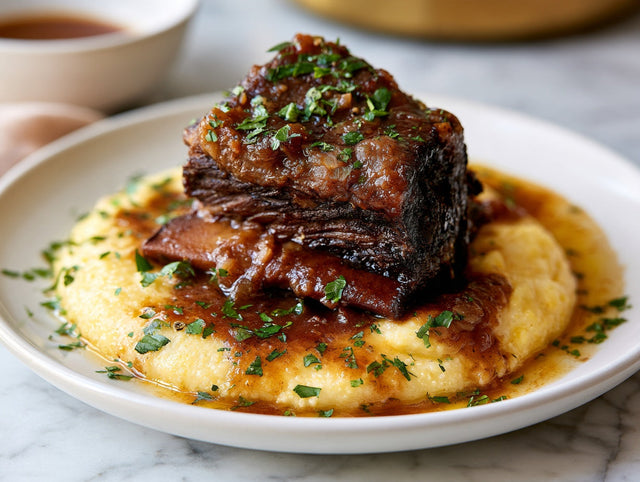
Red Wine–Braised Short Ribs with Creamy Parmesan Polenta
Wine Pairing: Aldo Conterno Langhe Rosso Quartetto 2022
Serves 4 | Prep: 25 minutes | Cook: 3–3½ hours
This one is for the weekend after the holiday, when the leftovers are gone and you want something cozy that isn’t turkey. It would also make a great main course for a smaller holiday dinner or a Friendsgiving where nobody wants to roast a bird.
Braised short ribs are one of my favorite things to make when the weather turns. You brown the meat, build a sauce in the same pot, slide it into the oven, and walk away for a few hours. I’m serving these over soft polenta finished with butter and Parmesan, which feels right for a wine from Piedmont.
Quartetto is a blend of four grapes, Nebbiolo, Pinot Nero, Merlot, and Syrah, all grown in the Bussia cru in Barolo country. It’s a big, dark-fruited red with plenty of structure, and it wants food with real richness. Short ribs are exactly that.
Ingredients
For the short ribs
- 3½–4 lbs bone-in, English-cut beef short ribs
- Kosher salt and freshly ground black pepper
- 2 tbsp neutral oil
- 1 large yellow onion, diced
- 2 medium carrots, diced
- 2 celery stalks, diced
- 5 garlic cloves, smashed
- 2 tbsp tomato paste
- 2 cups dry red wine (something you’d drink, but save the Quartetto for the table)
- 2 cups beef broth, plus more if needed
- 2 sprigs fresh rosemary
- 4 sprigs fresh thyme
- 2 bay leaves
- 1 tsp red wine vinegar
For the Parmesan polenta
- 4 cups water
- 1 cup whole milk, plus more for loosening
- 1 tsp kosher salt
- 1 cup coarse-ground polenta or cornmeal (not instant)
- 3 tbsp unsalted butter
- ¾ cup freshly grated Parmesan, plus more for serving
- Freshly ground black pepper
Instructions
Make the short ribs
- Preheat the oven to 325°F. Pat the short ribs very dry and season generously on all sides with salt and pepper.
- Heat the oil in a large Dutch oven over medium-high heat. Brown the short ribs in batches, about 3–4 minutes per side, until deeply browned. Transfer to a plate.
- Pour off all but about 2 tablespoons of fat. Reduce the heat to medium and add the onion, carrots, and celery with a pinch of salt. Cook for 6–8 minutes, until softened and lightly golden.
- Add the garlic and tomato paste and cook for 2 minutes, stirring, until the tomato paste darkens.
- Pour in the red wine and scrape up all the browned bits from the bottom of the pot. Simmer for 8–10 minutes, until the wine has reduced by about half.
- Add the beef broth, rosemary, thyme, and bay leaves. Return the short ribs and any juices to the pot, bone-side up. The liquid should come about two-thirds of the way up the meat; add a little more broth if needed.
- Bring to a simmer, cover, and transfer to the oven. Braise for 2½–3 hours, until the meat is completely tender and pulling away from the bone.
- Transfer the short ribs to a plate. Discard the herb stems and bay leaves and skim the fat from the surface of the sauce. Simmer the sauce on the stovetop for about 10 minutes, until slightly thickened. Stir in the vinegar, taste, and adjust the seasoning.
Make the polenta
- About 45 minutes before the short ribs are done, bring the water, milk, and salt to a gentle simmer in a medium saucepan.
- Slowly whisk in the polenta in a thin stream so it doesn’t clump.
- Reduce the heat to low and cook for 30–40 minutes, stirring often, until thick, creamy, and tender. If it gets too stiff, loosen it with a splash of milk or water.
- Stir in the butter and Parmesan and season with salt and plenty of black pepper.
- Spoon the polenta into shallow bowls, top with a short rib, and ladle the sauce over everything. Finish with more Parmesan.
Pairing Note
Quartetto has the dark fruit, spice, and tannin to stand up to a rich braise. The fat in the short ribs softens the wine’s structure, while its acidity keeps the dish from feeling heavy. The Merlot gives the blend a plush middle that works beautifully with slow-cooked beef, the Syrah adds a peppery, savory edge, and the Nebbiolo brings the grip that makes you want another bite. Decant it for 30–45 minutes and serve it just below room temperature.

Caramelized Onion, Butternut Squash & Gruyère Galette with Crispy Sage
Wine Pairing: Jean-Paul & Charly Thevenet Morgon La Roche Pilée 2023
Serves 6 as a side or 4 as a main | Prep: 25 minutes | Cook: 1 hour 15 minutes
If you’ve been asked to bring something to Thanksgiving or Friendsgiving, this is it. A savory galette looks impressive, travels well, tastes great warm or at room temperature, and happens to be a very good vegetarian main for anyone skipping the turkey.
The base is a big pile of slowly caramelized onions, which is where all the deep, savory-sweet flavor comes from. On top go thin slices of roasted butternut squash, nutty Gruyère, a little Dijon, and sage leaves that crisp up in the oven. And because I love a good shortcut when it makes sense, we’re using a store-bought pie crust. Nobody will know, and you have enough to do this month.
Morgon is one of the more structured crus of Beaujolais, and the Thevenets’ La Roche Pilée is full of dark berries, violets, and a stony freshness from its granite soils. It’s exactly the kind of red that loves sweet, earthy fall vegetables.
Ingredients
For the caramelized onions
- 2 tbsp unsalted butter
- 1 tbsp olive oil
- 2 large yellow onions, thinly sliced
- ½ tsp kosher salt
- 1 tsp fresh thyme leaves
- 1 tsp sherry vinegar or red wine vinegar
For the squash
- 12 oz butternut squash (about half of a small squash), peeled, seeded, and sliced ¼ inch thick
- 1 tbsp olive oil
- Kosher salt and freshly ground black pepper
For the galette
- 1 refrigerated pie crust (or your favorite homemade crust)
- 1 tbsp Dijon mustard
- 1 cup freshly grated Gruyère cheese, from a block
- 8 fresh sage leaves, tossed in 1 tsp olive oil
- 1 large egg, beaten
- Flaky salt and freshly ground black pepper
Instructions
Caramelize the onions
- Melt the butter with the olive oil in a large skillet over medium heat. Add the onions and salt and stir to coat.
- Reduce the heat to medium-low and cook for 30–35 minutes, stirring every few minutes, until the onions are soft, jammy, and deep golden brown. If they start to stick or scorch, add a splash of water and lower the heat.
- Stir in the thyme and vinegar. Let cool slightly.
Roast the squash
- While the onions cook, preheat the oven to 400°F.
- Toss the squash slices with the olive oil, salt, and pepper and spread in a single layer on a sheet pan.
- Roast for 12–15 minutes, until just tender when pierced with a knife. The squash will finish cooking in the galette.
Assemble and bake
- Roll the pie crust out on a sheet of parchment paper to about 12–13 inches across. Slide the parchment onto a sheet pan.
- Spread the Dijon over the crust, leaving a 2-inch border. Sprinkle with half of the Gruyère.
- Spread the caramelized onions over the cheese, then arrange the squash slices on top, overlapping slightly. Top with the remaining Gruyère and the sage leaves.
- Fold the border of the crust up and over the edge of the filling, pleating as you go. It’s supposed to look rustic, so don’t overthink it.
- Brush the crust with the beaten egg and sprinkle with a little flaky salt and black pepper.
- Bake for 30–35 minutes, until the crust is deep golden brown and the cheese is bubbling.
- Let rest for 10 minutes before slicing. Serve warm or at room temperature.
Pairing Note
Caramelized onions and roasted squash are sweet, earthy, and savory all at once, which is exactly where Gamay shines. The Morgon’s bright, dark berry fruit plays off the sweetness of the onions and squash, its acidity cuts through the Gruyère and buttery crust, and the sage and thyme bring out the wine’s savory, stony side. Serve the Morgon slightly cool, around 55–60°F. About 20 minutes in the fridge before opening does the trick.

Pan-Fried Chicken Cutlets with Buttery Mashed Potatoes & Lemon Butter
Wine Pairing: Von Winning Riesling Sekt Extra Brut NV
Serves 4 | Prep: 20 minutes | Cook: 35 minutes
Crispy, golden chicken cutlets with mashed potatoes might be one of the most comforting dinners there is. It’s also a great small-scale holiday meal. If you’re cooking for two or four this year and don’t want to deal with a whole turkey, this gives you the crispy, buttery, mashed potato experience in under an hour.
The cutlets get a panko and Parmesan crust and a quick pan-fry, the potatoes are simple and buttery, and everything gets finished with a warm lemon butter spooned over the top.
Von Winning’s Sekt is 100% Riesling from the Pfalz, made the same way as Champagne and finished extra brut, so it’s very dry, bright, and incredibly refreshing. Sparkling wine with anything crispy and fried is one of my favorite pairings, and the lemon butter ties it all together.
Ingredients
For the mashed potatoes
- 2 lbs Yukon Gold potatoes, peeled and cut into 1½-inch chunks
- 6 tbsp unsalted butter, cut into pieces
- ¾ cup whole milk, warmed
- Kosher salt and freshly ground black pepper
- 1 tbsp finely chopped fresh chives
For the chicken cutlets
- 2 large boneless, skinless chicken breasts (about 1½ lbs total)
- ½ cup all-purpose flour
- 2 large eggs
- 1½ cups panko breadcrumbs
- ¼ cup finely grated Parmesan
- Kosher salt and freshly ground black pepper
- Neutral oil, for shallow frying
For the lemon butter
- 4 tbsp unsalted butter
- 1 small garlic clove, finely grated
- Zest of ½ lemon
- 2 tbsp fresh lemon juice
- 1 tbsp chopped fresh parsley
- 1 tbsp capers, drained (optional)
- Pinch of kosher salt
Instructions
Make the mashed potatoes
- Place the potatoes in a large pot and cover with cold water by about an inch. Season the water generously with salt.
- Bring to a boil, then reduce to a simmer and cook for 15–18 minutes, until the potatoes are very tender when pierced with a knife.
- Drain well and return the potatoes to the warm pot for a minute to let the excess moisture steam off.
- Mash with the butter until smooth, then stir in the warm milk a little at a time until creamy. Season with salt and pepper. Cover to keep warm.
Cook the chicken
- Slice each chicken breast in half horizontally to make 4 thin cutlets. Place between two pieces of plastic wrap or parchment and pound to an even ¼-inch thickness. Season both sides with salt and pepper.
- Prepare three shallow bowls: flour in the first, beaten eggs in the second, and panko mixed with the Parmesan and a pinch of salt in the third.
- Dredge each cutlet in flour, shaking off the excess, then dip into the egg and coat thoroughly with the panko mixture. Press gently so the breadcrumbs adhere.
- Pour about ¼ inch of neutral oil into a large skillet and heat over medium-high heat until shimmering.
- Fry the cutlets in batches for 3–4 minutes per side, until deep golden brown and cooked through. The chicken should reach 165°F internally.
- Transfer to a wire rack and season lightly with salt while still hot.
Make the lemon butter
- Melt the butter in a small saucepan over medium heat until foaming.
- Add the garlic and cook for 30 seconds, just until fragrant.
- Remove from the heat and stir in the lemon zest, lemon juice, parsley, capers if using, and a pinch of salt.
- Spoon the mashed potatoes onto plates, top with chives, and add a cutlet alongside. Spoon the warm lemon butter over the chicken and serve with extra lemon wedges.
Pairing Note
This pairing is all about contrast. The Sekt’s bubbles and bright Riesling acidity cut right through the crispy crust and buttery potatoes and reset your palate after every bite. The lemon in the butter mirrors the wine’s citrus and green apple character, and its time on the lees gives it a toasty depth that works beautifully with the golden breadcrumbs. Serve it well chilled.
Food For Thought
The holidays can make wine pairing feel more complicated than it needs to be. There are a dozen dishes on the table, everyone likes something different, and no single bottle is going to be perfect with all of it. That’s fine. The best holiday wines are the ones that are fresh, food-friendly, and easy to share, and that’s exactly what we picked this month.
So bring these bottles to Thanksgiving, to Friendsgiving, or to whatever get-together is on your calendar, and don’t worry about the rest. And if you do want to cook, I hope one of these recipes finds its way onto your table.
As always, make these recipes your own, taste as you go, and don’t forget to pour yourself a glass while you’re cooking.
0 Comments
There are no comments for this article. Be the first one to leave a message!