

Domaine Marquis d’Angerville Volnay 1er Cru Clos des Ducs 2023 1.5L
We have 2 in stock (Inventory is live and accurate)
The Land
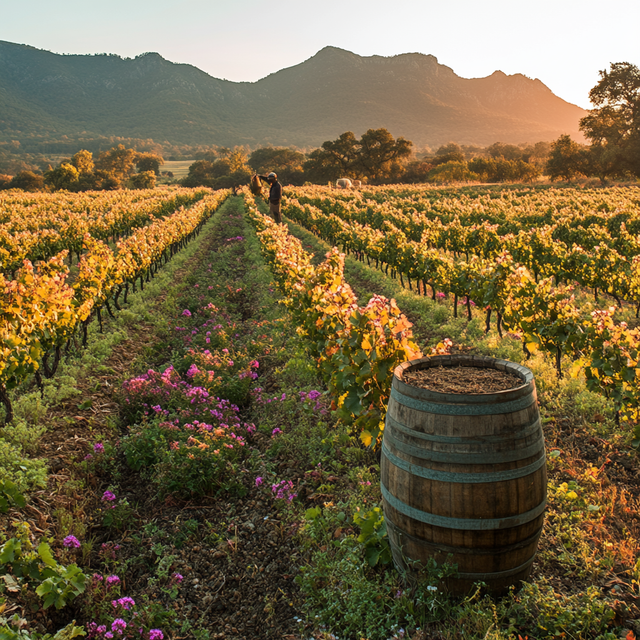
The Dukes of Burgundy held this hillside before the d'Angervilles did, which is where Clos des Ducs gets its name. Records of the clos go back to 1507, and its walls still enclose exactly what they did then: 2.15 hectares, owned outright by one family as a monopole. It is the domaine's highest Volnay vineyard, directly behind the family house, on a steep south-east pitch of thin limestone and white marl. Poor, quick-draining soil holds back vigor and keeps the berries small, which matters in a warm, abundant year like 2023. Where clay-rich Champans builds breadth, this site gives a firmer, more mineral Volnay red wine that asks for patience.
The Wine
The Domaine Marquis d'Angerville Volnay 1er Cru Clos des Ducs 2023 is 100% Pinot Noir from 40- to 45-year-old vines. 2023 was a large, warm crop in the Côte de Beaune. The domaine started picking on September 5, sorted out only a few dried berries, did no green harvesting and still averaged about 40 hl/ha, with alcohol between 13.5 and 14%. The grapes were fully destemmed and spent 16 to 18 days in vat, mostly wooden, with pump-overs only, then went to barrel with roughly a fifth new oak. Of the domaine's 2023s, this is the most concentrated: dark cherry, cassis, orange rind and spice, a full, velvety middle and the firm frame the site always delivers. Start opening it around 2028.
The People
The estate began with a civil servant. In 1804 Baron du Mesnil, newly posted as sub-prefect of Autun, bought a 15-hectare domaine in Volnay, a manor house on the north side of the village and the Clos des Ducs. A century later, in 1906, Sem, Marquis d'Angerville, bought the whole property on the death of a du Mesnil uncle and replanted it with his own small-berried selection of Pinot Noir, a strain the BIVB later propagated for growers across Burgundy. Through the late 1920s and early 1930s Sem bottled his own wine alongside Henri Gouges and Armand Rousseau. His grandson Guillaume runs the domaine today, and the clos remains its flagship.
Food Pairing
This vintage carries more flesh than usual, which widens the menu. Braise short ribs in red wine with carrots and pearl onions and serve them over soft polenta; the wine's velvet texture meets the meat and its acidity cuts the sauce. Roast a duck with cherries and a splash of kirsch to pick up the dark fruit. A wild mushroom risotto finished with parmesan and thyme plays to its savory side, and a wedge of Époisses makes the Burgundian finish. This is the magnum, which slows the wine's development: set it aside for a table of eight a decade from now, and stand it up the day before you pour.
We ship wine to most states with a $100 minimum order for shipping. We don't ship spirits nor beer.
Weather shipping advisory: Orders placed during times of extreme heat or extreme cold will be held for no charge until more favorable weather returns.
Domaine Marquis d’Angerville
- Est.1804
- RegionBurgundy - Cote d'Or
- FarmingFarming - Certified Biodynamic
- In stock17 wines →
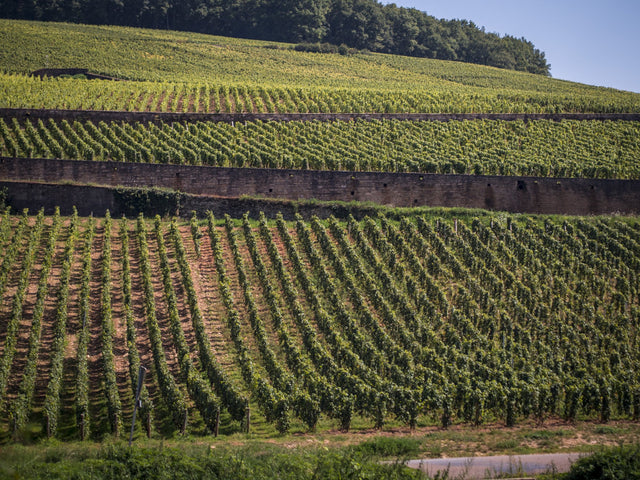
Burgundy, in eastern France, encompasses several subregions, but it is the Côte d'Or that is home to many of the world's most expensive and revered wines. The region, primarily a single east-facing slope, has mixed limestone soils that vary dramatically from village to village and even vineyard to vineyard. White wines, crafted from Chardonnay, range from rich and opulent to lean and intensely mineral, while Pinot Noir produces silky, perfumed red wines of exceptional finesse and complexity. Centuries of winemaking tradition have resulted in every plot being meticulously recognized and scrutinized, making the Côte d'Or a true capital of terroir.
Burgundy - Cote d'Or

Pinot Noir is a thin-skinned, notoriously difficult-to-grow, low-yielding grape that finds its ancestral home in Burgundy, France, where it produces some of the world's most elegant and nuanced wines. While Burgundy remains its spiritual heartland, Pinot Noir has since traveled the globe, finding success in other cooler climates, notably in California, Oregon, New Zealand, and Germany. This grape is a challenge for any grower, as it requires specific conditions to show its best, and yet the wines it produces are capable of such a captivating and singular character.
Pinot Noir
Certified Biodynamic vineyard farming is a holistic approach building upon organic principles, viewing the vineyard as a self-contained ecosystem influenced by cosmic rhythms. Based on Rudolf Steiner's teachings, it integrates precise agricultural methods with lunar and astrological calendars, using natural preparations from herbs, minerals, and manure to enhance soil and plant health. Certification by organizations like Demeter International requires rigorous inspections to ensure strict compliance. Biodynamic farming seeks not only high-quality wines but also ecological harmony, sustainability, and deeper connections among land, plants, animals, and humans.