

Domaine Marquis d’Angerville Volnay 1er Cru Clos des Ducs 2022
We have 2 in stock (Inventory is live and accurate)
The Land
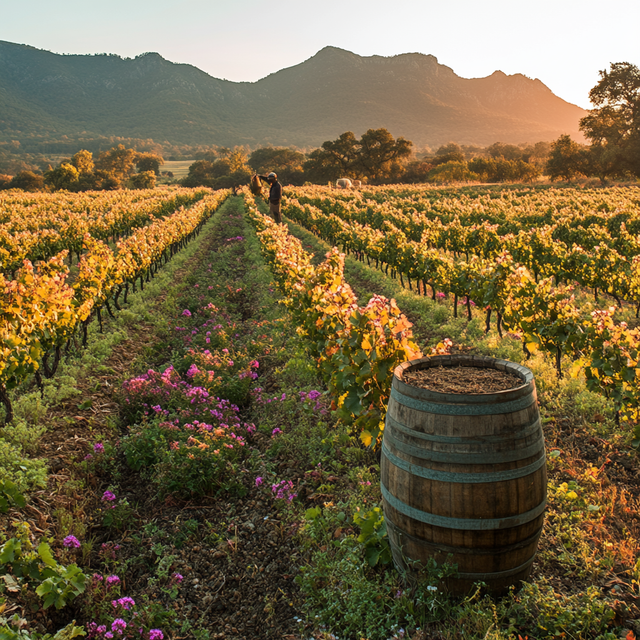
Clos des Ducs is one of the few Volnay premier crus with a single owner, and it sits directly behind the d'Angerville family house at the top of the village. The walls enclose 2.15 hectares, the same 52 ouvrées recorded in 1507, when the land belonged to the Dukes of Burgundy. The slope is steep and well drained, facing south-east, with thin, stony limestone and white marl that keeps the vines lean and the berries small. That poverty is the point. Volnay's lower premier crus build breadth from deeper clay; Clos des Ducs gives a narrower, more mineral Pinot Noir that shows little in its first years and a great deal after ten.
The Wine
The Domaine Marquis d'Angerville Volnay 1er Cru Clos des Ducs 2022 is 100% Pinot Noir from vines averaging 40 to 45 years old. The fruit is fully destemmed, fermented warm with pump-overs instead of punch-downs, and aged through two winters in barrel with about a fifth to a quarter new oak. 2022 moved fast: May was the hottest in fifty years, June storms dropped heavy rain around Beaune, and August heat brought the domaine's harvest forward to August 23. Guillaume d'Angerville still calls it an easy, classic year with no heat showing in the wines. In barrel, Bill Nanson of Burgundy Report found this pure and airy, with very fine, nearly grainless tannin and a velvety finish. Plan on eight to ten years before it opens fully.
The People
Jacques d'Angerville ran this domaine for half a century. He joined his father in 1945 at 18 with no formal wine schooling, had charge of all the winemaking by 1952, and did as much as anyone to raise the standing of Volnay. He was known for his rectitude: he once told a visiting journalist that he had used barrels with too heavy a toast on his 1988 Clos des Ducs and would never do it again. He died in July 2003, and his son Guillaume left a finance career to take over. The farming has changed since, with biodynamic conversion begun in 2006 and finished in 2009, but the cellar still works the way Jacques taught it.
Food Pairing
Young Clos des Ducs wants protein with some fat and very little sweetness. Roast a rack of lamb with a Dijon and herb crust, serve it pink with flageolet beans, and let the tannin grip the fat while the herbs echo the wine's savory side. Pheasant roasted with bacon laid over the breast and a chestnut stuffing suits its fine-grained texture. For beef, skip the heavy braise and sear a bavette rare with shallots and a red wine pan sauce. Finish with a slice of aged Comté. Buy it to put away, then open it on a night you plan to spend with one bottle.
We ship wine to most states with a $100 minimum order for shipping. We don't ship spirits nor beer.
Weather shipping advisory: Orders placed during times of extreme heat or extreme cold will be held for no charge until more favorable weather returns.
Domaine Marquis d’Angerville
- Est.1804
- RegionBurgundy - Cote d'Or
- FarmingFarming - Certified Biodynamic
- In stock17 wines →
Burgundy, in eastern France, encompasses several subregions, but it is the Côte d'Or that is home to many of the world's most expensive and revered wines. The region, primarily a single east-facing slope, has mixed limestone soils that vary dramatically from village to village and even vineyard to vineyard. White wines, crafted from Chardonnay, range from rich and opulent to lean and intensely mineral, while Pinot Noir produces silky, perfumed red wines of exceptional finesse and complexity. Centuries of winemaking tradition have resulted in every plot being meticulously recognized and scrutinized, making the Côte d'Or a true capital of terroir.
Burgundy - Cote d'Or

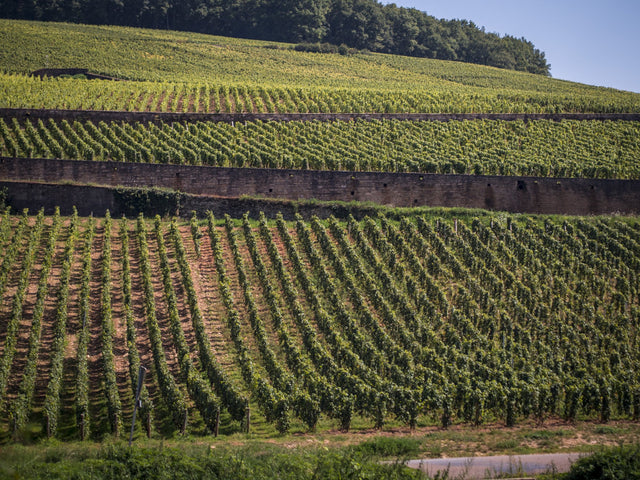
Pinot Noir is a thin-skinned, notoriously difficult-to-grow, low-yielding grape that finds its ancestral home in Burgundy, France, where it produces some of the world's most elegant and nuanced wines. While Burgundy remains its spiritual heartland, Pinot Noir has since traveled the globe, finding success in other cooler climates, notably in California, Oregon, New Zealand, and Germany. This grape is a challenge for any grower, as it requires specific conditions to show its best, and yet the wines it produces are capable of such a captivating and singular character.
Pinot Noir
Certified Biodynamic vineyard farming is a holistic approach building upon organic principles, viewing the vineyard as a self-contained ecosystem influenced by cosmic rhythms. Based on Rudolf Steiner's teachings, it integrates precise agricultural methods with lunar and astrological calendars, using natural preparations from herbs, minerals, and manure to enhance soil and plant health. Certification by organizations like Demeter International requires rigorous inspections to ensure strict compliance. Biodynamic farming seeks not only high-quality wines but also ecological harmony, sustainability, and deeper connections among land, plants, animals, and humans.