

Domaine Marquis d’Angerville Volnay 1er Cru Les Caillerets 2023
We have 2 in stock (Inventory is live and accurate)
The Land
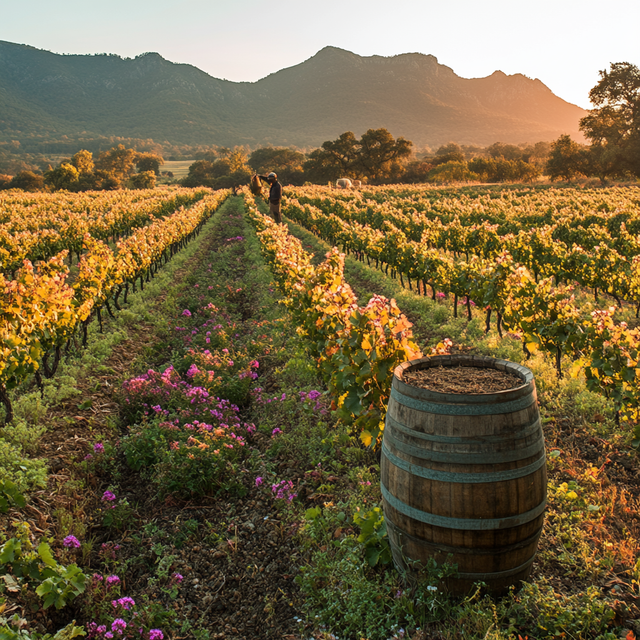
Caillerets is the smallest of d'Angerville's single-vineyard Volnays: 0.45 hectares, so little that in frost-hit 2021 the whole cuvée fit in one barrel. The climat lies on the stony middle slope beside Champans, facing east to south-east, with clay-limestone soil full of rock. Less clay than Champans means less weight and more lift, which is why Caillerets is the perfumed side of Volnay, the village's answer to the question of how delicate great Pinot Noir can be. D'Angerville's vines here average 30 to 35 years old. The domaine picked Caillerets right after Fremiets and Mitans in 2023, among the first of its premier crus to come in.
The Wine
The Domaine Marquis d'Angerville Volnay 1er Cru Les Caillerets 2023 is 100% Pinot Noir. Harvest began September 5 in a warm, abundant year for the Côte de Beaune, with only a light sort for dried berries, no green harvesting and yields around 40 hl/ha. The grapes were fully destemmed and spent 16 to 18 days in vat, mostly wooden, with pump-overs only. Then came an unusual call: the domaine bottled this wine before Christmas 2024, earlier than usual, to keep its freshness. The result is ripe red fruit and wild strawberry, a light, soft frame and a pretty, lingering finish. This is d'Angerville you can drink now and through about 2032.
The People
The vines in Caillerets carry the family's own Pinot Noir. When Sem, Marquis d'Angerville, took over the estate in 1906, he replanted it with a selection of his own, a small-berried strain with a high ratio of skin to juice that gives color and natural tannin without forcing extraction. Other growers planted it, locals came to call it the d'Angerville clone, and the BIVB, Burgundy's wine board, later propagated it for growers across the region. Guillaume d'Angerville, Sem's grandson, still farms it biodynamically, and Caillerets, the most delicate site the domaine owns, is where the strain shows its finest side.
Food Pairing
This is the d'Angerville wine for lighter cooking. Roast a chicken with lemon, garlic and thyme and serve it with the pan juices; the wine's red fruit and soft frame fit the bird exactly. Seared salmon with beurre rouge and sautéed chanterelles meets its perfume. Pork tenderloin roasted with red grapes and shallots echoes the strawberry fruit, and a mushroom toast with melted Gruyère suits its earthy undertone. Open it on a weeknight when you want great Volnay now rather than in 2035.
We ship wine to most states with a $100 minimum order for shipping. We don't ship spirits nor beer.
Weather shipping advisory: Orders placed during times of extreme heat or extreme cold will be held for no charge until more favorable weather returns.
Domaine Marquis d’Angerville
- Est.1804
- RegionBurgundy - Cote d'Or
- FarmingFarming - Certified Biodynamic
- In stock17 wines →
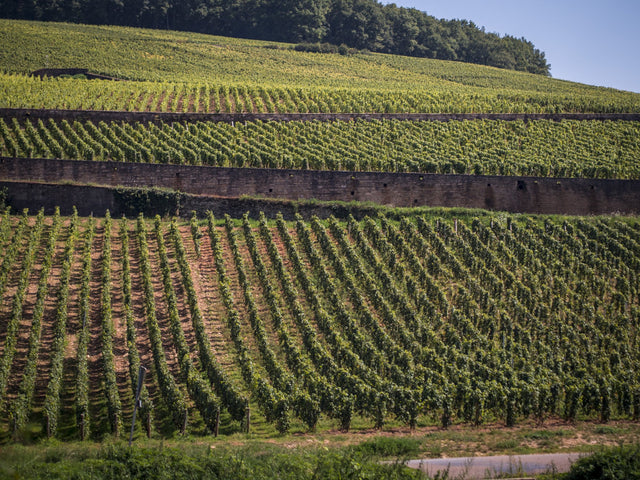
Burgundy, in eastern France, encompasses several subregions, but it is the Côte d'Or that is home to many of the world's most expensive and revered wines. The region, primarily a single east-facing slope, has mixed limestone soils that vary dramatically from village to village and even vineyard to vineyard. White wines, crafted from Chardonnay, range from rich and opulent to lean and intensely mineral, while Pinot Noir produces silky, perfumed red wines of exceptional finesse and complexity. Centuries of winemaking tradition have resulted in every plot being meticulously recognized and scrutinized, making the Côte d'Or a true capital of terroir.
Burgundy - Cote d'Or

Pinot Noir is a thin-skinned, notoriously difficult-to-grow, low-yielding grape that finds its ancestral home in Burgundy, France, where it produces some of the world's most elegant and nuanced wines. While Burgundy remains its spiritual heartland, Pinot Noir has since traveled the globe, finding success in other cooler climates, notably in California, Oregon, New Zealand, and Germany. This grape is a challenge for any grower, as it requires specific conditions to show its best, and yet the wines it produces are capable of such a captivating and singular character.
Pinot Noir
Certified Biodynamic vineyard farming is a holistic approach building upon organic principles, viewing the vineyard as a self-contained ecosystem influenced by cosmic rhythms. Based on Rudolf Steiner's teachings, it integrates precise agricultural methods with lunar and astrological calendars, using natural preparations from herbs, minerals, and manure to enhance soil and plant health. Certification by organizations like Demeter International requires rigorous inspections to ensure strict compliance. Biodynamic farming seeks not only high-quality wines but also ecological harmony, sustainability, and deeper connections among land, plants, animals, and humans.