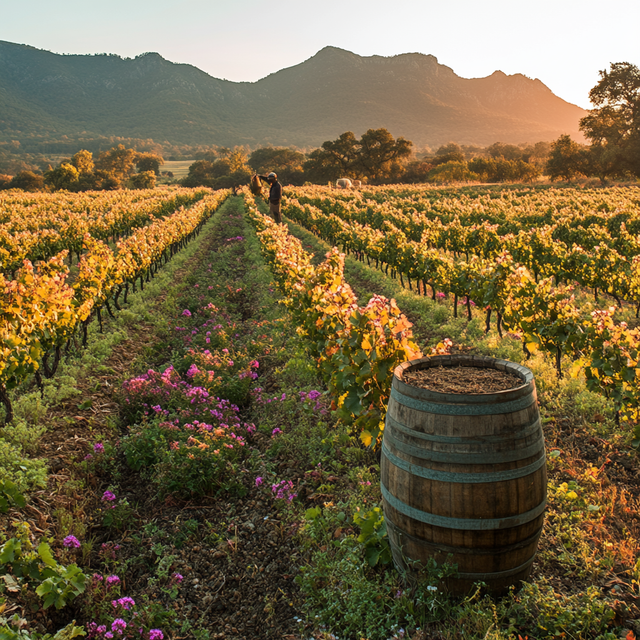
Domaine Marquis d’Angerville Volnay 1er Cru Taillepieds 2023
We have 3 in stock (Inventory is live and accurate)
The Land
Part of d'Angerville's Taillepieds is young again. The domaine has replanted much of its 1.07-hectare parcel in recent years, though the vines still average 30 to 35 years, and the parcel has belonged to the estate since the original 1804 purchase. Taillepieds sits on Volnay's steep middle slope, uphill from Champans, with thin, whitish, rock-strewn topsoil over limestone and marl. The ground is poor and hard to work, which caps vigor and keeps yields modest without any help from the grower. That is why Taillepieds is the firm, mineral premier cru of the village, and why it held its tension in a warm year like 2023 when riper sites leaned soft.
The Wine
The Domaine Marquis d'Angerville Volnay 1er Cru Taillepieds 2023 is 100% Pinot Noir. The domaine began picking on September 5, sorted only lightly, skipped green harvesting and averaged about 40 hl/ha, with alcohol of 13.5 to 14% and pH between 3.5 and 3.7. Everything was destemmed and fermented for 16 to 18 days, mostly in wooden vats, with pump-overs only, then pressed off to finish malolactic in tank before going to barrel with a modest share of new oak. Tasting the whole range for World of Fine Wine, the reviewer named this her favorite of the domaine's 2023s: blackberry and red currant, a streak of fresh herbs and a tight, concentrated, fresher palate than the Caillerets.
The People
When Jacques d'Angerville died in 2003, continuity at the domaine came from inside the family. His son-in-law Renaud de Villette, an agronomist who had worked alongside Jacques for some fifteen years, stayed on to help Guillaume through his first vintages, and the farming knowledge Jacques had built did not leave with him. Two years later Guillaume put François Duvivier in charge of vines and cellar, and in 2006 the domaine began converting to biodynamics, finishing in 2009. The replanting in Taillepieds belongs to that same long view: young vines set in place now so the parcel can keep producing premier cru Volnay for the next generation.
Food Pairing
Taillepieds wants food with some grip and herbs. Grill lamb chops and spoon a parsley and caper salsa verde over them; the herbal streak in the wine meets the sauce. A lentil and wild mushroom ragout with a poached egg suits its earthy, mineral side. Pork chops seared in cast iron with a Dijon cream sauce let its acidity work against the richness. Finish with a slice of Saint-Nectaire. Decant it for an hour if you open it before 2027, then watch it tighten and open over the evening.
We ship wine to most states with a $100 minimum order for shipping. We don't ship spirits nor beer.
Weather shipping advisory: Orders placed during times of extreme heat or extreme cold will be held for no charge until more favorable weather returns.
Domaine Marquis d’Angerville
- Est.1804
- RegionBurgundy - Cote d'Or
- FarmingFarming - Certified Biodynamic
- In stock17 wines →
Burgundy, in eastern France, encompasses several subregions, but it is the Côte d'Or that is home to many of the world's most expensive and revered wines. The region, primarily a single east-facing slope, has mixed limestone soils that vary dramatically from village to village and even vineyard to vineyard. White wines, crafted from Chardonnay, range from rich and opulent to lean and intensely mineral, while Pinot Noir produces silky, perfumed red wines of exceptional finesse and complexity. Centuries of winemaking tradition have resulted in every plot being meticulously recognized and scrutinized, making the Côte d'Or a true capital of terroir.
Burgundy - Cote d'Or

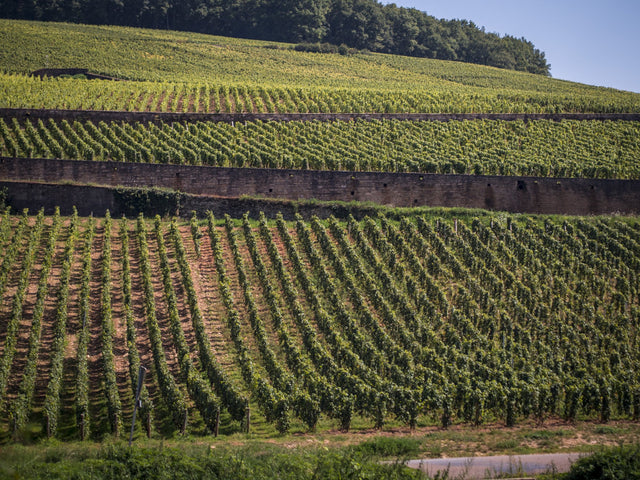
Pinot Noir is a thin-skinned, notoriously difficult-to-grow, low-yielding grape that finds its ancestral home in Burgundy, France, where it produces some of the world's most elegant and nuanced wines. While Burgundy remains its spiritual heartland, Pinot Noir has since traveled the globe, finding success in other cooler climates, notably in California, Oregon, New Zealand, and Germany. This grape is a challenge for any grower, as it requires specific conditions to show its best, and yet the wines it produces are capable of such a captivating and singular character.
Pinot Noir
Certified Biodynamic vineyard farming is a holistic approach building upon organic principles, viewing the vineyard as a self-contained ecosystem influenced by cosmic rhythms. Based on Rudolf Steiner's teachings, it integrates precise agricultural methods with lunar and astrological calendars, using natural preparations from herbs, minerals, and manure to enhance soil and plant health. Certification by organizations like Demeter International requires rigorous inspections to ensure strict compliance. Biodynamic farming seeks not only high-quality wines but also ecological harmony, sustainability, and deeper connections among land, plants, animals, and humans.