

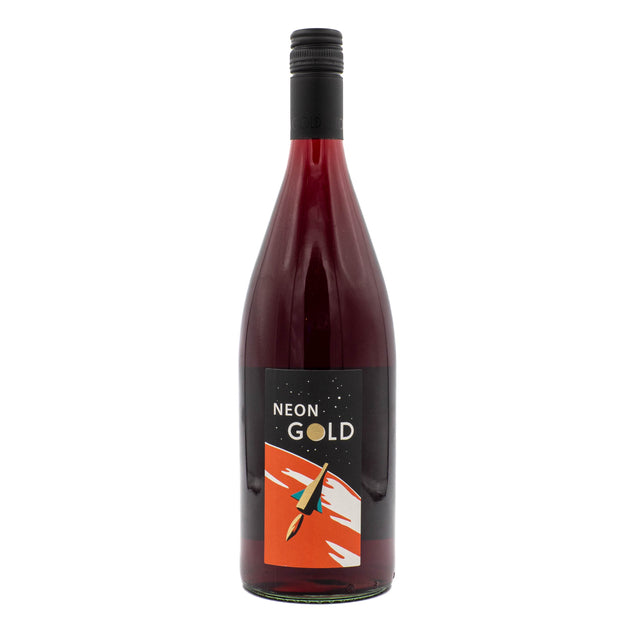
Leon Gold Neon Gold 2025 1L
We have 12 in stock (Inventory is live and accurate)
Summer Shipping Advisory: Orders may be temporarily held during periods of extreme heat to ensure wine arrives in optimal condition.
View current shipping weather map →
The Land
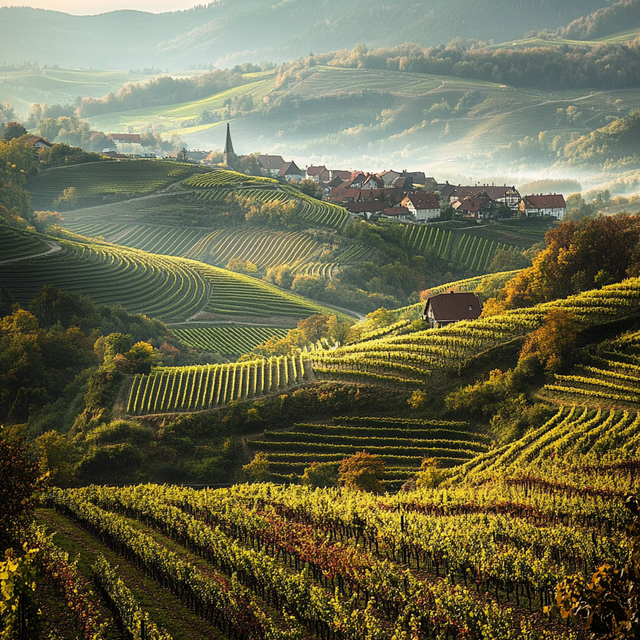
Trollinger is the most-planted red grape in Württemberg and almost nobody outside Germany has tasted it, largely because the Swabians drink essentially all of it themselves. This wine comes from Gundelsbach, a hamlet inside the town of Weinstadt in the Remstal, a tributary valley of the Neckar just outside Stuttgart. The valley is narrow and steep, with dramatic south-facing slopes, and the geology underneath is unusually layered: gypsum keuper, red sandstone, Bunte marl, and pebble sandstone stacked together. Warm days and cool nights let red varieties ripen without surrendering acid. Worth knowing that Trollinger belongs to Württemberg, not to neighboring Baden, since the two regions get confused constantly and only one of them treats this grape as its own.
The Wine
One hundred percent Trollinger, the same grape Alto Adige calls Schiava and Vernatsch, from vines around 45 years old, macerated traditionally and then fermented and aged entirely in stainless steel on indigenous yeasts. It is neither fined nor filtered, and the importer lists 15 mg/L of added sulfur, which is very little. The result is 12 percent alcohol and pale in the glass: raspberry, sour cherry, cranberry skin, dried herbs, a twist of pink peppercorn. The body is light, the tannin is barely present, and the acid does all the structural work. The bottle is a liter, a third more wine than a standard 750, which is the traditional German format for wine meant to be drunk rather than collected. 2025 was warm and early across Germany, with bud break well ahead of schedule and picking starting in the first week of September, roughly three weeks earlier than average; the national crop was the smallest since 2010, but quality reports were strong.
The People
Leon Gold is a first-generation vigneron with no family winery behind him. The idea came from childhood, watching his neighbors' vines, and it took him through the Bottwartal and the Remstal to a biodynamic estate in the South Palatinate whose farming shaped how he thinks about the job. He trained as a technician in viticulture and enology at the state teaching and research institute in Weinsberg, then came back to the Remstal, an adopted home rather than an inherited one, and founded his own estate. He farms about ten hectares, certified organic and practicing biodynamic, refusing synthetic treatments in favor of specially prepared compost and paying close attention to biological cycles and moon phases. His stated position is that quality comes from the vineyard and not just from the cellar.
Food Pairing
This is sausage wine in the best sense: bratwurst with sharp mustard, or a grilled kielbasa, with the acid resetting your palate between bites. Maultaschen in broth, or Swabian lentils with spätzle and a vinegary bite, are the regional pairings and they are regional for a reason. Grilled salmon works because there is no tannin to clash with the fish. Pizza with a heavy hand of oregano is the honest American answer. Chill it to 55 degrees. A liter on the table, no decision to make, nothing precious about it, is exactly what this bottle is for.
We ship wine to most states with a $100 minimum order for shipping. We don't ship spirits nor beer.
Weather shipping advisory: Orders placed during times of extreme heat or extreme cold will be held for no charge until more favorable weather returns.
Baden, Germany's warmest and southernmost wine region, is distinctly different from its northern counterparts. Benefiting from a near-Mediterranean climate, Baden is known for its ripe, full-bodied wines, particularly Pinot Noir (Spätburgunder) and Pinot Blanc (Weissburgunder). The Kaiserstuhl, a volcanic range within Baden, is a key area, known for its rich, fertile soils that contribute to the wines' concentration and power. While Riesling is grown, Baden's focus is more on these Burgundian varieties, producing wines that are richer, rounder, and often more approachable in their youth than classic examples from cooler German regions. Baden offers a unique and sun-drenched expression of German wine, showcasing a different facet of the country's viticultural landscape.