Skip to content
Welcome to Colorado's best wine shop!

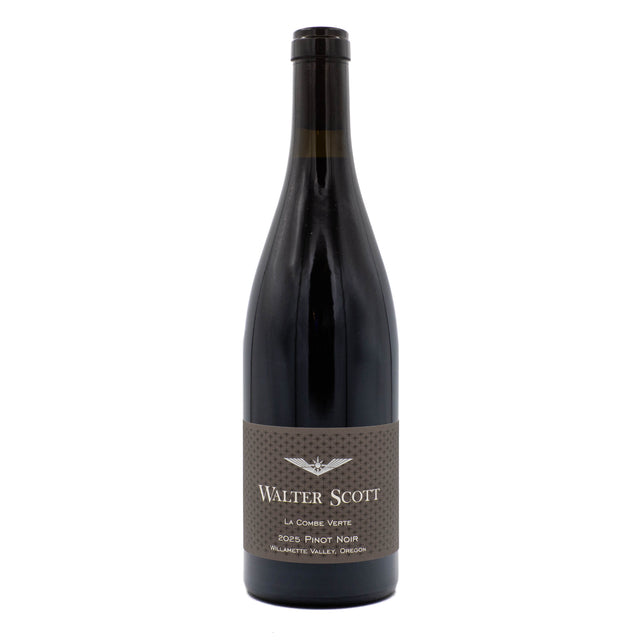
Walter Scott Pinot Noir La Combe Verte 2025

$35.00

We have 4 in stock (Inventory is live and accurate)

The Land

La Combe Verte means "the green valley," and it is Walter Scott's Willamette Valley Pinot Noir, the blend a Burgundian domaine would call its village wine. The fruit comes mostly from the Eola-Amity Hills, where Ken Pahlow and Erica Landon have built their reputation. In the 2024 release that meant Distraction, Sojeau, Temperance Hill and Witness Tree, plus Freedom Hill in the Coast Range foothills. The Eola-Amity sites sit on volcanic basalt clay, which runs cooler, holds water and pushes the wine toward red fruit and firm acid. Freedom Hill adds marine sedimentary soil, which drains fast and brings darker fruit and a silkier texture. The Van Duzer winds that pour through the hills every afternoon keep acidity high even in warm years.

The Wine

The Walter Scott La Combe Verte Pinot Noir 2025 follows the house method. Fruit is destemmed, fermented with ambient yeast in small lots, and mostly pumped over, with gentle punch-downs. The wine then spends about 10 months in French oak barrels, a portion of them new, before bottling. The team picks earlier than many neighbors for lower pH, which gives the wines a tight, polished frame that takes oak well. Earlier vintages have shown red raspberry, black cherry, hibiscus and violet, a touch of sandalwood and forest floor, medium body, fine-grained tannin and a bright, juicy finish. The 2025 season was warm and steady with few heat spikes, a dry winter, a short bloom that naturally reduced yields and an early harvest of clean, concentrated fruit.

The People

Walter Scott is Ken Pahlow and Erica Landon. Ken spent 14 years at St. Innocent and worked at Evening Land alongside Dominique Lafon; Erica came up as a sommelier and wine educator. They put their savings into the business at the end of the 2000s, made the first vintages at Patricia Green, and now work out of leased space at Bethel Heights in the Eola-Amity Hills. The name honors Ken's grandfather Walter, a TWA flight engineer, and his nephew Scott. They work with mostly organically farmed, dry-farmed vineyards, and their stated goal is to let each site show through. La Combe Verte gets the same care as their single-vineyard bottlings, and that is why it has become one of the most reliable Oregon Pinot Noirs at its price.

Food Pairing

Pinot Noir from the Eola-Amity Hills wants food with some earth and fat. Pan-roast a pork tenderloin and finish it with a sauce of dried cherries, shallots and a splash of the wine. Wild mushroom risotto with thyme and parmesan picks up the forest-floor side. Grilled king salmon with a crisp skin and a squeeze of lemon lets the acidity cut the oil. Or roast duck legs over lentils with a bit of bacon. La Combe Verte is the Pinot you keep a few of on hand, for the Friday dinner that turns into a longer night.

Select Title

We ship wine to most states with a $100 minimum order for shipping. We don't ship spirits nor beer.

Weather shipping advisory: Orders placed during times of extreme heat or extreme cold will be held for no charge until more favorable weather returns.

0 / 0
The Producer

Walter Scott


The Terroir

Walter Scott's map is mostly volcanic, with one deliberate exception. The winery sits on Justice Vineyard off Bethel Heights Road in the Eola-Amity Hills, leased from the Casteel family, who founded Bethel Heights in 1977. Most of the fruit comes from nearby Eola-Amity sites on volcanic soils: Sojeau, formerly Sojourner, at about 650 feet; Witness Tree, on Nekia and Jory; Koosah, at 720 to 1,080 feet; and X Novo, rocky clay at 525 feet on the edge of Holmes Gap, where the wind runs hard.

The exception is Freedom Hill in the Mt. Pisgah AVA, planted in 1981 and 1982 by Dan and Helen Dusschee on Bellpine loam, uplifted marine sediment that gives its Chardonnay and Pinot Noir a broader frame than the volcanic sites. Pinot Blanc comes from Fir Crest, planted in 1985 at the far southwestern edge of Yamhill-Carlton. Ken Pahlow picks early, among the first in the Eola-Amity Hills: Chardonnay on acidity first and sugar second, aiming for a pH near 3.1, and Pinot Noir at roughly pH 3.0 to 3.1. That timing keeps the wines taut.

Ken Pahlow and Erica Landon came to winemaking from restaurant floors and paid for it by emptying their retirement accounts. Landon ran restaurant wine programs: general manager of Dundee Bistro for the Ponzi family, then wine director and general manager of Ten 01 in Portland, and she has taught WSET certification classes. Pahlow worked sales and production at St. Innocent, worked Freedom Hill fruit there for more than a decade, managed Northwest sales for Evening Land, and worked a vintage there alongside Dominique Lafon, which turned him toward Chardonnay. The name honors Ken's grandfather Walter, a TWA flight engineer, and his nephew Scott, who died young.

The label started in 2008. The first wine, a 2009 La Combe Verte Pinot Noir, was made at Patricia Green Cellars, where the couple traded labor for cellar space; La Combe Verte nods to Green, who pushed them to start. Chardonnay followed in 2011. In 2012 they moved to Justice Vineyard and sold a 20 percent stake to Andy and Sue Steinman, still partners. Pahlow makes the wine and Landon directs operations, with general manager Jess Pierce and assistant winemaker Jacob Sembler.

Chardonnay

White grapes are crushed before pressing, fermented with native yeast in 350- and 500-liter French barrels with most of their lees, stirred as little as possible, and aged a full year in wood plus three to four months in steel.

  • Chardonnay Cuvée Anne A barrel selection; the 2023 draws on Justice, Koosah, Sojeau, Witness Tree and X Novo, with 12 months in 350- and 500-liter French oak, 45 percent new, then four months in tank. The single-vineyard cellar in one bottle.
  • Chardonnay La Combe Verte The Willamette Valley Chardonnay, raised in large French barrels, about 20 percent new, with minimal stirring. It gets the same handling as the single-vineyard wines at a lower price.
  • Chardonnay Freedom Hill Marine-sedimentary soils in the Mt. Pisgah AVA and about 50 percent new French oak. Fuller in frame than the volcanic Eola-Amity Chardonnays, held tight by early picking.
  • Chardonnay X Novo A 2-acre block planted from 2010 by Craig and Robin Williams with as many as 15 Chardonnay clones, California heritage selections alongside Dijon clones, on rocky clay at 525 feet by Holmes Gap. Twelve months in 350- and 500-liter barrels, then three in steel; the flintiest, most reductive white in the range.
  • Chardonnay Koosah Five clones planted in 2016 on volcanic soil at 720 to 1,080 feet, co-fermented. The 2023 spent 12 months in 350- and 500-liter French oak, 65 percent new, then about three months in steel.
  • Chardonnay Seven Springs From the south ridge of Seven Springs, an organically farmed Eola-Amity Hills vineyard that sells fruit to very few producers; Rajat Parr of Evening Land vouched for Walter Scott to get it.
  • Chardonnay Justice From the 40-acre home vineyard, farmed by the Casteel family on Jory and marine-sedimentary soils.
  • Chardonnay Bois-Moi A one-off 2020 blend of six sites, including X Novo, Seven Springs and Freedom Hill, fermented with native yeast and finished in large oak. Built to drink young.

Pinot Noir

Pinot Noir is mostly destemmed, with up to 30 percent whole clusters depending on the vintage, fermented with native yeast, extracted gently with a mix of pigeage and pump-overs, and aged 10 to 15 months in French oak.

  • Pinot Noir Cuvée Ruth Named for Ruth and Irv Kantor, the late parents of partner Sue Steinman. A barrel selection; the 2022 drew on Justice, Koosah, Sojeau, Temperance Hill, Witness Tree, Bracken and X Novo, with 5 percent whole clusters and 10 months in French oak, 30 percent new.
  • Pinot Noir La Combe Verte The Willamette Valley blend and the label's first wine, in 2009. The 2024 combines volcanic Eola-Amity fruit from Distraction, Sojeau, Temperance Hill and Witness Tree with old-vine Freedom Hill, aged 10 months in French oak, about a quarter new.
  • Pinot Noir Sojeau Vineyard A southwest-facing rocky slope on three volcanic soil types, planted to Pommard, Wädenswil and Dijon 114. The 2023 co-fermented all three clones with about 30 percent whole clusters and spent 15 months in French oak, 35 percent new.
  • Pinot Noir Freedom Hill Vines planted in the early 1980s on marine sediment in the Mt. Pisgah AVA; the 2022 had about 5 percent whole clusters and 15 percent new French oak. The counterweight to the volcanic Eola-Amity Pinots.
  • Pinot Noir X Novo From the same windy, rocky-clay site at the edge of Holmes Gap as the Chardonnay; dense and flinty.
  • Pinot Noir Koosah Volcanic soil at 720 to 1,080 feet, about 55 miles from the Pacific, with a clear maritime influence. Resonance bought the vineyard in 2022.
  • Pinot Noir Witness Tree Named for an oak that served as a pioneer survey marker, on volcanic Nekia and Jory soils. The 2022 included some whole clusters and was raised in neutral to lightly used French oak.
  • Pinot Noir Justice The home vineyard, 40 acres farmed without herbicides by the Casteels; Pahlow pursued this fruit for five years before he got it.
  • Pinot Noir Temperance Hill Planted in 1990 at about 800 feet, dry farmed and farmed organically. Aged mostly in neutral French oak.

Other wines

  • Pinot Blanc Fir Crest From 1.8 acres of Pinot Blanc and Pinot Gris planted in 1985 on silt clay loam at the southwestern edge of Yamhill-Carlton, ringed by Douglas fir.
  • Aligoté X Novo Aligoté from the windy X Novo site in the Eola-Amity Hills; reductive and stony, with the structure to age.
  • Aligoté X Saxa Lightly crushed, fermented with native yeast and aged 10 months on its lees in two 350-liter barrels, keeping about 25 percent of its malic acid. Farmed organically.
  • Gamay Arlyn Gamay Noir from Arlyn Vineyard in the Chehalem Mountains, one of the few reds in the range that is not Pinot Noir.
  • Arlyn Passetoutgrain A Passetoutgrain-style red from the same Arlyn Vineyard in the Chehalem Mountains.

Shop all Walter Scott (7)

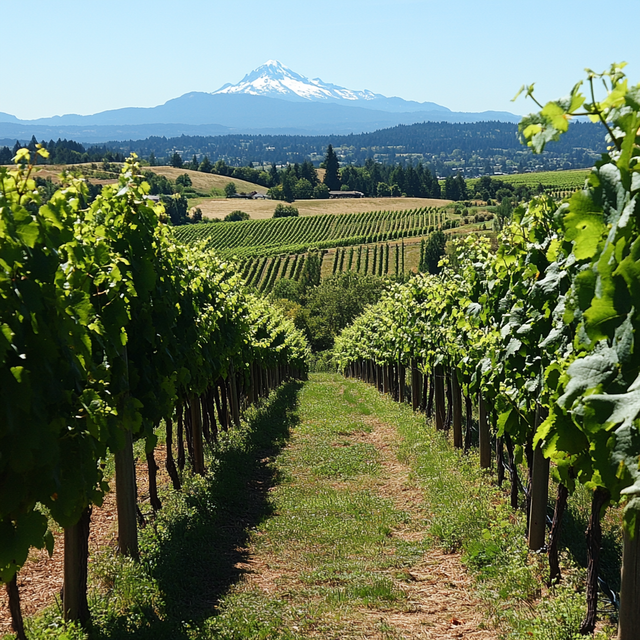
The Willamette Valley, nestled in Oregon, is a region renowned for its cool-climate wines, particularly its Pinot Noir. While Pinot Noir is its most celebrated variety, the valley is also home to other cool climate varieties like Chardonnay and Riesling. The region's unique terroir, characterized by rolling hills, volcanic and sedimentary soils, and a maritime climate influence, contributes to the elegance and complexity of its wines. The wines of the Willamette Valley offer a delicate balance between fruit, acidity, and earthiness. Its increasingly growing reputation places it among the world’s top regions for Pinot Noir.

Oregon - Willamette Valley


Pinot Noir is a thin-skinned, notoriously difficult-to-grow, low-yielding grape that finds its ancestral home in Burgundy, France, where it produces some of the world's most elegant and nuanced wines. While Burgundy remains its spiritual heartland, Pinot Noir has since traveled the globe, finding success in other cooler climates, notably in California, Oregon, New Zealand, and Germany. This grape is a challenge for any grower, as it requires specific conditions to show its best, and yet the wines it produces are capable of such a captivating and singular character.
Pinot Noir