Benjamin Leroux Vosne-Romanee 2024
We have 2 in stock (Inventory is live and accurate)
The Land
Vosne-Romanée's fame rests on a narrow band of mid-slope grand crus, but most people first learn what the commune tastes like through its village vineyards, lower on the hill. Benjamin Leroux builds his Vosne-Romanée from two of them. Les Violettes sits on deep, low-lying soils at the northern end of the appellation, right up against the Clos de Vougeot. Maizières lies downslope of the premier cru Les Suchots, in a stretch of vines that crosses into Flagey-Échezeaux and was folded into the Vosne-Romanée appellation in 1936. The deeper ground and gentler slope give Pinot Noir from these climats a rounder, more forward fruit than the stony premiers crus above, while keeping the spice and fine grain that make Vosne-Romanée red wine recognizable.
The Wine
Benjamin Leroux Vosne-Romanée 2024 is 100% Pinot Noir from vines planted in the early 1980s. A large share of the fruit goes into tank as whole clusters for a 15-day maceration and an ambient-yeast fermentation. The wine then ages 18 months in 300-liter barrels, 25% of them new, and is bottled unfined and unfiltered. The slightly larger barrels soften the oak imprint, and the stems add a peppery, floral lift. The 2024 season was among the hardest in a generation: rain from autumn 2023 onward, early and relentless mildew, and a cool, wet flowering, with some Vosne-Romanée vineyards losing 50 to 90 percent of their crop. A dry, breezy late summer saved what remained. Expect a lighter, juicy Vosne: red cherry, raspberry, rose and violet, a cool line of acidity, fine ripe tannin, and a finish of sweet spice and orange peel.
The People
Benjamin Leroux grew up around his mother's flower shop on the Place Carnot in Beaune and entered the town's Lycée Viticole at 14. The bottle that set his course was a 1985 Chambolle-Musigny Les Amoureuses from Domaine Roumier. He trained under Pascal Marchand at Domaine du Comte Armand in Pommard, earned his national enology diploma in Dijon, and worked harvests at Domaine Drouhin in Oregon, at Cos d'Estournel in Bordeaux, and in New Zealand. In 1999, at 24, he succeeded Marchand as manager of Comte Armand and stayed some fifteen vintages, a long education in biodynamic farming. He launched his own house in Beaune in 2007 while still running Comte Armand, and today he makes every cuvée from grapes forward, whether from his own vines or from partner growers.
Food Pairing
Sear a duck breast skin-side down until crisp, slice it, and serve it over lentils du Puy cooked with bacon and thyme; the acidity cuts the fat while the earthy lentils meet the wine's spice. Roast quail with red grapes and a splash of verjus mirrors the bright red fruit. Cedar-planked salmon brushed with Dijon and brown sugar works because the fine tannin never turns metallic against the fish. Finish with a ripe wedge of Brillat-Savarin and a baguette. This is the bottle to open when someone at the table wants to understand why people fall for Burgundy.
We ship wine to most states with a $100 minimum order for shipping. We don't ship spirits nor beer.
Weather shipping advisory: Orders placed during times of extreme heat or extreme cold will be held for no charge until more favorable weather returns.
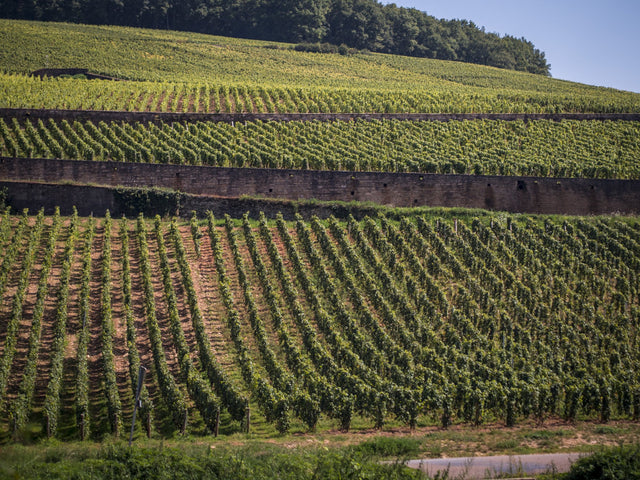
Burgundy, in eastern France, encompasses several subregions, but it is the Côte d'Or that is home to many of the world's most expensive and revered wines. The region, primarily a single east-facing slope, has mixed limestone soils that vary dramatically from village to village and even vineyard to vineyard. White wines, crafted from Chardonnay, range from rich and opulent to lean and intensely mineral, while Pinot Noir produces silky, perfumed red wines of exceptional finesse and complexity. Centuries of winemaking tradition have resulted in every plot being meticulously recognized and scrutinized, making the Côte d'Or a true capital of terroir.
Burgundy - Cote d'Or

Pinot Noir is a thin-skinned, notoriously difficult-to-grow, low-yielding grape that finds its ancestral home in Burgundy, France, where it produces some of the world's most elegant and nuanced wines. While Burgundy remains its spiritual heartland, Pinot Noir has since traveled the globe, finding success in other cooler climates, notably in California, Oregon, New Zealand, and Germany. This grape is a challenge for any grower, as it requires specific conditions to show its best, and yet the wines it produces are capable of such a captivating and singular character.