

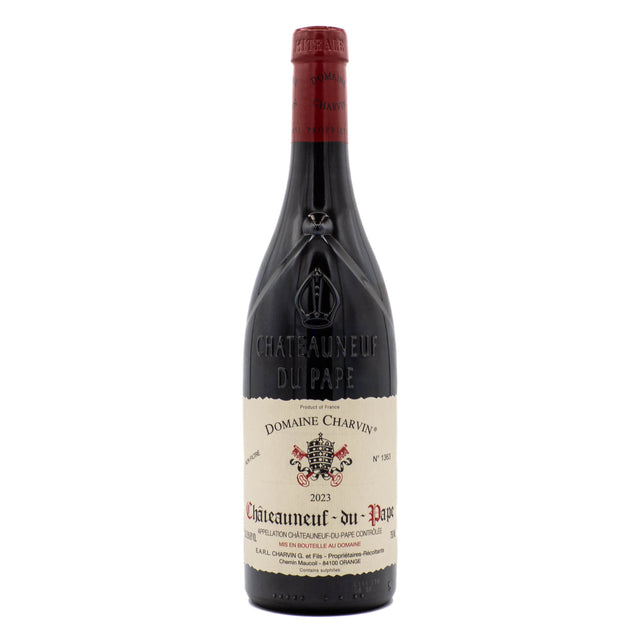
Domaine Charvin Châteauneuf-du-Pape 2023
We have 6 in stock (Inventory is live and accurate)
Summer Shipping Advisory: Orders may be temporarily held during periods of extreme heat to ensure wine arrives in optimal condition.
View current shipping weather map →
The Land
Every photograph of Châteauneuf-du-Pape shows the galets roulés, the big smooth river stones that hold the day's heat and push the wines toward power. Charvin's vineyards have essentially none of them. Laurent Charvin's eight hectares sit in the far northwestern corner of the appellation, out toward Orange, on sandy, north-facing ground. That is the coolest exposure in one of the warmest appellations in France, and sand behaves nothing like galets: it drains hard, holds no heat, and yields wines built on perfume and lift rather than density. The holdings run through the lieux-dits of Cabrières, L'Arnesque, and Le Devès, with vines averaging around 60 years old. This is the address that explains why Charvin tastes the way it does.
The Wine
82% Grenache with 5% Mourvèdre, 5% Syrah, 4% Counoise, and 4% Vaccarèse. Counoise and Vaccarèse are nearly extinct in the appellation and both are doing real work here, contributing acidity and a peppery, savory edge that keeps the Grenache from dominating. Fermented 100% whole bunch, then raised entirely in concrete for 18 to 21 months, fined, and bottled unfiltered. No barrel touches this wine at any stage, which is the second half of the house argument: concrete adds nothing, so what is in the glass is fruit, stems, and sand. Cassis, mulberry, dried lavender, menthol, black pepper, and garrigue, medium to full-bodied with velvety tannin and a long savory close. 2023 was a hot year in the southern Rhône, and the north-facing sandy sites are exactly what keeps this bottle fresh in a vintage like that.
The People
The Charvin family has been at this since 1851. Laurent Charvin, the sixth generation, took over in the early 1990s and immediately made three decisions that defined the estate: he converted all 28 hectares to organic farming, stopped destemming entirely, and got rid of the barrels in favor of concrete. None of those were fashionable choices at the time, and Châteauneuf in that era was moving hard in the opposite direction toward extraction and new oak. He has not changed course since, and the estate is now one of the reference points for what traditional Châteauneuf-du-Pape actually means.
Food Pairing
Grenache with this much herb and pepper wants slow-cooked, herb-heavy food. Daube de boeuf with olives and orange peel is the regional answer and the right one. Also strong: roast leg of lamb with rosemary and garlic, braised oxtail with root vegetables, or grilled portobellos with thyme and aged goat cheese. The velvety tannin will not fight anything and the garrigue character in the wine meets rosemary, thyme, and juniper directly. Decant an hour, or lay it down; this will improve for a decade or more.
We ship wine to most states with a $100 minimum order for shipping. We don't ship spirits nor beer.
Weather shipping advisory: Orders placed during times of extreme heat or extreme cold will be held for no charge until more favorable weather returns.
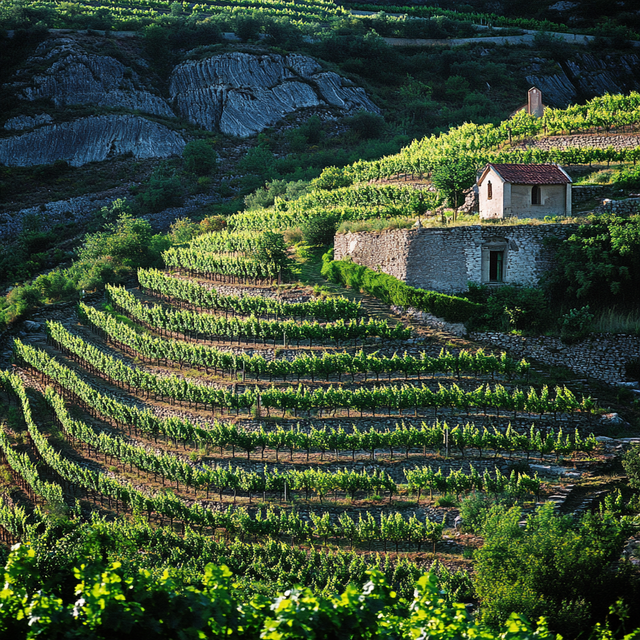
The Rhône Valley is a diverse and historic wine region, divided into two distinct areas. The Northern Rhône is the birthplace of Syrah, with steep, terraced vineyards that produce some of the world's most revered wines, such as those from Hermitage and Côte-Rôtie. The Southern Rhône is much more expansive, offering a wider range of styles, but typically based around Grenache-based blends, with wines from Châteauneuf-du-Pape known for their complexity and power. While the region is celebrated for its reds, it also produces incredible textured whites, and as a whole the region displays the spectrum of French wine and the incredible differences that can come from small geographic changes.
Rhone Valley

Grenache is a widely planted grape variety that thrives in its Mediterranean home. In Spain, it's known as Garnacha, where it reaches its peak in the Sierra de Gredos as a pure varietal wine, while also being a key blending component in Rioja. France's Southern Rhône, notably Châteauneuf-du-Pape, is another well-known region, where Grenache is often the base of a blended wine. Grenache also finds a home in Sardinia as Cannonau, and it has spread beyond its Mediterranean origins, most famously to Australia's Barossa Valley. The resulting wines are typically light in color, yet they possess a full body and flavor, displaying mature red fruit notes, herbal spices, and often a hint of orange peel, along with soft tannins and moderate acidity. It is an incredibly versatile grape, showing different expressions based on its terroir and the winemaking style employed.