Trediberri Dogliani 2024
We have 10 in stock (Inventory is live and accurate)
The Land
Trediberri is a Barolo house, but its Dolcetto grows far from the Barolo hills, at the southern end of the Langhe where the land climbs toward the Ligurian Alps. Since 2022 the fruit for this Dogliani DOCG red wine has come from vineyards in three villages, Cigliè, Bastia Mondovì, and Clavesana, all inside the Dogliani zone and planted at 450 to 520 meters. This is Dolcetto's home ground. The grape ripens early, and the cooler, higher hills of the southern Langhe let it hang long enough to build spice without losing freshness. That altitude is why this Dolcetto from Dogliani tastes lifted rather than jammy.
The Wine
Trediberri Dogliani 2024 is 100% Dolcetto, fermented only in concrete for about 10 days, then taken through malolactic in concrete or steel. After cold stabilization it rests a few months in concrete, steel, or fiberglass and is bottled in the April or May after harvest, with no wood at all. The goal, in the estate's words, is to bring out Dolcetto's vinosità: its grapey, winey core. They describe the result honestly: fun, not especially complex through the middle, with light tannin and a long, spicy, almost peppery finish. Expect purple plum, black cherry, and violet, a bitter-almond edge, and that peppery close. The 2024 season was wet in spring and again from mid-September, but warm, dry weather from mid-June to mid-September let early-ripening varieties like Dolcetto reach full ripeness before the rain returned.
The People
The Dogliani project is the newest chapter at Trediberri. Nicola Oberto and his father Federico call Dolcetto a great historic Piedmontese grape, and they wanted to make one that took it seriously rather than treating it as the house wine poured while Barolo ages. Their first attempt came from Bricco Mollea in Vicoforte, a south-facing, leased vineyard at about 600 meters that they worked from 2019 to 2021 and bottled as Dogliani Bricco Mollea. When that lease ended, they moved to the vineyards in Cigliè, Bastia Mondovì, and Clavesana, farmed from 2022 onward. The cellar approach stayed the same as for their Barbera and Langhe Nebbiolo: concrete, steel, and an early bottling to keep the fruit intact.
Food Pairing
Trediberri's own pairing list for this Dolcetto reads like a trip down the Po valley, and it is worth following. Saffron risotto finished with butter and Parmigiano lets the wine's acidity cut the richness while the spice in the finish meets the saffron. Sarde in saor, Venetian sweet-and-sour sardines with onions and raisins, shows how low tannin handles oily fish. Sicilian caponata with eggplant, capers, and vinegar picks up the bitter-almond edge. Fried crescentine filled with mortadella and squacquerone cheese is the most fun of all, salty and fatty against bright fruit. Pour it slightly cool on a weeknight when nobody wants to think too hard about the wine.
We ship wine to most states with a $100 minimum order for shipping. We don't ship spirits nor beer.
Weather shipping advisory: Orders placed during times of extreme heat or extreme cold will be held for no charge until more favorable weather returns.
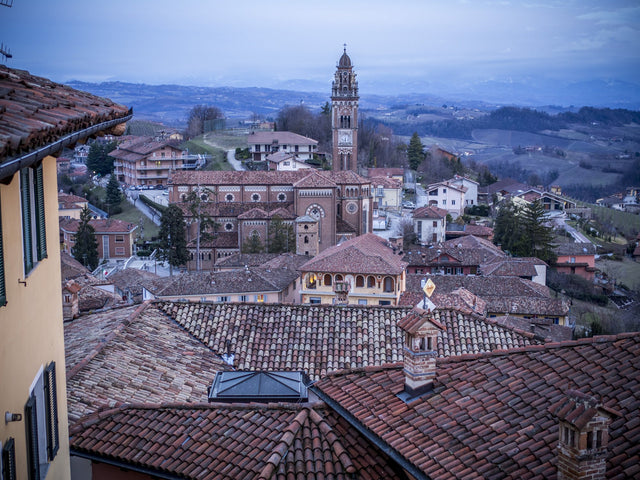
Piedmont, framed by the Alps in northwestern Italy, is a land of rolling hills and carefully cultivated vineyards. The continental climate, with its cold winters and warm summers, creates prime conditions for the Nebbiolo grape, which dominates much of the region's red wine production. The Langhe area is home to Barolo and Barbaresco, structured red wines known for their complex aromas, firm tannins, and aging potential. While Nebbiolo is the dominant grape of Piedmont, the region also makes interesting white wines like those from Arneis and Timorasso. Alto Piemonte is a separate region in the north with its own distinctive expressions of Nebbiolo, alongside other red grape varietals.
Italy - Piedmont

Dolcetto is a black grape variety native to the Piedmont region in northwest Italy, cherished for its ability to produce soft, fruit-forward red wines with relatively low acidity and a pleasing bitter finish. Known for its early ripening, Dolcetto yields wines that are typically deep in color, offering aromas of black cherry and licorice, making them highly approachable in their youth. The grape is most commonly associated with wines from Dogliani, Alba, and Asti, where the varietal's characteristics are celebrated in their purest form. While not as prestigious as Nebbiolo-based wines like Barolo and Barbaresco, Dolcetto holds a beloved place in Piedmontese wine culture for its straightforward, deliciously fruity profile and its versatility with food.