

Magoutes Rosé 2024
We have 2 in stock (Inventory is live and accurate)
The Land
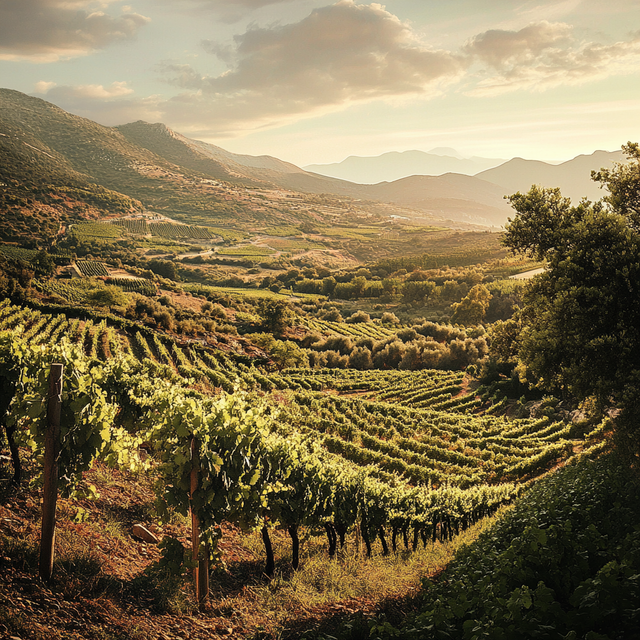
Siatista is a mountain town in western Macedonia better known today for its fur trade than for wine, yet in the 1800s its wines were said to rival Naoussa's, and grapes have grown here since at least the 15th century. The Magoutes vineyard lies southwest of Kozani in the foothills of the Askio range, on steep, south-facing slopes of rocky limestone and clay at roughly 800 to 850 meters. That altitude is the point. It keeps a rosé from Siatista pale, low in alcohol and sharp with acidity even in hot years, while the limestone shows up as a stony, faintly saline finish. The wine is labeled PGI Siatista, one of the least-known and most promising mountain wine zones in Greece.
The Wine
Magoutes Rosé 2024 blends roughly 80% Xinomavro with 20% Moschomavro, the near-extinct local red whose name means "black Muscat" even though it is unrelated to Muscat. Moschomavro brings light tannin and a floral lift; Xinomavro brings acidity and backbone. Fermentation is spontaneous, the juice is racked off its skins, and the wine finishes in old barrels, which round the texture without adding oak flavor. Expect a pale, partridge-eye color, redcurrant, wild strawberry, white peach and pink grapefruit, steely acidity, and a stony finish with a touch of sea salt, all at a modest 11.5% alcohol. This is a dry, mineral Xinomavro rosé, not a fruity one. The 2024 season in western Macedonia was hot and dry: neighboring Amyndeon had its warmest winter on record and a persistent summer drought, and harvest there began 12 days earlier than in 2023. Altitude is the hedge against a year like that.
The People
Konstantinos Diamantis founded the estate in 1985. By then Moschomavro survived only in Siatista's old vineyards, and in the early 1990s he collected cuttings himself and passed them to the nursery Vitro Hellas. Any new Moschomavro planted elsewhere in Greece now traces back to that material. His son Dimitris took over in 2006 after his father's death, and the estate, once known as Diamantis Winery, now goes by the name of its vineyard, Magoutes. The family has rescued abandoned old vineyards and replanted from local cuttings to keep Siatista's clonal heritage alive, farms organically, picks by hand and keeps intervention low in the cellar. Without the Diamantis family, Moschomavro would likely be a footnote in an ampelography book.
Food Pairing
Treat it like a mezze wine and keep it cold. Grill sardines over high heat and finish them with lemon and flaky salt; the wine's salinity and acidity match the oily fish. Taramasalata with warm pita, cucumbers and olives works because the bright acid cuts the richness of the roe. Shrimp saganaki, baked in tomato sauce with crumbled feta, plays the red-berry fruit against the sweet tomato and briny cheese. A plate of grilled halloumi with watermelon and mint covers the vegetarians at the table. This is the rosé for a long lunch outside, or a Thursday night when someone else picked up the souvlaki.
We ship wine to most states with a $100 minimum order for shipping. We don't ship spirits nor beer.
Weather shipping advisory: Orders placed during times of extreme heat or extreme cold will be held for no charge until more favorable weather returns.
Greece – Mainland covers a diverse range of wine regions shaped by mountains, rivers, and varying altitudes, from the cool slopes of Macedonia in the north to the sunlit plains of the Peloponnese. Key areas like Naoussa, Nemea, and Amyndeon are known for structured reds from Xinomavro and Agiorgitiko, while higher-altitude zones produce crisp, aromatic whites from Roditis, Malagousia, and Assyrtiko. Soils range from limestone and marl to clay and schist, and elevation plays a crucial role in moderating the heat, allowing for balance and freshness across styles. This varied landscape has helped reestablish the mainland as the backbone of Greece’s modern wine revival.