

Seehof Pinot Noir Rosé 2025
We have 11 in stock (Inventory is live and accurate)
The Land
Rheinhessen spent decades as Germany's bulk-wine engine, and Westhofen is one of the villages that broke that reputation. The Fauth family's Seehof stands in the center of the village beside the Seebach stream, where the family says a farm has existed for roughly 1,200 years. The ground around Westhofen is limestone, not slate. Morstein faces due south on heavy calcareous clay over limestone rock, with a dry, hot microclimate. Kirchspiel is weathered limestone loam and marl on slopes up to 30 percent, sheltered by hills to the west and north. Steingrube is calcareous loam with loess and high iron, and it is where the estate grows most of its Burgundy varieties. The rosé carries the broader Rheinhessen designation rather than a single site.
The Wine
The Seehof Pinot Noir Rosé 2025 is 100 percent Pinot Noir, picked early for freshness and pressed directly off the skins rather than left to soak for color. Individual vineyard lots are vinified separately, blended, and held in stainless steel until bottling. It is a dry Qualitätswein with 3 grams of residual sugar and 12 percent alcohol. Expect pale salmon, then wild strawberry, red currant and pink grapefruit pith, with a chalky grip on a crisp, clean finish that keeps pulling you back. Vom Boden calls it transparent and crystal clear. The 2025 Rheinhessen season swung between dry, warm stretches and intense rain, with heavy disease pressure that forced extra canopy and cluster work and cut yields. Germany's harvest overall was its smallest since 2010 and one of its earliest, and the musts kept a lively tension.
The People
Florian Fauth is not the next Klaus Peter Keller. He is family: his sister Julia is married to Keller, whose estate is about ten minutes away. Fauth trained at top Pfalz wineries, and the estate credits him with a sure hand with wooden casks, most visible in his "R" Chardonnay and Weissburgunder. His Rieslings from Morstein, Kirchspiel and Steingrube carry the reputation, yet his US importer, Vom Boden, rates the basic estate wines among the most accomplished in Germany at their price. The family also runs "Same Same but Different," a charity project funding places where people with and without disabilities live, learn and work together, and it lends its name to one of the estate's wines.
Food Pairing
The estate's own advice is that no barbecue should be without this rosé, so start there: grilled bratwurst with sharp mustard and a vinegar-dressed potato salad, where the acidity resets your palate after each bite of fat. Seared salmon with a cucumber and dill salad works because the red-fruit core matches the fish's richness. Roasted beet and goat cheese salad with toasted walnuts plays the wine's chalky edge against tangy cheese. Vietnamese summer rolls with shrimp, mint and nuoc cham let the low alcohol and crisp finish stand up to lime and chili. Keep a bottle cold for the first warm Saturday on the patio, or for any weeknight that calls for grilling.
We ship wine to most states with a $100 minimum order for shipping. We don't ship spirits nor beer.
Weather shipping advisory: Orders placed during times of extreme heat or extreme cold will be held for no charge until more favorable weather returns.
Rheinhessen, Germany's largest wine region by volume, is experiencing a quality revolution, led by producers like Weingut Keller. Once known for bulk wine, it's now gaining recognition for its dry Rieslings, particularly from the famed Roter Hang (Red Slope). This area, with its unique red clay and slate soils, is a source of intensely mineral and age-worthy wines. Rheinhessen, with its rolling hills and varied soils, also produces a diverse range of styles beyond the Roter Hang, often richer and broader than Mosel or Saar wines, while retaining vibrant acidity. The region is quickly establishing itself as a source of high-quality dry Riesling, showcasing a compelling and evolving side of German winemaking.
Germany - Rheinhessen

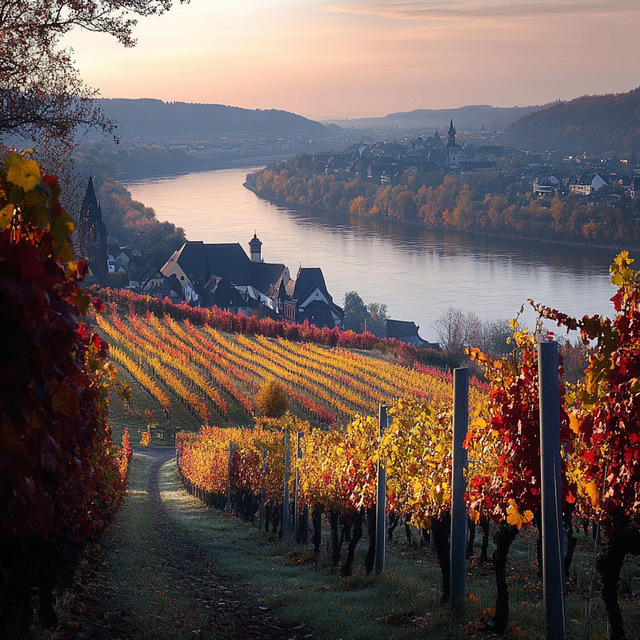
Pinot Noir is a thin-skinned, notoriously difficult-to-grow, low-yielding grape that finds its ancestral home in Burgundy, France, where it produces some of the world's most elegant and nuanced wines. While Burgundy remains its spiritual heartland, Pinot Noir has since traveled the globe, finding success in other cooler climates, notably in California, Oregon, New Zealand, and Germany. This grape is a challenge for any grower, as it requires specific conditions to show its best, and yet the wines it produces are capable of such a captivating and singular character.