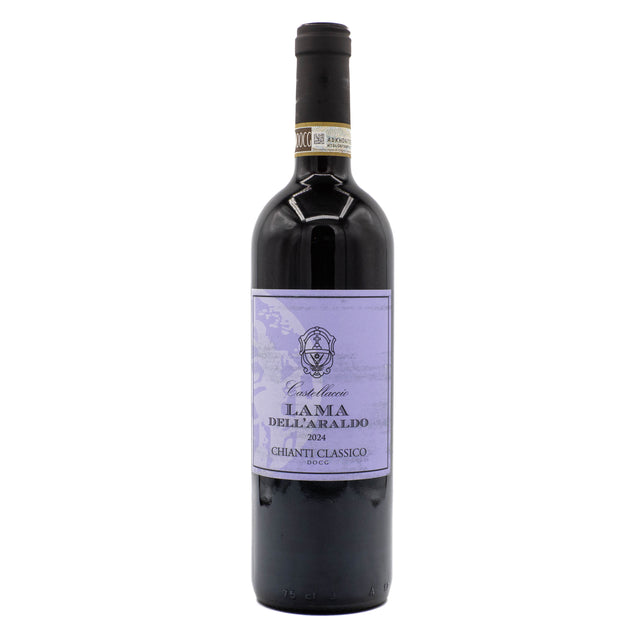
Castellaccio Chianti Classico Lama dell'Araldo 2024
We have 11 in stock (Inventory is live and accurate)
The Land
Most people picture Chianti Classico as low, rolling hills of cypress and sun. Castellaccio's vineyards sit far higher, split between Lamole and Lucolena in the mountains above Greve, at 500 to 700 meters, and the estate counts among them what it describes as the highest vineyard site in all of Chianti Classico. Up here the soils are dominated by sandstone and quartz, the nights are cold, and the growing season stretches long. The coolest slopes, like the northeast face of Lucolena, ripen Sangiovese slowly and late. In the glass, that altitude translates to lighter color, lifted aromatics, and acidity that feels sharp and mountain-fresh rather than broad and sun-baked. This is Chianti Classico red wine shaped by elevation first and warmth second.
The Wine
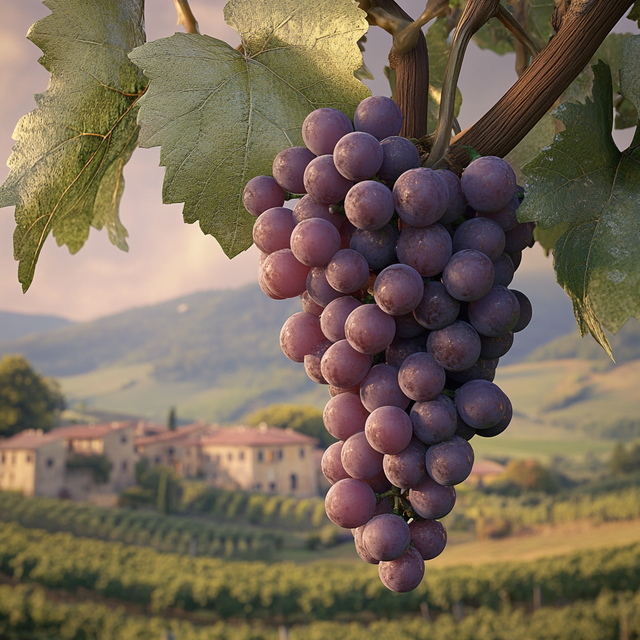
Castellaccio Chianti Classico Lama dell'Araldo 2024 is Sangiovese from the estate's high, organically farmed vineyards. Castellaccio picks by hand, ferments with wild yeasts in concrete, then ages its wines in 25-hectoliter casks, tonneaux, or untoasted Burgundy barrels, depending on the cuvée. Concrete and old, untoasted wood keep the focus on fruit and stone rather than oak spice. In the estate's house style, expect sour cherry, red currant, wild strawberry, dried violet, and crushed rock, with fine-grained tannins, saline lift, and a crisp, mineral finish. The 2024 Chianti Classico harvest was cool and wet, with rain every few days through September and a long, slow ripening that held acidity high and kept alcohol moderate. This is an elevated expression of Chianti Classico.
The People
Davide Bottai is the fourth generation of his family to make wine at Castellaccio. For most of its history the estate sold its grapes in bulk, and its mountain fruit disappeared into other people's blends. The shift began before Davide took the lead: in 2013, at his grandfather's urging, the family converted the vineyards to organic farming. Davide has since pushed the estate toward small, site-specific bottlings, separating individual slopes into their own wines, some drawn from a single tonneau, and reviving older Tuscan habits such as Lennino, a Sangiovese blended with skin-macerated Trebbiano and Malvasia. Producers like this, working Chianti Classico's highest ground with organic farming and a light hand in the cellar, are where the region's most exciting wines are coming from right now.
Food Pairing
High-altitude Sangiovese with this much acidity wants food on the table. Chicken liver crostini with capers and a splash of vin santo gives the acidity richness to slice through. Ribollita made with lacinato kale, cannellini beans, and day-old bread, finished with a thread of new olive oil, matches the wine's earthy, rustic side. A blistered wood-oven margherita lines up tomato acidity with wine acidity, and grilled fennel sausages over white beans meet the fine tannin. Serve it lightly chilled. Open it on a Tuesday with whatever comes off the grill.
We ship wine to most states with a $100 minimum order for shipping. We don't ship spirits nor beer.
Weather shipping advisory: Orders placed during times of extreme heat or extreme cold will be held for no charge until more favorable weather returns.
Tuscany is one of Italy’s most iconic wine regions, anchored by historic regions like Chianti and Montalcino, where Sangiovese thrives in clay-limestone soils and varying elevations. Chianti Classico produces medium-bodied, savory reds, while Montalcino’s warmer, drier conditions give rise to the powerful and long-lived Brunello. Along the Tuscan coast, regions like Bolgheri emerged in the late 20th century with the rise of Super Tuscans—often blends of international varieties like Cabernet Sauvignon and Merlot grown in marine-influenced soils. While overwhelmingly known for red wines, Tuscany is also home to great classic whites grown in San Gimignano and modern whites often made with French grape varieties.
Italy - Tuscany

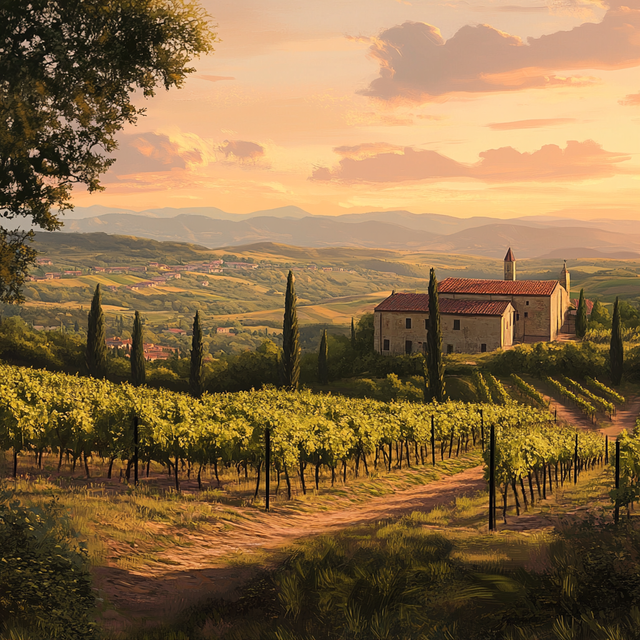
Sangiovese is Italy’s most widely planted red grape and the backbone of many of the country’s most renowned wines, including Chianti Classico, Brunello di Montalcino, and Vino Nobile di Montepulciano. Its name likely derives from the Latin “sanguis Jovis,” or “blood of Jupiter,” hinting at its ancient Roman roots. While native to central Italy, particularly Tuscany, it is also grown in regions like Umbria, Emilia-Romagna, and even scattered sites abroad. Sangiovese is known for its high acidity, firm tannins, and bright red fruit character, often showing notes of sour cherry, dried herbs, and earthy spice. Its structure and versatility make it a natural match for food and a compelling lens through which to explore regional terroirs.