

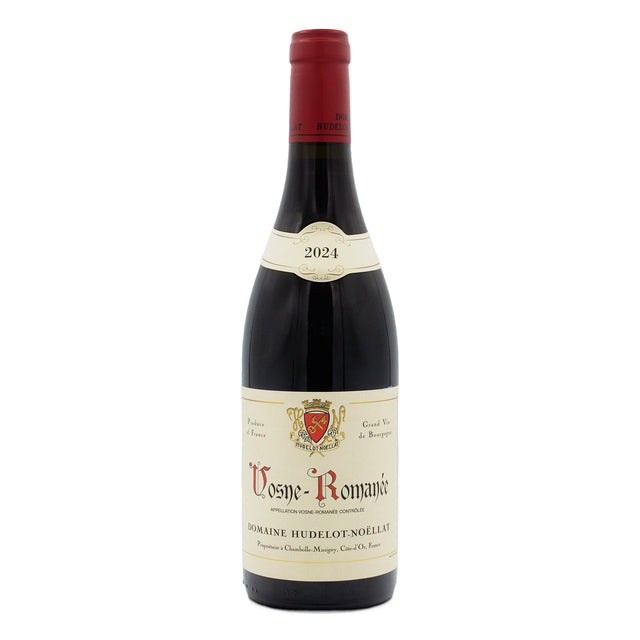
Hudelot-Noellat Vosne-Romanée 2024
We have 2 in stock (Inventory is live and accurate)
The Land
Vosne-Romanée village wine is often treated as a distant cousin of the grand crus above it, but Hudelot-Noëllat's comes largely from a single parcel just below Les Suchots, one of the commune's most sought-after premiers crus. In recent vintages the blend has been about 85 percent Les Basses Maizières and 15 percent Les Vigneux, filled out with some young-vine premier cru fruit. Vosne is the commune of Romanée-Conti, La Tâche, and Richebourg, and its clay and limestone soils give its reds more depth and spice than Chambolle to the north. The deeper ground of the lower slope adds density, which is why this Vosne-Romanée red wine tends to run darker and firmer than the domaine's other village bottlings.
The Wine
Hudelot-Noëllat Vosne-Romanée 2024 is 100 percent Pinot Noir, predominantly destemmed with the berries kept whole and fermented in cement tanks over two to three weeks. It then spends about 18 months in barrel, mostly from the cooper Cavin with some Cadus, in the domaine's cold cellar. In 2024, Pinot Noir growers in Vosne, Vougeot, and Nuits-Saint-Georges lost 50 to 90 percent of their crop to a cold, wet flowering and relentless mildew, and potential alcohol was low enough that chaptalization was nearly universal. One writer who tasted the domaine's 2024s from barrel found well-judged extraction and noted that Cavin's barrels, with their faint sweetness, suited the vintage's lower ripeness. In past vintages this wine has shown poached plum, black cherry, spice, and a tea-like edge, with a sweet core and a firmer finish than the Chambolle. Expect a leaner, fresher frame in 2024.
The People
Alain Hudelot founded the domaine in 1962, working parcels from his father in Vougeot. It changed shape in the 1970s, when his wife, Odile Noëllat, granddaughter of the Vosne-Romanée grower Charles Noëllat, brought her family's vines into the estate. Those parcels took the domaine into Vosne in a serious way, with Richebourg, Romanée-Saint-Vivant, and the premiers crus Les Suchots, Les Beaumonts, and Les Malconsorts. The joined names on the label record that marriage. Today the couple's grandson, Charles van Canneyt, runs the estate, and the Vosne holdings remain its center of gravity. This village wine, grown within sight of the family's premier cru rows, is the most direct line back to what Odile brought to the domaine.
Food Pairing
This is a red for a proper dinner. Pan-roasted duck breast with a plum and star anise glaze picks up the wine's dark fruit and spice, and the acidity trims the fat. Coq au vin braised with lardons, pearl onions, and cremini mushrooms is a Côte de Nuits classic for a reason: the sauce's depth meets the wine's earthier side. Beef tenderloin with a cracked black pepper crust and shallot pan sauce works because the firm finish holds up to the meat. Close with aged Comté, whose nutty, salty crystals sharpen the fruit. Open it on a Saturday when the cooking takes all afternoon.
We ship wine to most states with a $100 minimum order for shipping. We don't ship spirits nor beer.
Weather shipping advisory: Orders placed during times of extreme heat or extreme cold will be held for no charge until more favorable weather returns.
Burgundy, in eastern France, encompasses several subregions, but it is the Côte d'Or that is home to many of the world's most expensive and revered wines. The region, primarily a single east-facing slope, has mixed limestone soils that vary dramatically from village to village and even vineyard to vineyard. White wines, crafted from Chardonnay, range from rich and opulent to lean and intensely mineral, while Pinot Noir produces silky, perfumed red wines of exceptional finesse and complexity. Centuries of winemaking tradition have resulted in every plot being meticulously recognized and scrutinized, making the Côte d'Or a true capital of terroir.
Burgundy - Cote d'Or

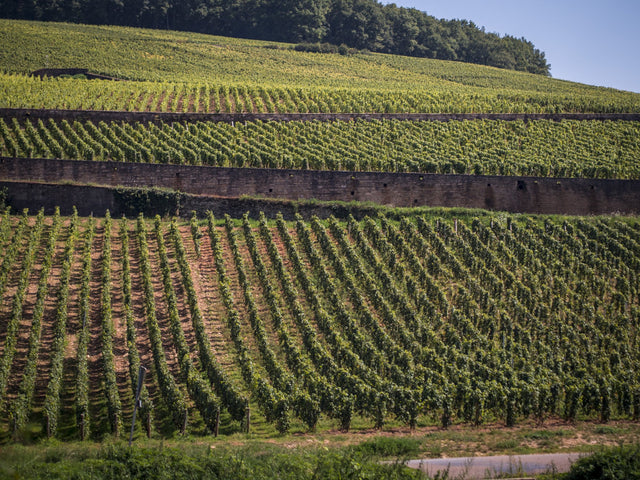
Pinot Noir is a thin-skinned, notoriously difficult-to-grow, low-yielding grape that finds its ancestral home in Burgundy, France, where it produces some of the world's most elegant and nuanced wines. While Burgundy remains its spiritual heartland, Pinot Noir has since traveled the globe, finding success in other cooler climates, notably in California, Oregon, New Zealand, and Germany. This grape is a challenge for any grower, as it requires specific conditions to show its best, and yet the wines it produces are capable of such a captivating and singular character.