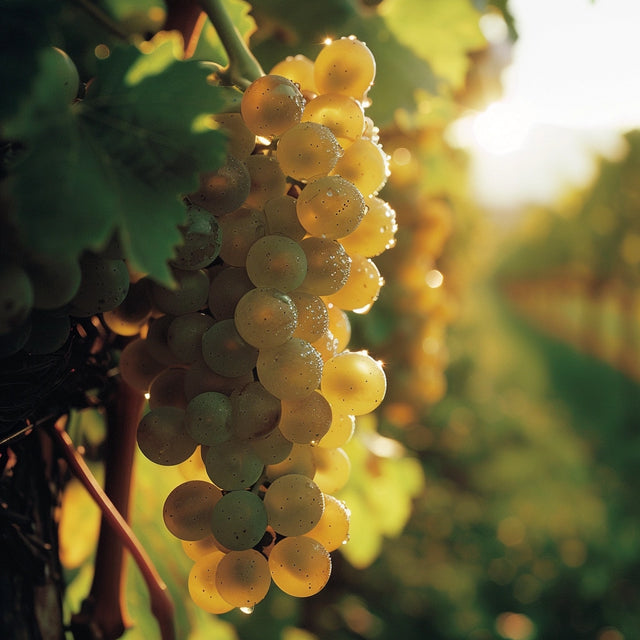


Aldo Conterno “Bussiador” Langhe Bianco 2023
We have 10 in stock (Inventory is live and accurate)
The Land
This is Chardonnay from the most famous Barolo hill in Monforte d'Alba. Bussiador comes from parcels inside the Bussia cru, on the eastern slope of the Romirasco hill and the northwestern side of Bussia Soprana, the same amphitheater that gives Poderi Aldo Conterno its Granbussia and Romirasco Barolos. The estate's vineyards sit around 400 meters above sea level, facing south-southwest, on compact gray-brown sandy layers alternating with white and bluish calcareous marls rich in calcium carbonate and iron. Those marls are why a Langhe Chardonnay from Bussia reads as stony and taut rather than broad: the limestone keeps acidity locked in even when Piedmont summers run hot, and the altitude buys cool nights before an early September harvest.
The Wine
Aldo Conterno Bussiador Langhe Bianco 2023 is 100% Chardonnay from several parcels in Bussia, hand-harvested with selection in the vineyard during the first ten days of September. The must spends three to four days in stainless steel, and once fermentation starts it moves into barrel to finish at 20 to 24°C. The wine is then racked and returned to wood for a few more months before bottling. Batonnage was cut back over the years because the wine had turned too buttery, and the shift shows: the oak was chosen for neutrality, so it frames rather than flavors. Expect white peach, ripe apricot, orange peel and a whiff of cinnamon and vanilla, then dense yellow fruit tightened by sage, bay laurel and a saline, chalky streak, finishing long and creamy. The 2023 season brought a hot, dry August broken by heavy rain in the Langhe in late August and early September, which suits a variety picked before the deluge.
The People
Aldo Conterno almost became a California winemaker. Born in 1931, the second son of Giacomo Conterno, he left Italy in 1954 intending to start a winery in Napa with an uncle's help, was drafted into the US Army, served in Korea, and came home to Monforte. Aldo first made Chardonnay in Bussia in 1982 and sold it as bulk wine for nearly a decade while he studied how the site behaved; the first bottles were released with the 1991 vintage. The estate reports no chemical treatments in its vineyards since 1995. After Aldo's death in 2012, his sons Franco, Stefano and Giacomo carried the work forward, and Bussiador remains the estate's only white.
Food Pairing
Make tajarin with butter and shaved white truffle: the wine's creamy texture meets the butter while its acidity cuts through the egg-rich pasta. Roast a chicken over potatoes with sage and lemon; the herbal streak in the wine echoes the sage, and the oak frame stands up to crisp skin. Try veal vitello tonnato, where the salinity of the wine meets capers and tuna mayonnaise. Or pan-sear scallops in brown butter with hazelnuts from the Langhe. This is the bottle to open when the Barolo is still too young and you want Bussia on the table tonight.
We ship wine to most states with a $100 minimum order for shipping. We don't ship spirits nor beer.
Weather shipping advisory: Orders placed during times of extreme heat or extreme cold will be held for no charge until more favorable weather returns.
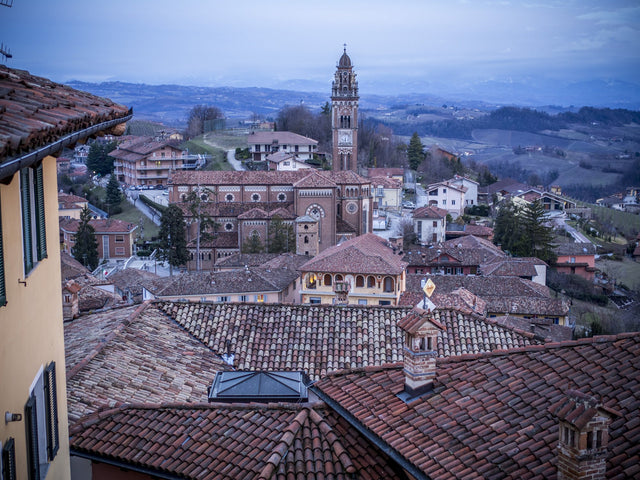
Piedmont, framed by the Alps in northwestern Italy, is a land of rolling hills and carefully cultivated vineyards. The continental climate, with its cold winters and warm summers, creates prime conditions for the Nebbiolo grape, which dominates much of the region's red wine production. The Langhe area is home to Barolo and Barbaresco, structured red wines known for their complex aromas, firm tannins, and aging potential. While Nebbiolo is the dominant grape of Piedmont, the region also makes interesting white wines like those from Arneis and Timorasso. Alto Piemonte is a separate region in the north with its own distinctive expressions of Nebbiolo, alongside other red grape varietals.
Italy - Piedmont

Chardonnay, one of the world's most versatile and beloved white grape varieties, showcases a remarkable spectrum of styles, from the lean, mineral-driven expressions of Chablis in France to the rich, buttery, and oak-aged versions from California's Napa Valley. Its adaptability extends to cooler climates such as Burgundy, where it achieves elegance and complexity, and to regions like Australia's Yarra Valley, known for producing vibrant and fruit-forward renditions. This grape's ability to reflect its terroir, coupled with winemaking techniques, results in a wide array of profiles, including unoaked, crisp varieties with apple and citrus notes, to full-bodied wines with tropical fruit flavors and creamy textures.