Aldo Conterno Langhe Rosso Quartetto 2022
We have 9 in stock (Inventory is live and accurate)
The Land
Pinot Nero, Merlot, and Syrah are not grapes anyone associates with Barolo country, yet all three grow in one of its great crus. Every grape in Quartetto comes from Aldo Conterno's vineyards in Bussia, the Monforte d'Alba cru where the estate works only its own fruit on calcareous clay at around 400 meters, with steep slopes facing south and southwest. Because the wine is labeled Langhe Rosso DOC rather than Barolo, the estate is free to plant and blend outside the Nebbiolo rulebook. Bussia supplies the Piedmontese frame either way: the clay builds dark fruit and density, the limestone adds grip, and the elevation holds onto acidity even when a season runs hot.
The Wine
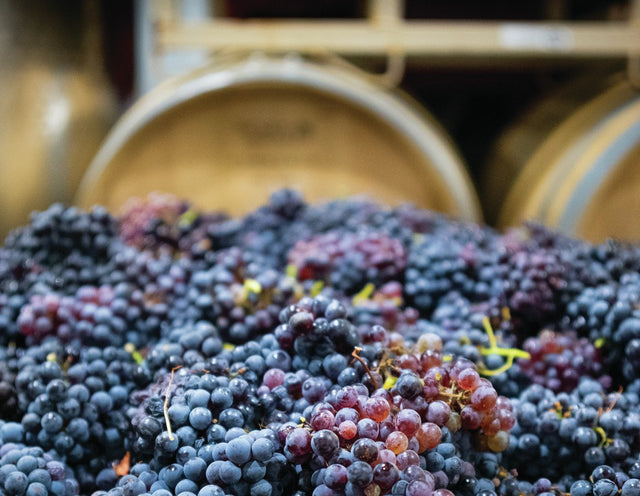
Aldo Conterno Langhe Rosso Quartetto 2022 is a four-grape red wine from Piedmont: about 40 percent Nebbiolo, with Pinot Nero, Merlot, and Syrah making up the rest in roughly equal parts. The grapes are picked by hand, each variety is vinified separately, and the assembled blend spends 9 to 12 months in French barriques. The barrique ties the four together with polished tannin. The recipe has shifted since the first release in 1997, when Barbera and Cabernet Sauvignon were part of the mix. Expect ripe dark cherry, blackberry, and plum, violet and sandalwood, then cumin, tar, and an iron edge, followed by a dense, juicy palate of dark berries and licorice, lively acidity, and a long finish. The 2022 season was among the driest and hottest Piedmont has recorded, the harvest came early, and this vintage carries a full 15 percent alcohol.
The People
Poderi Aldo Conterno has been in the hands of Aldo's three sons since the late 1990s, well before their father's death in 2012, and each took a lane. Franco, born in 1965, is a trained enologist and the estate's public face. Stefano, born in 1968 and also an enologist, has made the wines. Giacomo, born in 1973, studied accountancy and runs the vineyards. In the early 2000s the brothers cut already low yields and replaced rotary fermenters with horizontal tanks fitted with a paddle, which extract more gently. Stefano, the most experimental of the three, created Quartetto, and it remains the one wine where the family works outside Barolo's rules. All of the vineyards are in Bussia, and all are farmed organically.
Food Pairing
Quartetto has the dark fruit and density for grilled and braised meat. Grill a thick ribeye over hardwood and finish it with rosemary and flaky salt; the char meets the tar and the tannin trims the fat. Short ribs braised in red wine with carrots and served over soft polenta play off the Merlot's plush middle. Lamb burgers with cumin, feta, and grilled red onion pick up the spice from the Syrah, and a sausage and mushroom pizza with fontina works on a casual night because the acidity cuts the cheese. This is the red to open when a crowd wants something big from Piedmont without a Barolo price tag.
We ship wine to most states with a $100 minimum order for shipping. We don't ship spirits nor beer.
Weather shipping advisory: Orders placed during times of extreme heat or extreme cold will be held for no charge until more favorable weather returns.
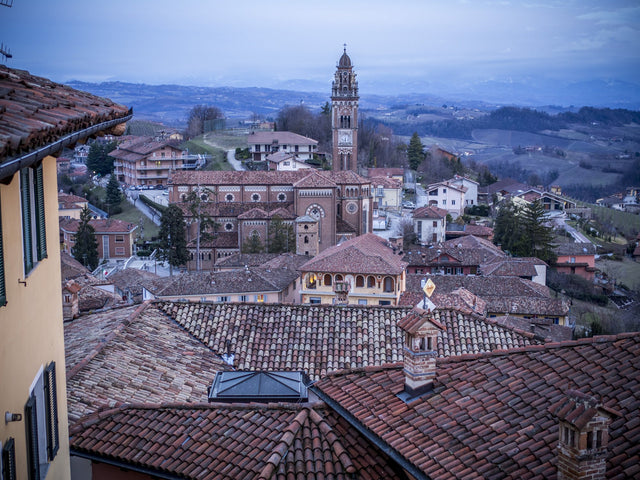
Piedmont, framed by the Alps in northwestern Italy, is a land of rolling hills and carefully cultivated vineyards. The continental climate, with its cold winters and warm summers, creates prime conditions for the Nebbiolo grape, which dominates much of the region's red wine production. The Langhe area is home to Barolo and Barbaresco, structured red wines known for their complex aromas, firm tannins, and aging potential. While Nebbiolo is the dominant grape of Piedmont, the region also makes interesting white wines like those from Arneis and Timorasso. Alto Piemonte is a separate region in the north with its own distinctive expressions of Nebbiolo, alongside other red grape varietals.
Italy - Piedmont

Red Blend is a catch-all for wines built from more than one red grape, a practice as old as winemaking itself and central to many of the world's most celebrated bottles. Blending lets a producer balance what a single variety cannot deliver alone: structure from one grape, perfume from another, flesh and color from a third. Bordeaux, Châteauneuf-du-Pape, Rioja, and the old field blends of Portugal's Douro all fall under this umbrella, as do countless wines from growers who care more about the finished wine than about varietal labeling. Expect enormous range in style, from light and herbal to dense and age-worthy, depending entirely on origin and intent.