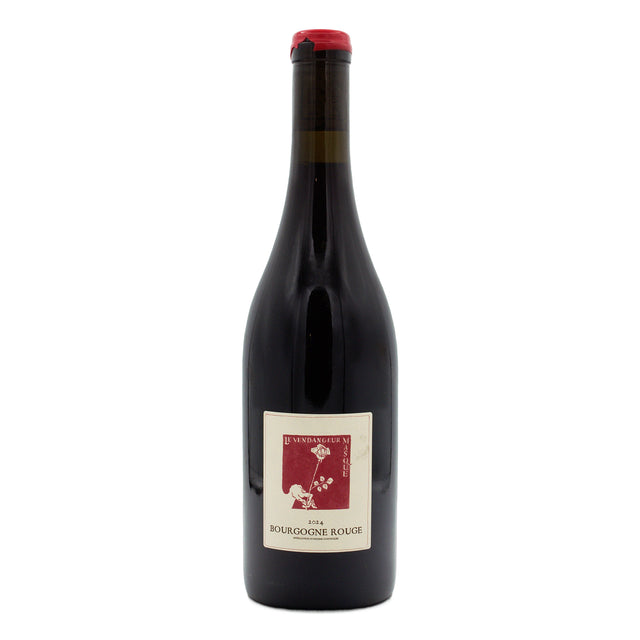
Alice & Olivier De Moor Bourgogne Rouge 2024
We have 0 in stock (Inventory is live and accurate)
The Land
Pinot Noir from the Mâconnais is the exception, not the rule. Burgundy's southern district is planted overwhelmingly to Chardonnay, with Gamay and Pinot Noir in the minority, so a red Bourgogne from here is uncommon. For 2024, the De Moors sourced the Pinot Noir for this wine from the same Mâconnais grower who supplied their Vendangeur Masqué Bourgogne Chardonnay, which makes it a négoce wine rather than one from their own vines in Courgis. The Mâconnais lies far south of the Yonne, warmer, with limestone and clay hills. In 2024 it fared better than the north: harvest started about a week ahead of the Côte de Beaune, and the white appellations were hit less severely. Pinot Noir, everywhere in Burgundy, took the brunt of the year's mildew.
The Wine
Alice & Olivier De Moor Bourgogne Rouge 2024 is 100 percent Pinot Noir from organically farmed fruit, fermented as whole clusters in a partly carbonic fermentation lasting two to three weeks, then aged for a year in used barrels and bottled unfiltered. Whole bunches and an intracellular start keep the fruit bright and the aromatics lifted, while older barrels add texture without oak flavor. Expect red cherry, raspberry, and pomegranate, a light frame with fine, chalky tannin, and a juicy finish with a peppery, stem-driven edge. The vintage suits this style. Rain ran from October 2023 into February 2025 with few breaks, mildew arrived early, cold at flowering caused heavy coulure, and many growers called 2024 the most difficult season in a generation. Most producers reported yields of 20 to 30 hectoliters per hectare. The reds that survived came out pure and juicy, with lighter density than 2022 or 2023.
The People
Alice and Olivier De Moor were farming organically in the Chablis district before it was common. Herbicides were gone from their vines by the late 1990s; they converted fully in 2005, a rarity in their area at the time, and were certified in 2008. Along the way they rebuilt the cellar around gentle handling: small harvest boxes from 2002 so grapes are not crushed under their own weight, a high-ceilinged winery in 2007 so wine moves by gravity, a pneumatic press in 2008. That discipline carries into their négoce label, Le Vendangeur Masqué, which buys only organic grapes. In 2024 it brought red fruit from a friend in the Mâconnais into a cellar better known for Chablis and Aligoté.
Food Pairing
Œufs en meurette, eggs poached in red wine with lardons, mushrooms, and pearl onions, is the Burgundian classic, and the bright acidity keeps the sauce from feeling heavy. Grilled salmon over lentils du Puy with a mustard vinaigrette works because the fine tannin never fights the fish. Duck rillettes on toasted country bread with quick-pickled shallots let the juicy fruit cut the fat. For a weeknight, try a mushroom pizza with fontina and thyme. Give it twenty minutes in the fridge and pour it with whatever is coming out of the oven.
We ship wine to most states with a $100 minimum order for shipping. We don't ship spirits nor beer.
Weather shipping advisory: Orders placed during times of extreme heat or extreme cold will be held for no charge until more favorable weather returns.
Burgundy, in eastern France, encompasses several subregions, but it is the Côte d'Or that is home to many of the world's most expensive and revered wines. The region, primarily a single east-facing slope, has mixed limestone soils that vary dramatically from village to village and even vineyard to vineyard. White wines, crafted from Chardonnay, range from rich and opulent to lean and intensely mineral, while Pinot Noir produces silky, perfumed red wines of exceptional finesse and complexity. Centuries of winemaking tradition have resulted in every plot being meticulously recognized and scrutinized, making the Côte d'Or a true capital of terroir.
Burgundy - Cote d'Or

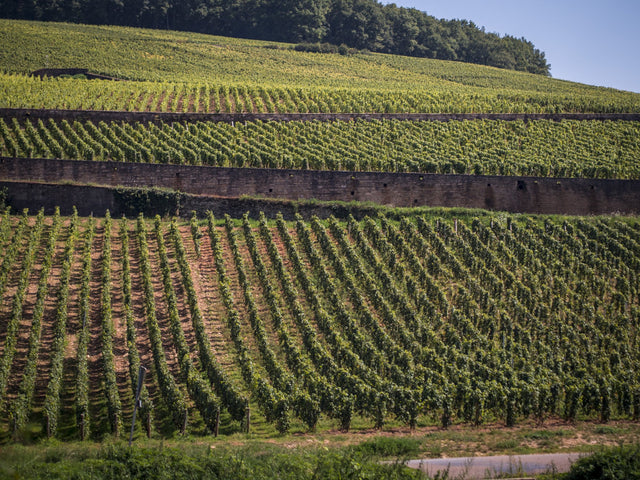
Pinot Noir is a thin-skinned, notoriously difficult-to-grow, low-yielding grape that finds its ancestral home in Burgundy, France, where it produces some of the world's most elegant and nuanced wines. While Burgundy remains its spiritual heartland, Pinot Noir has since traveled the globe, finding success in other cooler climates, notably in California, Oregon, New Zealand, and Germany. This grape is a challenge for any grower, as it requires specific conditions to show its best, and yet the wines it produces are capable of such a captivating and singular character.