Alice & Olivier De Moor Chablis Coteau de Rosette 2023
We have 0 in stock (Inventory is live and accurate)
The Land
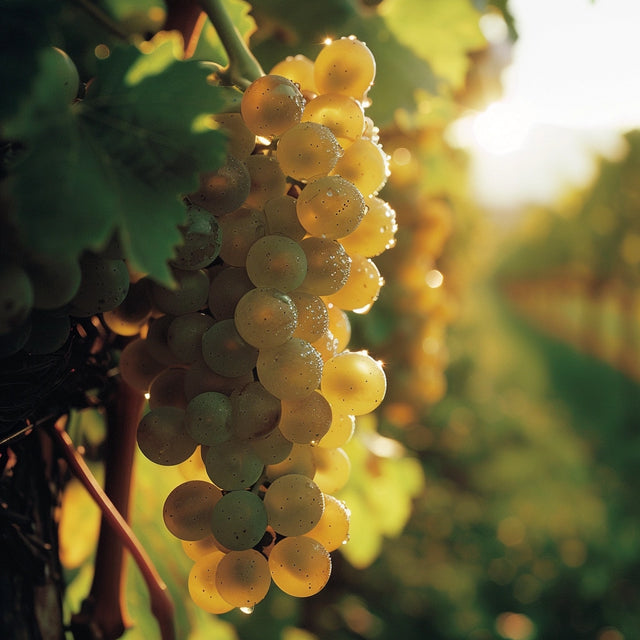
Rosette is the parcel Alice and Olivier De Moor consider their best, and it is the hardest one they farm. The single hectare faces southeast on a steep hillside in their home village of Courgis, about 7 kilometers southwest of Chablis, with slopes reaching roughly 40 percent. The soil changes as you climb: dense clay with some limestone at the bottom, Kimmeridgian marl through the middle, and thin, eroded material over Portlandian rock at the top. Topsoil is shallow, the fruit ripens slowly, and the slope is often picked in two passes. That spread of soils is why this Chablis white wine carries both the saline cut of Kimmeridgian marl and more layered depth than a typical village bottling.
The Wine
Alice & Olivier De Moor Chablis Coteau de Rosette 2023 is 100 percent Chardonnay from vines the couple planted themselves, beginning in 1989. The fruit is hand-harvested and destemmed, fermented spontaneously, and taken through malolactic. It then spends a year on its lees in a 500-liter demi-muid and a second year in foudre, with no bâtonnage, and is bottled unfiltered with a small sulfur addition. Two years in large wood build texture without oak flavor. In past vintages Rosette has opened slowly from a compact, pure nose into layered depth, carried by juicy acidity to a long finish; expect lemon zest, green apple, white flowers, and crushed stone. Chablis in 2023 saw minor spring frost, a smooth flowering, and scattered summer rain before a September heatwave pushed sugars quickly. Harvest across Chablis began around September 11. The vines set a very large crop, and the best wines came from growers who kept yields in check.
The People
The De Moor story begins with planting, not buying. In 1989 Olivier, working alongside his uncle, planted three Chablis plots in Courgis: Bel-Air, Clardy, and Rosette. He and Alice, both Dijon-trained enologists, held jobs elsewhere until 1994, when they harvested their first crop, kept only a small part of it, leased extra vines in Saint-Bris, and left salaried work. For years they tended other growers' vines to pay the bills. Their aging cellar sits under the house that belonged to Olivier's grandparents. Herbicides were gone by the late 1990s, organic farming followed in 2005, and certification in 2008. More than three decades on, Rosette remains the hillside they planted themselves and the one they rate above the rest.
Food Pairing
Steam mussels with shallots, white wine, and a fistful of parsley, and the wine's salinity locks onto the broth. Sole meunière with boiled potatoes works because the acidity cuts the brown butter while the fish stays delicate. Crab cakes with a sharp remoulade play the wine's citrus against the sweetness of the crab. Or keep it local: a ripe wedge of Chaource, the creamy cow's milk cheese made a short drive from Chablis, with a baguette. This is the Chablis to open when dinner is a pot of something steaming and the bread is still warm.
We ship wine to most states with a $100 minimum order for shipping. We don't ship spirits nor beer.
Weather shipping advisory: Orders placed during times of extreme heat or extreme cold will be held for no charge until more favorable weather returns.
Chablis, a village and region in northern Burgundy, is all about Chardonnay, making arguably the best unoaked versions in the world. The wines here are defined by a crisp acidity and a strong mineral backbone. The area's unique Kimmeridgian limestone soil, packed with marine fossils, gives the wines a distinctive flinty edge. One slope overlooking the village holds the seven Grand Cru vineyards, while Premier Cru sites are scattered along both sides of the Sereine River, which cuts the region in half. Chablis is the ultimate destination for highly mineral white wines.
Burgundy - Chablis


Chardonnay, one of the world's most versatile and beloved white grape varieties, showcases a remarkable spectrum of styles, from the lean, mineral-driven expressions of Chablis in France to the rich, buttery, and oak-aged versions from California's Napa Valley. Its adaptability extends to cooler climates such as Burgundy, where it achieves elegance and complexity, and to regions like Australia's Yarra Valley, known for producing vibrant and fruit-forward renditions. This grape's ability to reflect its terroir, coupled with winemaking techniques, results in a wide array of profiles, including unoaked, crisp varieties with apple and citrus notes, to full-bodied wines with tropical fruit flavors and creamy textures.