Skip to content
Welcome to Colorado's best wine shop!

Barone di di Villagrande Etna Rosso Contrada Monte Ilice 2022

$70.00

We have 9 in stock (Inventory is live and accurate)

Select Title

We ship wine to most states with a $100 minimum order for shipping. We don't ship spirits nor beer.

Weather shipping advisory: Orders placed during times of extreme heat or extreme cold will be held for no charge until more favorable weather returns.

0 / 0
The Producer

Barone di Villagrande


The Terroir

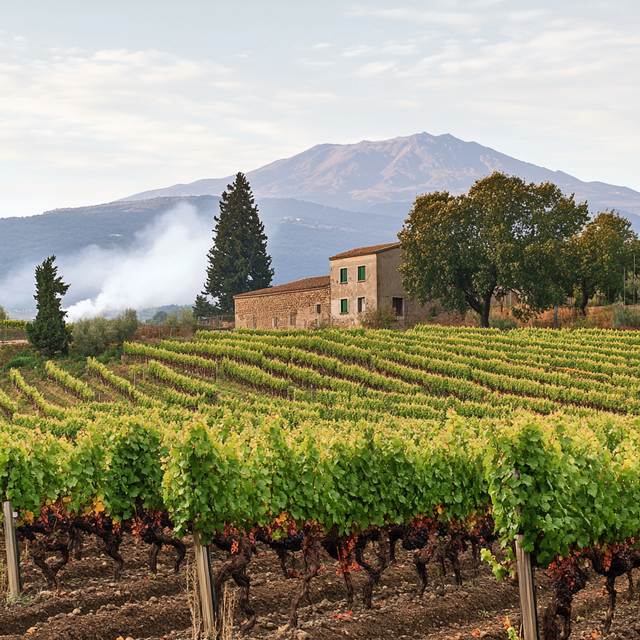
Milo is the only commune on Etna allowed to put “Superiore” on an Etna Bianco label, and Barone di Villagrande sits in the middle of it. Its 18 hectares sit at about 700 meters in Contrada Villagrande on the eastern slope, facing Taormina and the Ionian Sea, below the Valle del Bove. An ancient landslide out of that basin mixed lava of different ages into the soil rich in iron, copper, potassium and magnesium, with no calcium. A sea breeze dries the vines after rain. August days of 86 to 97°F fall to 54 to 59°F at night, and October harvest mornings can approach freezing; that swing keeps Carricante’s acidity intact.

Vines are trained in Guyot and spurred cordon on terraces, staked with Etnean chestnut poles (the same wood as the red-wine barrels) and fertilized only with donkey manure from a neighboring farm. The family also works about 2 hectares on Salina in the Aeolian Islands, plus Nerello on Monte Ilice (about 900 meters, 60% slopes, tilled by hand) and Monte Arso (1,012 meters).

The Nicolosi family has farmed Milo since the early 1700s, when the Bishop of Catania handed them a lava-covered tract on Etna’s eastern face to make productive. In 1727 Emperor Charles VI, as King of Naples, made Don Carmelo Nicolosi Baron of Villagrande. In 1869 Paolo Nicolosi built a new cellar and began vinifying white and red grapes separately, the step toward Etna Bianco Superiore as its own wine. A century later Carlo Nicolosi Asmundo, a professor of enology at the University of Catania, wrote the rules for Etna DOC, approved in 1968 as Sicily’s first.

Marco Nicolosi, the tenth generation, is winemaker and production manager and runs the estate with his wife, Barbara Liuzzo. The vineyards have been farmed organically since 1989, though Marco leaves the logo off the labels. He calls himself “the wine assistant” and says, “We don’t add anything into the wine.” He trialed American oak, French oak and cherry before settling on chestnut, which holds Nerello Mascalese’s unstable color better and, to him, tastes more of the mountain.

Etna

  • Etna Bianco Superiore About 90% Carricante with other native Etna whites from the Milo vineyards at 700 meters, raised in stainless steel and bottled about 10 months after harvest. Floral, saline and tight when young; the family says it hits its stride at five or six years and holds to about ten.
  • Etna Bianco Superiore Contrada Villagrande The single-contrada white: about 90% Carricante from the home vineyard, raised in wood rather than steel. Fuller and more textured than the standard Superiore, with the same flinty, saline core.
  • Etna Rosato 90% Nerello Mascalese and 10% Carricante, pressed with the skins removed immediately and no maceration. The Carricante keeps it pale, light and sharp; built for the table, not the pool.
  • Etna Rosso 80% Nerello Mascalese, 20% Nerello Cappuccio and Nerello Mantellato, aged about one year in chestnut barrels. Red berries, herbs and black pepper; the chestnut softens the tannin without the vanilla of oak.
  • Etna Rosso Contrada Villagrande The same Nerello blend from the home contrada, aged two years in chestnut barrels made from the estate’s own forest. Wood tannin and volcanic, balsamic depth over a fresh frame; the cellar-worthy red.
  • Etna Rosso Contrada Monte Ilice Nerello Mascalese with other old native varieties from the extinct Ilice crater on Etna’s south side, at up to 900 meters on slopes averaging 60%, all worked by hand. Raised in chestnut; pale ruby, floral and red-fruited.
  • Etna Rosso Contrada Monte Arso Nerello Mascalese and Nerello Cappuccio from 6 hectares of vines at 1,012 meters in the commune of Nicolosi, where the eastern slope turns south. The estate’s highest red.

Salina

About 2 hectares of espalier-trained vines on Salina’s eastern side, cooled at night by air off the 961-meter Fossa delle Felci.

  • Salina Bianco 40% Malvasia delle Lipari with 60% Rucignola, Catarratto and other island natives, IGT Salina. Dry Malvasia with real aromatic lift, and the bottle to pour with Salina capers.
  • Malvasia delle Lipari Passito Malvasia delle Lipari and Corinto Nero, picked in September and sun-dried on cane racks; the most raisined berries are added to the fermenting must. Sweet, herbal and golden-raisined.

Sicily, Italy’s largest island, blends ancient wine traditions with a fresh wave of modern creativity. Its star red grape, Nero d’Avola, thrives in the island’s warm, sun-soaked climate, producing intensely flavored wines with dark fruit and a hint of savory spice. Along the western coast lies the historic heartland of Marsala, a fortified wine prized for both sweet and dry styles. Rising above the island’s varied landscapes is Mount Etna, an active volcano whose mineral-rich soils and cooler elevations result in elegantly structured reds and nuanced whites. From coast to crater, Sicily’s wine culture is as diverse and vibrant as the region itself.

Italy - Sicily


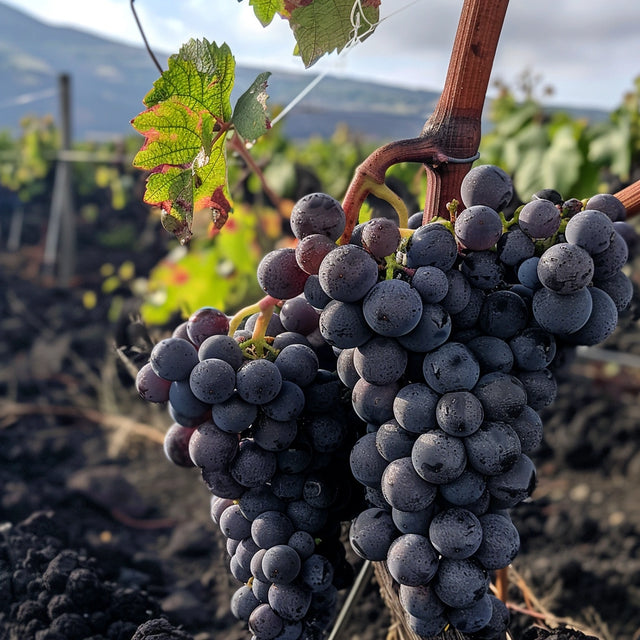
Named for its pale color and hometown of Mascali, Nerello Mascalese is a rising star in the wine world. Indigenous to Mount Etna, it was overlooked for decades until recently the world has taken notice of the elegant yet powerfully minerally wines produced on the volcanic slopes. Think halfway between Pinot Noir and Nebbiolo.
Nerello Mascalese