

Benjamin Leroux Saint-Romain Sous le Chateau 2024
We have 2 in stock (Inventory is live and accurate)
The Land
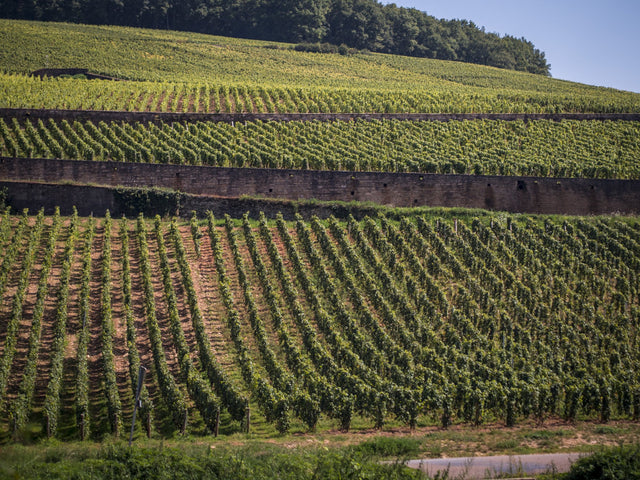
Saint-Romain is not really on the Côte at all. The village sits in a side valley behind Auxey-Duresses, with vineyards at 300 to 400 meters, higher than almost anywhere else in the Côte d'Or. Altitude kept it in the shadows: it earned its own appellation only in 1947, it has no premiers crus, and in cool years the grapes struggled to ripen. Warmer decades have flipped the script, and the extra height now delivers the freshness that lower sites lose. Sous le Château is the best-known vineyard in the appellation, set high on rocky limestone right below where the village castle once stood. It is one of the cooler sites Benjamin Leroux works with, and that shows in a Saint-Romain white wine built on cut rather than weight.
The Wine
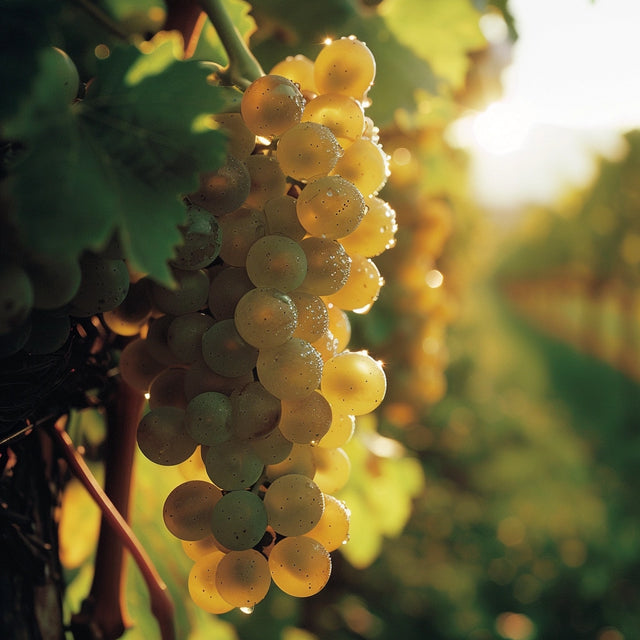
Benjamin Leroux Saint-Romain Sous le Château 2024 is 100% Chardonnay, farmed organically. The clusters are pressed whole, the juice is lightly settled, and it moves to foudres and barrels for an indigenous-yeast fermentation. It ages 12 months before bottling, fined or filtered only if needed. Whole-cluster pressing gives a cleaner, finer juice, and the mix of large and standard wood adds texture without much oak flavor. The 2024 vintage was a wet, mildew-plagued year, yet Chardonnay came through far better than Pinot Noir, with white yields down roughly 10 to 40 percent and harvest alcohols often just 12 to 12.5 percent. The whites are taut, with chiseled citrus and a firm acid backbone. Expect lemon, green apple and white flowers, a lean, chalky middle, and a saline finish that lingers on crushed stone.
The People
Benjamin Leroux started his own house in 2007 with no family vineyards to inherit. Born in Beaune and trained during fifteen vintages as manager of Domaine du Comte Armand, he built his business the hard way: buying grapes, never finished wine, from growers across the Côte d'Or whose farming he trusts, and vinifying everything himself in Beaune. His first vintages were made in a 19th-century winery shared with other growers. That model, now running alongside a small domaine of his own, gives him access to sites he could never have bought. Fruit is harvested and sorted by hand, each tank is tasted daily, and the wines are raised in whatever suits them: traditional barrels, larger foudres, amphorae, or glass globes.
Food Pairing
Lean, high-acid white Burgundy wants food with a little butter or salt to push against. Pan-fried trout amandine, finished with brown butter, lemon, and toasted almonds, is a natural match; the acidity slices the butter and the nuttiness echoes the barrel work. Steam mussels with shallots, white wine, and parsley and let the saline finish meet the brine. Warm gougères with a few slices of aged Comté show off the wine's chalky grip. Chicken paillard with capers and lemon keeps things light on a weeknight. This is the white to pour when you want Côte de Beaune precision without opening a Meursault.
We ship wine to most states with a $100 minimum order for shipping. We don't ship spirits nor beer.
Weather shipping advisory: Orders placed during times of extreme heat or extreme cold will be held for no charge until more favorable weather returns.
Burgundy, in eastern France, encompasses several subregions, but it is the Côte d'Or that is home to many of the world's most expensive and revered wines. The region, primarily a single east-facing slope, has mixed limestone soils that vary dramatically from village to village and even vineyard to vineyard. White wines, crafted from Chardonnay, range from rich and opulent to lean and intensely mineral, while Pinot Noir produces silky, perfumed red wines of exceptional finesse and complexity. Centuries of winemaking tradition have resulted in every plot being meticulously recognized and scrutinized, making the Côte d'Or a true capital of terroir.
Burgundy - Cote d'Or

Chardonnay, one of the world's most versatile and beloved white grape varieties, showcases a remarkable spectrum of styles, from the lean, mineral-driven expressions of Chablis in France to the rich, buttery, and oak-aged versions from California's Napa Valley. Its adaptability extends to cooler climates such as Burgundy, where it achieves elegance and complexity, and to regions like Australia's Yarra Valley, known for producing vibrant and fruit-forward renditions. This grape's ability to reflect its terroir, coupled with winemaking techniques, results in a wide array of profiles, including unoaked, crisp varieties with apple and citrus notes, to full-bodied wines with tropical fruit flavors and creamy textures.