

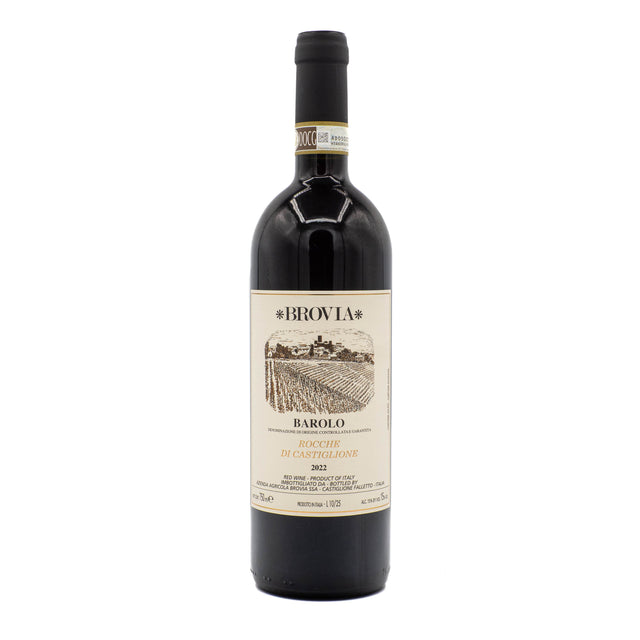
Brovia Barolo Rocche di Castiglione 2022
We have 6 in stock (Inventory is live and accurate)
Summer Shipping Advisory: Orders may be temporarily held during periods of extreme heat to ensure wine arrives in optimal condition.
View current shipping weather map →
The Land
Barolo is usually described as a landscape of clay and marl, which makes Rocche di Castiglione the outlier. The soil here is sand, loose and free-draining, on the steep eastern face of the Castiglione Falletto ridge where the hill falls away toward the valley. Brovia farms 1.5 hectares in the middle of it, planted in 1966, facing southeast at 350 meters. That exposure does more work than it sounds like it should. The vines take morning sun and are out of the hardest afternoon heat, so sugar accumulates slowly and the aromatics survive. Sand holds almost no water, which forces the roots deep. That combination is why Rocche has always been the perfumed, fine-boned cru of Castiglione Falletto rather than the muscular one.
The Wine
100% Nebbiolo, hand-picked, fermented with indigenous yeasts in old glass-lined concrete with roughly a month of maceration on the skins, then 18 months in large Slavonian botti and another 18 in French oak casks, bottled unfiltered. Long skin contact in neutral vessels, with no small barrels anywhere in the cellar, lets the sand speak instead of the wood. 2022 was the driest Piedmontese season in roughly seven decades, about 311 millimeters of rain between April and October, with yields down 20 to 45 percent. Rain at the end of September brought the balance back, pulling potential alcohol down by nearly a degree. Rose petal, red cherry, crushed mint and white pepper over a chalky core, with silky, finely drawn tannins and a long mineral finish.
The People
Brovia was founded in 1863 and went quiet in 1932 when Antonio Brovia died young. Production restarted in 1953 under his sons Giacinto, an enologist, and Raffaele, an agronomist, which is where the old Fratelli Brovia label comes from. Their daughters Elena and Cristina joined in the 1980s, Elena in the vineyards and Cristina in the cellar. When the barrique and short-maceration wave swept Barolo in the 1990s, Brovia did not move, and kept long macerations and large casks through the entire modernist period. Alex Sanchez, Elena's husband, arrived from Barcelona in 2001 having never tasted Barolo, learned the cellar under Giacinto, and runs the estate with her today. The vineyards are farmed organically, yields are held around 35 to 40 hectoliters per hectare against a legal ceiling of 54, and only vines over 40 years old go into the cru bottlings.
Food Pairing
This is the Brovia cru for savory rather than heavy. Tajarin with butter, sage and a shaving of white truffle is the classic, and the reason the wine exists. Veal braised slowly with rosemary and a little stock meets the silky tannin without fighting it. Roast duck breast, skin crisped, with a cherry and balsamic reduction picks up the red fruit head-on. Or a wedge of aged Castelmagno with walnuts and honey, the salt sharpening that chalky finish. Rocche di Castiglione is the bottle for the night you want Barolo perfume more than Barolo muscle.
We ship wine to most states with a $100 minimum order for shipping. We don't ship spirits nor beer.
Weather shipping advisory: Orders placed during times of extreme heat or extreme cold will be held for no charge until more favorable weather returns.
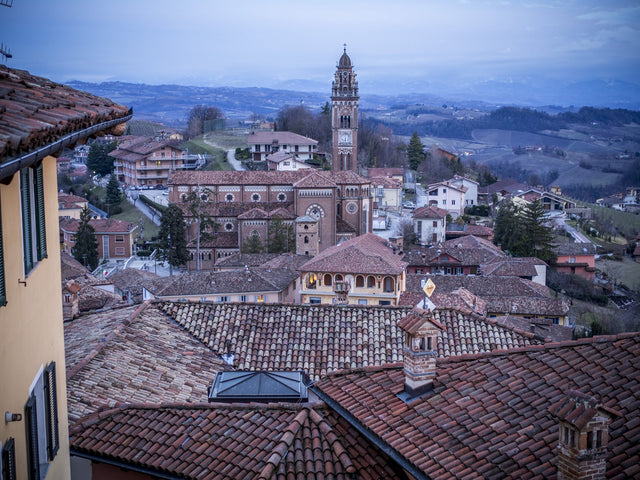
Piedmont, framed by the Alps in northwestern Italy, is a land of rolling hills and carefully cultivated vineyards. The continental climate, with its cold winters and warm summers, creates prime conditions for the Nebbiolo grape, which dominates much of the region's red wine production. The Langhe area is home to Barolo and Barbaresco, structured red wines known for their complex aromas, firm tannins, and aging potential. While Nebbiolo is the dominant grape of Piedmont, the region also makes interesting white wines like those from Arneis and Timorasso. Alto Piemonte is a separate region in the north with its own distinctive expressions of Nebbiolo, alongside other red grape varietals.
Italy - Piedmont

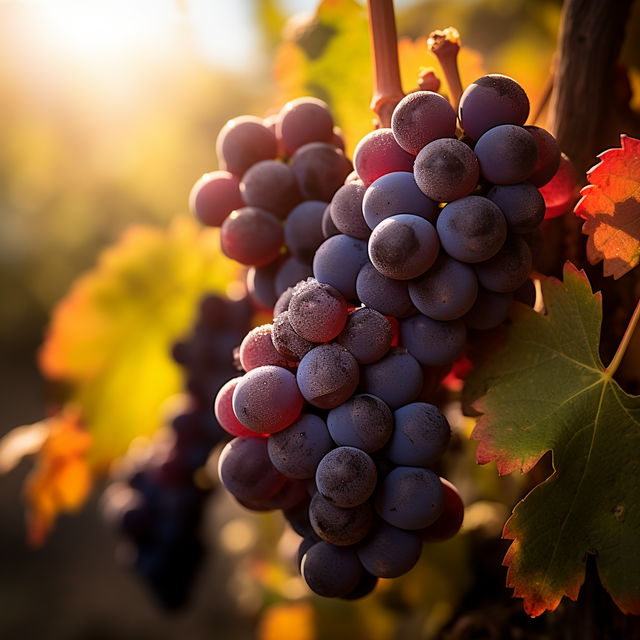
Nebbiolo, a prestigious grape from Italy's Piedmont region, is celebrated for its profound truffle and rose aromas, complex flavors, and ability to age gracefully thanks to strong acidity and tannins, producing the renowned Barolo and Barbaresco wines.