

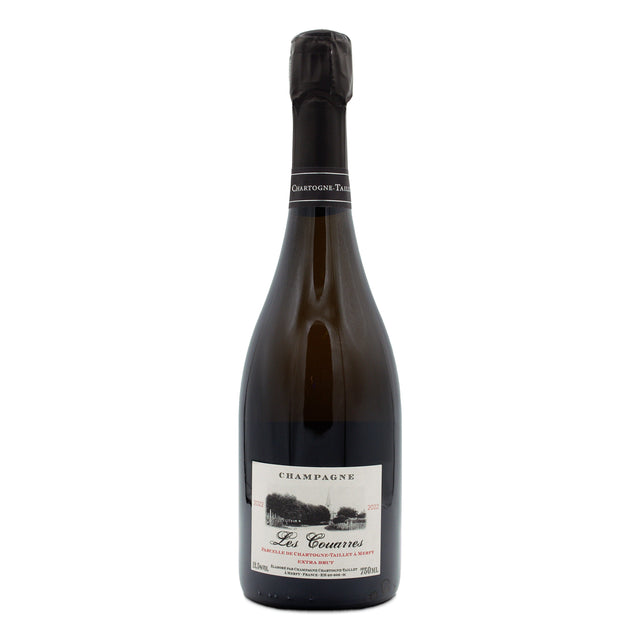
Chartogne-Taillet Cuvée Couarres Extra Brut 2022
We have 2 in stock (Inventory is live and accurate)
The Land
Merfy is not where most people look for great Champagne. The village sits on the southern slope of the Massif de Saint-Thierry, about 8 km northwest of Reims, on sand and clay over chalk. Its wines reached royal tables from the 9th century. Les Couarres lies in the middle of the village vineyards on a gentle south-facing slope, with the richest, most water-retentive soil the Chartognes farm: one parcel on tuffeau, the other on deep clay. That clay is a gift in hot, dry years like 2022 because the vines never run short of water, though it leaves the site more exposed to spring frost. In the glass the clay shows up as breadth and weight, a Champagne with real shoulders.
The Wine
Les Couarres combines Chardonnay and Pinot Noir from vines planted between 1970 and 2009. Each parcel ferments on its own with native yeasts from the estate's vineyards, and malolactic happens naturally. Because this wine is prone to oxidation, Alexandre Chartogne ages it in two- to three-year-old barrels in the coolest corner of the cellar and keeps them topped up. It is bottled Extra Brut, and this 2022 was disgorged in February 2026. The 2022 season was long, sunny and healthy, with minimal frost, hail or disease, and the Comité Champagne set yields at 12,000 kg/ha, the highest in more than a decade. Expect plum, citrus confit, lemon oil, marzipan and spice over a broad, plush texture, with a tighter, more reductive edge than usual that the estate ties to the clay. Give it air now or a few more years in the cellar.
The People
The Taillet family has grown vines in Merfy since at least the 15th century, and Alexandre Chartogne still keeps the handwritten register of Fiacre Taillet, a forebear born in 1700 who recorded his work and the events of his time. Alexandre took over from his parents, Philippe and Élisabeth, in 2006 and is widely described as a disciple of Anselme Selosse. He moved the estate away from a yield-driven style toward the soil: parcel-by-parcel vinification, plantings of ungrafted vines, horse ploughing to limit compaction, chickens and sheep among the rows, and yearly soil analysis by Claude and Lydia Bourguignon. The farming follows organic practice without certification. Chartogne-Taillet is now the only récoltant-manipulant left in Merfy.
Food Pairing
The clay and barrel work give Les Couarres enough weight for a main course. Roast a pork loin with fennel and apples and spoon over the pan juices: the wine's acidity cuts the fat while the plum and spice meet the caramelized apple. Braise chicken thighs in cream with morels, letting the bubbles scrub the sauce and the marzipan richness echo the mushrooms. For cheese, choose a washed-rind Époisses or Munster, strong enough to stand up to the wine's breadth. This is the Champagne for a Sunday roast, poured in place of the red you would normally open.
We ship wine to most states with a $100 minimum order for shipping. We don't ship spirits nor beer.
Weather shipping advisory: Orders placed during times of extreme heat or extreme cold will be held for no charge until more favorable weather returns.
Champagne is the northernmost major wine region in France, defined by its cool climate, chalky soils, and centuries-old tradition of sparkling wine production. Centered around the towns of Reims and Épernay, the region is divided into key subzones like the Montagne de Reims, Vallée de la Marne, and Côte des Blancs, each favoring different grapes—Pinot Noir, Meunier, and Chardonnay respectively. The region’s signature chalk and limestone soils provide excellent drainage and impart a distinctive mineral character to the wines. While méthode champenoise was refined here in the 17th century, Champagne’s global prestige grew through the 19th and 20th centuries, cementing its role as the benchmark for sparkling wine worldwide.
Champagne

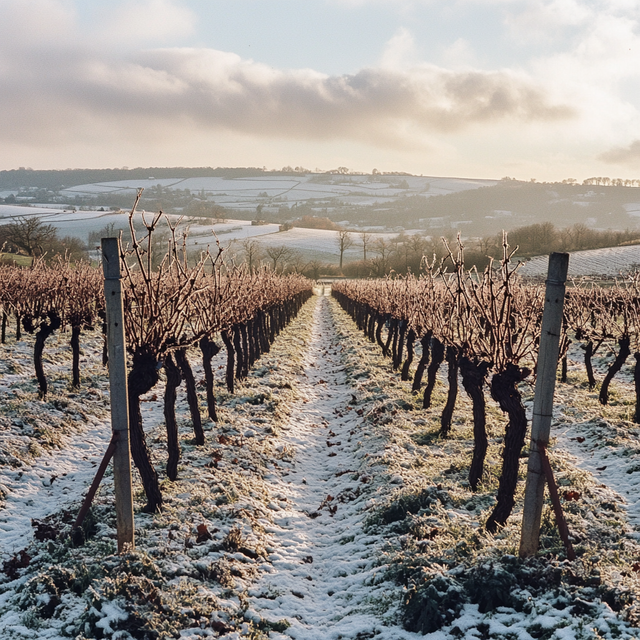
Pinot Noir is a thin-skinned, notoriously difficult-to-grow, low-yielding grape that finds its ancestral home in Burgundy, France, where it produces some of the world's most elegant and nuanced wines. While Burgundy remains its spiritual heartland, Pinot Noir has since traveled the globe, finding success in other cooler climates, notably in California, Oregon, New Zealand, and Germany. This grape is a challenge for any grower, as it requires specific conditions to show its best, and yet the wines it produces are capable of such a captivating and singular character.
Pinot Noir
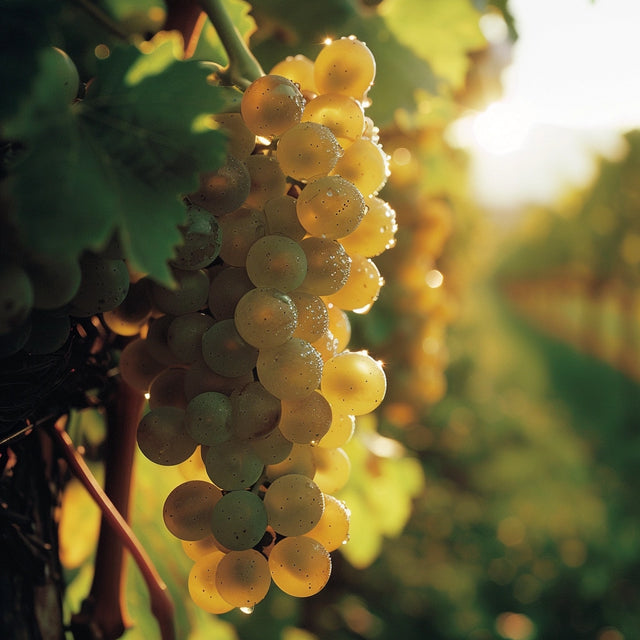
Chardonnay, one of the world's most versatile and beloved white grape varieties, showcases a remarkable spectrum of styles, from the lean, mineral-driven expressions of Chablis in France to the rich, buttery, and oak-aged versions from California's Napa Valley. Its adaptability extends to cooler climates such as Burgundy, where it achieves elegance and complexity, and to regions like Australia's Yarra Valley, known for producing vibrant and fruit-forward renditions. This grape's ability to reflect its terroir, coupled with winemaking techniques, results in a wide array of profiles, including unoaked, crisp varieties with apple and citrus notes, to full-bodied wines with tropical fruit flavors and creamy textures.