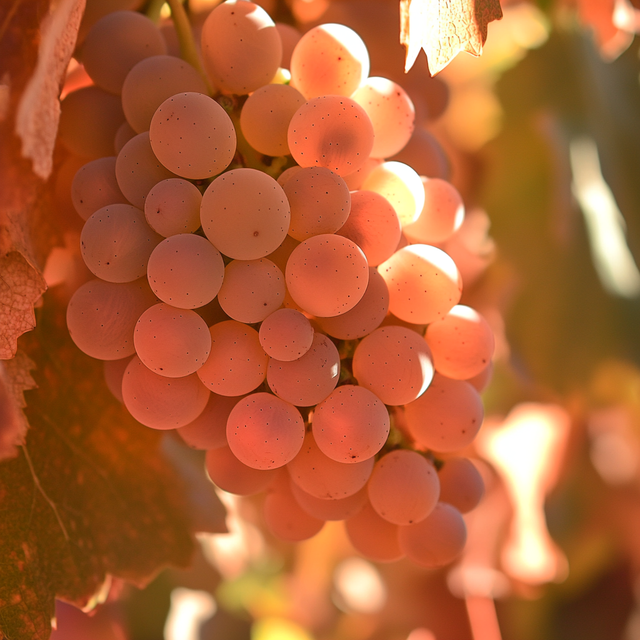
Chateau Carbonnieux Blanc 2003
We have 0 in stock (Inventory is live and accurate)
The Land
2003 is remembered as a red-wine vintage, and for dry whites it was a test of terroir. Château Carbonnieux sits on a raised gravel ridge outside Léognan, in the Pessac-Léognan appellation south of Bordeaux, with Garonne gravel over clay and limestone. In August the heat held above 35°C for eleven days straight, and the sites that came through best were the ones whose soils held water. Carbonnieux grows its Sémillon on the clay-limestone, where the vines have reserves to draw on, and its Sauvignon Blanc on the deeper gravel. The estate is also unusual in its appellation for planting nearly as much white as red, roughly 42 of its 92 hectares.
The Wine
Château Carbonnieux Blanc 2003 is a blend of Sauvignon Blanc and Sémillon. The estate does not publish a sheet for this vintage; in the years it documents from 2006 on, the split runs about 70 to 30 and the wine spends ten months in barrels and larger casks with roughly a quarter new oak. The heat brought the earliest Bordeaux harvest since 1893, and in Pessac-Léognan the white grapes came in from mid-August, with Haut-Brion starting on August 13. Whites from 2003 came out rich and broad rather than taut, and most were built for earlier drinking than usual. At 23 years, expect deep gold color, dried apricot, candied lemon peel, beeswax, toasted hazelnut and a little honey, with the Sémillon now carrying most of the texture. Old bottles vary, and storage history matters more than the label.
The People
The Perrin family bought Carbonnieux in 1956, when the château had stood empty and neglected since the First World War. Marc Perrin, whose family also lost its Algerian vineyards after independence in 1962, began the long rebuild; his son Anthony ran the estate from 1982 and made its white one of the most reliable in Bordeaux. Anthony was one of the figures behind the creation of the Pessac-Léognan appellation in 1987 and presided over the Union des Grands Crus de Bordeaux from 1992 to 1994. In 1988 he brought in Denis Dubourdieu, the Bordeaux university researcher whose work on white wine aroma and oxidation reshaped dry white Bordeaux, and Dubourdieu was still advising when this 2003 was made. Anthony's sons Eric and Philibert, who joined in 1987 and 1992, run the estate today.
Food Pairing
Age turns Carbonnieux Blanc from an oyster wine into a sauce wine. Veal sweetbreads seared golden and finished with morels and cream meet the wine's waxy, nutty side. Chicken tagine with preserved lemon and green olives works because the candied-citrus notes in the glass mirror the lemon, and the estate lists tagine and curry among its own pairings. Lobster in a light curry butter is the splurge version. A wedge of aged Ossau-Iraty, the Basque sheep's cheese, is the simplest. Stand the bottle upright a day, decant gently, serve at 12 degrees and drink it within an hour or two. This is a rare chance to taste what a scorching Bordeaux summer does to white wine two decades on.
We ship wine to most states with a $100 minimum order for shipping. We don't ship spirits nor beer.
Weather shipping advisory: Orders placed during times of extreme heat or extreme cold will be held for no charge until more favorable weather returns.
The Bordeaux wine region, an emblem of vinicultural prestige, is bisected by the Gironde Estuary into the Left and Right Banks, each celebrated for distinct styles shaped by their unique terroirs. The Left Bank is renowned for its structured, Cabernet Sauvignon-led blends, while the Right Bank favors the softer, Merlot-dominated wines. This region is also the birthplace of the luscious, sweet wines of Sauternes. Bordeaux's time-honored blend and winemaking techniques have inspired countless wine regions around the globe, setting a benchmark for the wine world.
Bordeaux

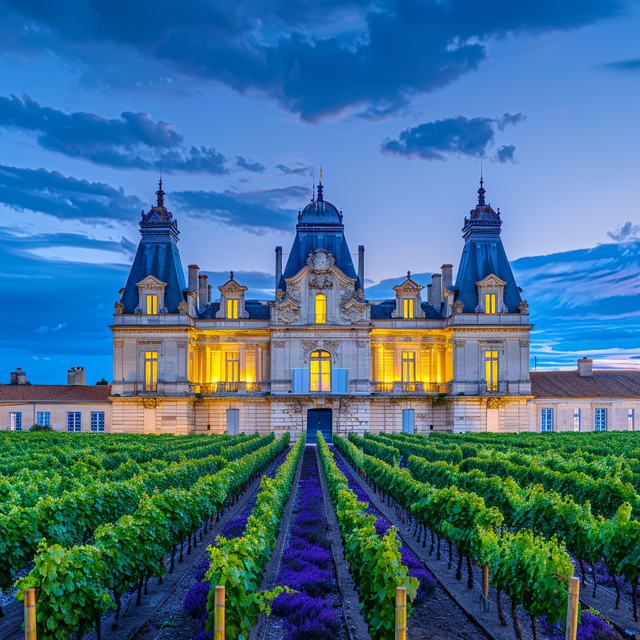
Sauvignon Blanc, a white grape of significant character, is believed to have originated in the Loire Valley of France, where it continues to produce some of the world’s most iconic and expressive examples. This variety has also found success in Bordeaux, where it is often blended with Sémillon, as well as in New Zealand, where it has become a signature grape, and many other regions across the globe. Known for its vibrant acidity and distinctive aromatic profile, Sauvignon Blanc often displays a pronounced greenness, with notes of fresh-cut grass, herbaceousness, and sometimes even a touch of jalapeño, depending on ripeness and region. These traits are often supported by citrus fruits like grapefruit and lime, leading to wines that are both refreshing and complex, ranging from steely and mineral-driven to more tropical and fruit-forward styles.