

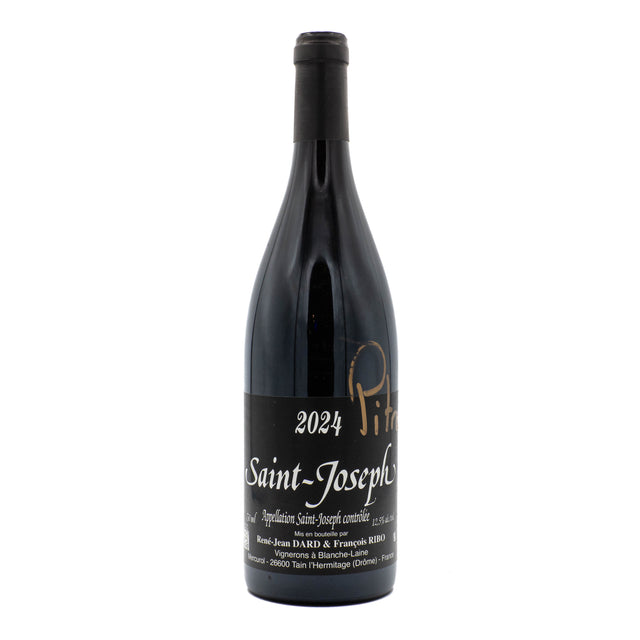
Dard & Ribo Saint-Joseph Rouge Le Pitrou 2024
We have 2 in stock (Inventory is live and accurate)
Summer Shipping Advisory: Orders may be temporarily held during periods of extreme heat to ensure wine arrives in optimal condition.
View current shipping weather map →
The Land
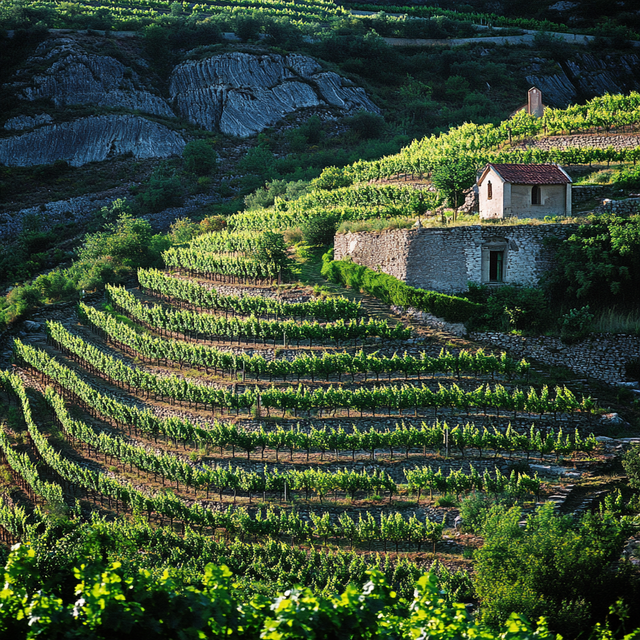
Saint-Joseph stretches roughly 50 kilometers down the right bank of the Rhone, which makes it the longest of the northern appellations and the most uneven. The name still suggests a single hillside, but most of what gets bottled under it comes from flatter extensions added in the 1960s and 1970s. Le Pitrou is not that. The parcel sits above Saint-Jean-de-Muzols, just north of Tournon, on the old core of the appellation, where the slope is steep enough to need terracing. Older survey maps label the site L'Echirol. The soil is sandy decomposed granite, free-draining and poor, which holds yields down on its own and gives Syrah a fine, dusty tannin rather than a dense one. Dard and Ribo farm 0.55 hectares of it.
The Wine
Syrah, from vines planted in the 1940s and 1950s. Fermentation runs 67 percent whole bunch in open wooden vats, worked with pumpovers rather than hard extraction, with two to three weeks of skin contact. Elevage is 10 to 12 months in used 600-liter casks, then bottling unfined and unfiltered with minimal to no added sulfur. Crushed raspberry and mulled red fruit, dried herbs, and a struck-match reduction that clears with half an hour in a decanter. The attack is juicy and round, soaked red cherry through the middle, then the whole-cluster fraction pulls the finish tight and savory. The 2024 season was wet: March rainfall in Crozes-Hermitage hit 182 millimeters against 54 the year before, downy mildew never relented, and cool flowering left uneven fruit set that cut the crop early. August warmth brought the Syrah in sound, and the 2024 reds are lighter and fresher than the 2023s, which suits this address.
The People
Rene-Jean Dard was 15 when his father died and left him about a hectare of Saint-Joseph. He was already making wine, and because his father never added sulfur, he did not learn that sulfur was standard practice until oenology school in Dijon. He found the coursework dull, moved to practical training in Beaune, and met Francois Ribo, from Tain-l'Hermitage across the river, in his late teens. They began working together in 1980 and made the domaine official in 1983, based at Blanche-Laine in Mercurol. The estate runs about 8.5 hectares across seven villages, farmed organically without certification and treated only with copper and sulfur. Saint-Joseph is where it started.
Food Pairing
Lamb is the standard call here and it earns it. Roast a shoulder slowly with garlic, anchovy and rosemary until it pulls apart, and let the sandy tannin work against the rendered fat. Duck breast seared skin-side down with a cherry and black pepper pan sauce mirrors the soaked-cherry fruit directly. Grilled merguez with harissa and a cucumber yogurt gives the herbal, cordite edge something to push against. Serve it around 60 degrees, decant it, and open it on a night you want to pay attention.
We ship wine to most states with a $100 minimum order for shipping. We don't ship spirits nor beer.
Weather shipping advisory: Orders placed during times of extreme heat or extreme cold will be held for no charge until more favorable weather returns.
The Rhône Valley is a diverse and historic wine region, divided into two distinct areas. The Northern Rhône is the birthplace of Syrah, with steep, terraced vineyards that produce some of the world's most revered wines, such as those from Hermitage and Côte-Rôtie. The Southern Rhône is much more expansive, offering a wider range of styles, but typically based around Grenache-based blends, with wines from Châteauneuf-du-Pape known for their complexity and power. While the region is celebrated for its reds, it also produces incredible textured whites, and as a whole the region displays the spectrum of French wine and the incredible differences that can come from small geographic changes.
Rhone Valley

Syrah is a dark-skinned grape of French origin, specifically from the Northern Rhône Valley, where it produces some of the world's most powerful and complex wines. Known as Shiraz in Australia, Syrah is capable of displaying a wide range of aromas and flavors. Cool climate Syrahs tend to express floral notes like violets, along with savory elements like olives, while those grown in warmer climates like Australia are more likely to show black pepper and dark fruit notes such as plum. The grape's versatility allows it to adapt to various climates and soil types, but it maintains its unique characteristics no matter where it is planted.