

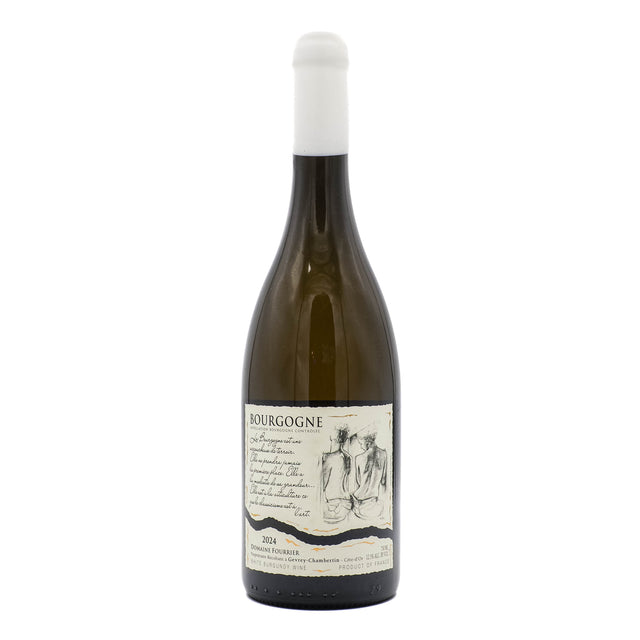
Domaine Fourrier Bourgogne Blanc 2024
We have 2 in stock (Inventory is live and accurate)
Summer Shipping Advisory: Orders may be temporarily held during periods of extreme heat to ensure wine arrives in optimal condition.
View current shipping weather map →
The Land
Fourrier makes almost nothing but Gevrey-Chambertin, so a Bourgogne Blanc is already an anomaly here, and the fruit does not come from Gevrey at all. The Chardonnay grows in Chambolle-Musigny: three parcels totalling roughly one hectare on limestone, clay and sand. That makes this Côte de Nuits Chardonnay, from the commune the world knows for the most perfumed Pinot Noir in Burgundy, sold under a regional label because the appellation rules leave it nowhere else to go. Chambolle's soils are thinner and stonier than Gevrey's, weighted toward limestone rather than clay, which is a large part of why the reds here are lighter and more aromatic. Plant white grapes on the same ground and you get tension instead of weight.
The Wine
100% Chardonnay, fermented and aged entirely in used barrels with no new oak whatsoever, consistent with Jean-Marie Fourrier's house maximum of 20% new across the entire range, grand cru included. He does not rack: the wine sits undisturbed on its fine lees until it goes to tank a couple of months before bottling, and he deliberately retains dissolved CO2 through malolactic, 600 to 700 mg/L at bottling, so the wine protects itself and needs very little sulfur. No fining, no filtration. On 2024, the season was punishing. Rainfall from October 2023 through March ran close to double average, May and June brought 38 days of rain, mildew pressure pushed growers from a normal dozen spray passes to 17 and beyond, and coulure at flowering cut yields hard. Chardonnay caught the better flowering window and its thicker skins resisted the mildew; August then delivered 21 degrees average and only 24 mm of rain, which pulled the fruit to ripeness. The whites came out taut and saline, pH between 3.2 and 3.35, with the kind of acid line Burgundy last showed in 2014.
The People
The domaine began as Fernand Pernot's. His great-nephew Jean-Claude Fourrier joined in 1961 and the two worked side by side for twenty years. Jean-Marie Fourrier took over in 1994 at 23, having apprenticed with Henri Jayer and interned at Domaine Drouhin in Oregon. He farms 10 hectares across Gevrey-Chambertin, Chambolle-Musigny, Morey-Saint-Denis and Vougeot, split into roughly 70 parcels that become about 15 wines. No herbicides since the mid-1990s, replanting only by sélection massale, yields controlled by winter pruning and debudding rather than green harvest, and no July leaf-plucking. The domaine is not certified organic or biodynamic and makes no such claim. His other rule is quiet but consequential: fruit from vines under 30 years old does not go into a domaine bottling at all. It gets sold off.
Food Pairing
Neutral-oak Chardonnay with this much acid is a food wine, not a cocktail wine. Roast chicken with tarragon and a splash of cream stirred into the pan, whole trout with butter and parsley, gougères straight from the oven, or a wedge of young comté and good bread. It also handles a mushroom risotto, where the lees texture meets the starch without either one going slack. If you were planning to save it, do not bother: 2024 whites are built for early drinking as much as for the cellar.
We ship wine to most states with a $100 minimum order for shipping. We don't ship spirits nor beer.
Weather shipping advisory: Orders placed during times of extreme heat or extreme cold will be held for no charge until more favorable weather returns.
Burgundy, in eastern France, encompasses several subregions, but it is the Côte d'Or that is home to many of the world's most expensive and revered wines. The region, primarily a single east-facing slope, has mixed limestone soils that vary dramatically from village to village and even vineyard to vineyard. White wines, crafted from Chardonnay, range from rich and opulent to lean and intensely mineral, while Pinot Noir produces silky, perfumed red wines of exceptional finesse and complexity. Centuries of winemaking tradition have resulted in every plot being meticulously recognized and scrutinized, making the Côte d'Or a true capital of terroir.
Burgundy - Cote d'Or

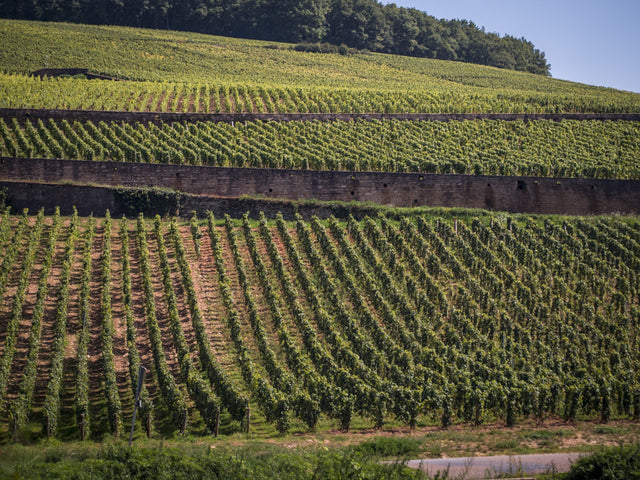
Chardonnay, one of the world's most versatile and beloved white grape varieties, showcases a remarkable spectrum of styles, from the lean, mineral-driven expressions of Chablis in France to the rich, buttery, and oak-aged versions from California's Napa Valley. Its adaptability extends to cooler climates such as Burgundy, where it achieves elegance and complexity, and to regions like Australia's Yarra Valley, known for producing vibrant and fruit-forward renditions. This grape's ability to reflect its terroir, coupled with winemaking techniques, results in a wide array of profiles, including unoaked, crisp varieties with apple and citrus notes, to full-bodied wines with tropical fruit flavors and creamy textures.