

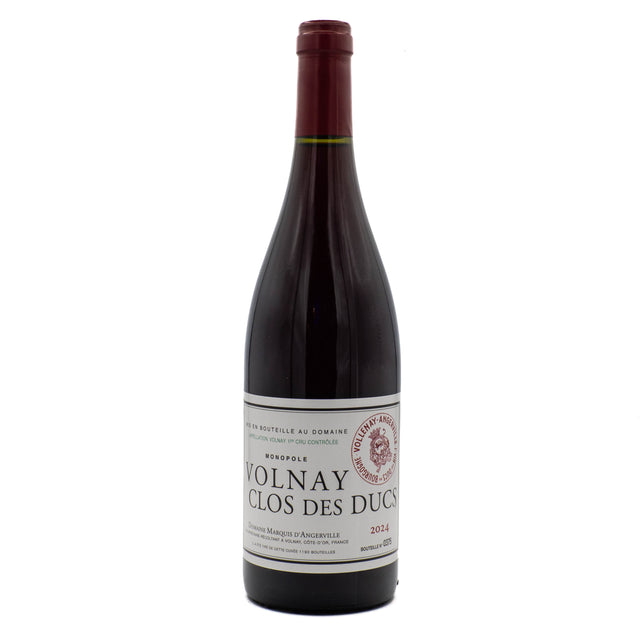
Domaine Marquis d’Angerville Volnay 1er Cru Clos des Ducs 2024
We have 2 in stock (Inventory is live and accurate)
Summer Shipping Advisory: Orders may be temporarily held during periods of extreme heat to ensure wine arrives in optimal condition.
View current shipping weather map →
The Land
Most of Volnay's premier crus are shared among a dozen or more owners. The Clos des Ducs is not. It is a true clos of 2.15 hectares, walled on every side, and the entire vineyard belongs to Domaine Marquis d'Angerville as a monopole. It sits on a steep, east to southeast facing slope, high on the Volnay hillside. The soil is poor, stony limestone, with enough depth and clay in places to carry the vines through dry spells. That combination of altitude, rock and morning sun produces a lifted, perfumed style of Pinot Noir. The walls also mean every bottle of Clos des Ducs comes from one farmer's decisions, a rarity in Burgundy.
The Wine
The Domaine Marquis d'Angerville Volnay 1er Cru Clos des Ducs 2024 is 100% Pinot Noir, fully destemmed and fermented with regular pump-overs, then aged in barrel with a minority of new oak. 2024 was the hardest growing season Guillaume d'Angerville has seen, and he has called it possibly the worst in the estate's history. Rainfall ran close to double normal through winter and spring, flowering was poor for the reds, and mildew pressure lasted for months, leaving Pinot Noir yields well below normal across the Côte de Beaune. What survived, though, is pure. Volnay was one of the Côte de Beaune's successes, with cool, damp conditions favoring finesse. The wine shows tangerine, rhubarb and dark raspberry on the nose, then a light, precise frame of red berries and very fine tannin. This is the domaine's signature wine, and one of the reference points for Volnay red wine.
The People
The Clos des Ducs has a longer paper trail than most Burgundy estates. It appears in records dating to 1507 and takes its name from its early association with the Dukes of Burgundy. In 1804 Baron du Mesnil acquired the clos along with surrounding Volnay parcels, and the estate later passed by inheritance to Sem d'Angerville, whose family has held it since. Sem replanted after phylloxera using his own selection of Pinot Noir, which became known as the Pinot d'Angerville. Today Guillaume d'Angerville, who took over in 2003, runs the estate with his daughter Margot, the next generation, and has farmed the clos biodynamically since beginning the domaine's conversion in 2006.
Food Pairing
Clos des Ducs rewards dishes that let its perfume through. Roast a chicken with tarragon butter under the skin and serve it with pan juices and new potatoes. Seared duck breast with a cherry and port sauce picks up the wine's red fruit and citrus lift. A mushroom and gruyère tart with thyme plays to its savory side, and seared salmon with lentils du Puy and a little bacon shows how well a light-framed red handles richer fish. Lay a bottle or two down for a decade, or open one now with a quiet dinner at home and pay attention as it changes in the glass over an evening.
We ship wine to most states with a $100 minimum order for shipping. We don't ship spirits nor beer.
Weather shipping advisory: Orders placed during times of extreme heat or extreme cold will be held for no charge until more favorable weather returns.
Burgundy, in eastern France, encompasses several subregions, but it is the Côte d'Or that is home to many of the world's most expensive and revered wines. The region, primarily a single east-facing slope, has mixed limestone soils that vary dramatically from village to village and even vineyard to vineyard. White wines, crafted from Chardonnay, range from rich and opulent to lean and intensely mineral, while Pinot Noir produces silky, perfumed red wines of exceptional finesse and complexity. Centuries of winemaking tradition have resulted in every plot being meticulously recognized and scrutinized, making the Côte d'Or a true capital of terroir.
Burgundy - Cote d'Or

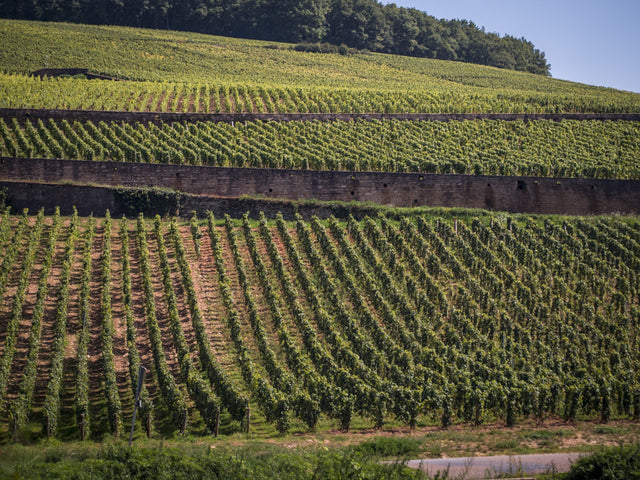
Pinot Noir is a thin-skinned, notoriously difficult-to-grow, low-yielding grape that finds its ancestral home in Burgundy, France, where it produces some of the world's most elegant and nuanced wines. While Burgundy remains its spiritual heartland, Pinot Noir has since traveled the globe, finding success in other cooler climates, notably in California, Oregon, New Zealand, and Germany. This grape is a challenge for any grower, as it requires specific conditions to show its best, and yet the wines it produces are capable of such a captivating and singular character.
Pinot Noir
Certified Biodynamic vineyard farming is a holistic approach building upon organic principles, viewing the vineyard as a self-contained ecosystem influenced by cosmic rhythms. Based on Rudolf Steiner's teachings, it integrates precise agricultural methods with lunar and astrological calendars, using natural preparations from herbs, minerals, and manure to enhance soil and plant health. Certification by organizations like Demeter International requires rigorous inspections to ensure strict compliance. Biodynamic farming seeks not only high-quality wines but also ecological harmony, sustainability, and deeper connections among land, plants, animals, and humans.