

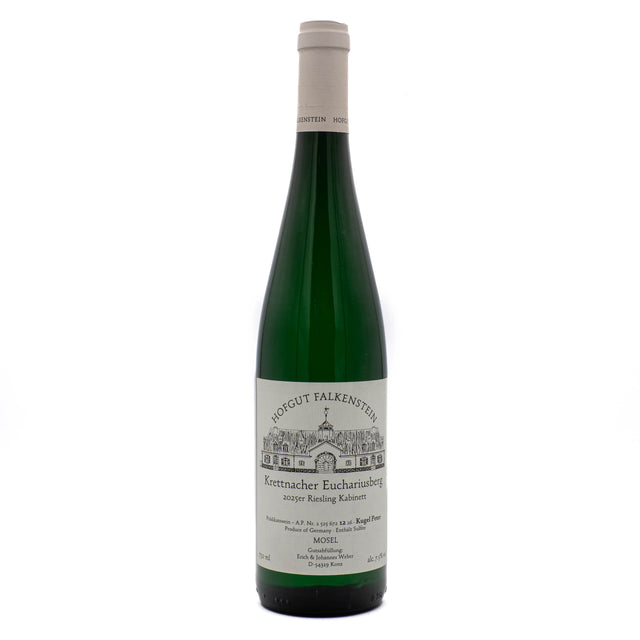
Hofgut Falkenstein Krettnacher Euchariusberg Riesling Kabinett 2025
We have 5 in stock (Inventory is live and accurate)
Summer Shipping Advisory: Orders may be temporarily held during periods of extreme heat to ensure wine arrives in optimal condition.
View current shipping weather map →
The Land
Most of the Saar's famous hillsides face south. The Krettnacher Euchariusberg mostly does not. Its roughly 36 hectares stretch from Obermennig to Krettnach in the Konzer Tälchen, a side valley east of the Saar, and the bulk of the slope faces west to west-southwest, catching the afternoon and evening sun rather than the midday blast. In a cold valley that slower, later warmth stretches the season and keeps acidity high. The soil is deep gray-clayey slate mixed with quartz and quartzite-bearing sandstone, which gives the vines water to draw on in dry spells. Hofgut Falkenstein farms about 2.3 hectares here, and this Riesling from the Saar is as clear a picture of the Tälchen as the estate bottles.
The Wine
The Hofgut Falkenstein Krettnacher Euchariusberg Riesling Kabinett 2025 is the cask the Webers call Kugel Peter, AP 12. As with every wine here, whole bunches are pressed without pumping, the juice settles overnight, and fermentation runs on ambient yeast in an old 1,000-liter Fuder, with no temperature control and nothing added to adjust sugar or acid. The wine is bottled straight off its gross lees. With no trocken or feinherb on the label, this is a Kabinett in the traditional sense, where a touch of residual sugar meets razor Saar acidity and the result reads less sweet than it measures. The 2025 is savory and piney, darker and deeper than the name Kabinett implies, with fresh herbs and spice on the nose and a bright, mouthwatering finish. The Saar harvested early in 2025, starting the first week of September.
The People
Erich Weber is a Krettnach native, and the Euchariusberg sits at the core of what he built at Hofgut Falkenstein alongside his son Johannes. Their farming is where the style starts. Each vine is pruned to one short flat cane to hold yields down. Grasses grow between the rows, and there are no herbicides, systemic fungicides or synthetic fertilizers. The Webers also avoid stripping leaves during warm months, reasoning that exposed bunches sunburn and build thicker skins, which push Riesling toward the petrol character they do not want. Harvest is by hand, parcel by parcel. In the cellar each Fuder is nicknamed for a former owner of the plot it holds, and collectors follow those names from vintage to vintage.
Food Pairing
The savory, piney side of this Kabinett points toward smoke and spice. Spread smoked trout rillettes on dark rye with horseradish crème fraîche and a few dill fronds. Roast a pork loin with apples, onions and caraway, and let the residual sugar pick up the fruit while the acidity handles the fat. Green papaya salad with lime, fish sauce and a little chile is a classic match for Kabinett, the sweetness cooling the heat. Or keep it simple with a plate of Black Forest ham and a soft pretzel with mustard. It is a light enough wine to drink at lunch and serious enough to hold a conversation about at dinner.
We ship wine to most states with a $100 minimum order for shipping. We don't ship spirits nor beer.
Weather shipping advisory: Orders placed during times of extreme heat or extreme cold will be held for no charge until more favorable weather returns.
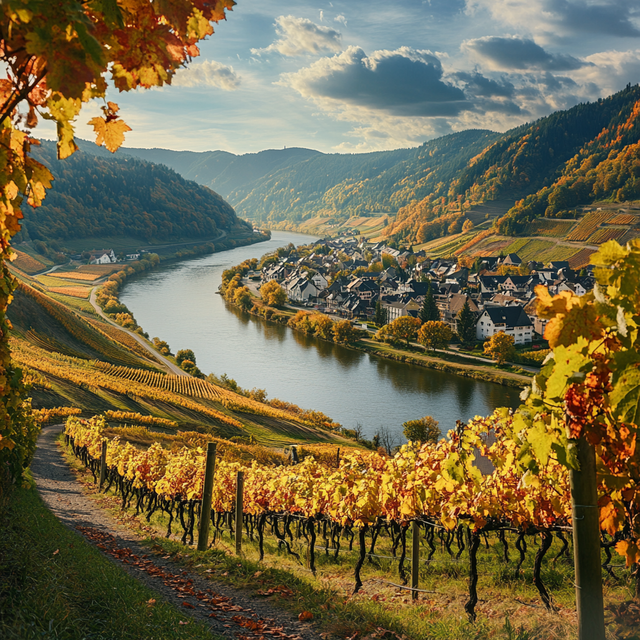
The Mosel, a stunning river valley in Germany, is a region synonymous with Riesling. The area's steep, slate slopes create a unique terroir that imparts a distinct minerality and high acidity to the wines. Mosel Rieslings range from bone dry to intensely sweet, showcasing the grape's versatility and the region's incredible potential for producing complex, age-worthy wines. The wines of the Mosel are known for their aromatic complexity and their incredibly graceful nature, and are a benchmark for all Riesling made throughout the world.
Germany - Mosel

Riesling is a truly noble grape, known for its incredibly high acidity and a flavor profile that can range from bone dry to lusciously sweet. Germany is its heartland, and it's responsible for some of the world's most age-worthy examples, but Riesling also thrives in Austria, where it usually is dry. In Alsace, it takes on a slightly richer texture, while in parts of Australia, like the Clare and Eden Valleys, it displays a uniquely powerful and lime-tinged aromatic profile. This is a grape that has no problem showcasing its origins, and it's a fantastic example of how one variety can show many different expressions, each with its own unique appeal.