

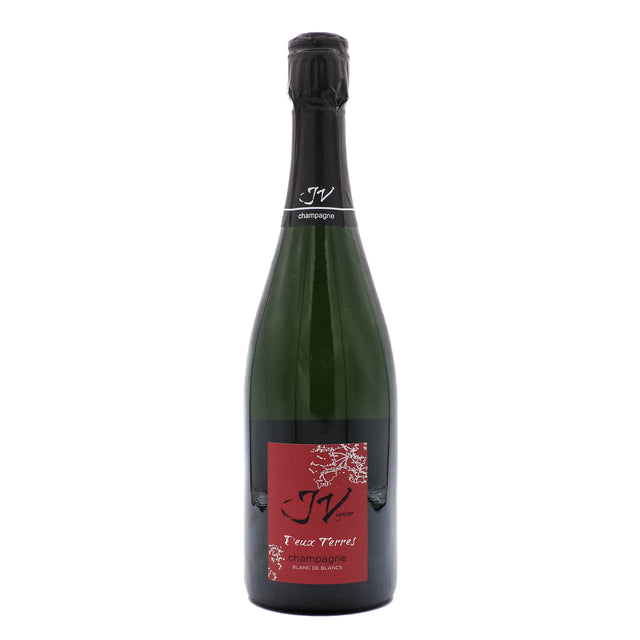
J. Vignier Champagne Deux Terres Blanc de Blancs 2010
We have 4 in stock (Inventory is live and accurate)
Summer Shipping Advisory: Orders may be temporarily held during periods of extreme heat to ensure wine arrives in optimal condition.
View current shipping weather map →
The Land
Two parcels roughly 50 kilometers apart, and the wine is named for the distance between them. Le Bateau sits in Cramant, a grand cru village on the Côte des Blancs, where Cretaceous chalk lies close beneath a thin cap of clay. Les Bercottes sits in the Côte de Sézanne, the warmer, softer, far less famous Chardonnay country to the south, on chalk and marl. The Sézanne vines did not come from a nursery catalogue: they were propagated by sélection massale from cuttings taken in the oldest Cramant parcels, so the two sites hold the same genetic material grown in two different climates. Vines run 50 to 60 years old, on south, southwest and northeast exposures.
The Wine
100% Chardonnay, a declared vintage from a house that declares them rarely. Fermented and aged in stainless steel with no wood at any stage, which is a position rather than an economy: the house holds that steel keeps the fruit and the chalk legible. Full malolactic. Bottled in May and left a minimum of eight years on lees before disgorgement. 11.8% alcohol, 2.8 g/L residual sugar, pH 3.06, so the dosage is close to a rounding error. Citrus and orchard fruit first, then brioche, almond and pastry from the long lees contact, apricot and cinnamon underneath, fine bead, dry close. The 2010 context matters: mid-August delivered two months of rain in three days, rot moved through the vineyards, and growers in the Marne Valley sorted out more than 30% of their Pinot. Chardonnay on the chalk came through it intact. This is a bottle from the corner of the vintage that worked.
The People
Nathalie Vignier is the tenth generation of her family in Champagne and the sixth in Cramant, a line traced to Nicolas Vignier of Bar-sur-Seine in 1530. Her grandfather Paul LeBrun broke with the négociants after the First World War to become one of the first independent growers on the Côte des Blancs, and Frank Schoonmaker brought his wines to the United States. Nathalie ran the family domaine with her brother Jean, then partnered with Sebastian Nickel in 2006 to bottle individual parcels under the J. Vignier label, launching with the 2007 and 2008 harvests. The holding is 16.5 hectares, all Chardonnay, planted between 1950 and 2010: grand cru Cramant, Chouilly and Oiry in the north, 12 hectares in the Côte de Sézanne. No herbicides, no pesticides, ploughed soils, certified sustainable under Viticulture Durable en Champagne, which is not organic certification and should not be read as one. Her working rule, stated plainly: nature decides.
Food Pairing
Eight years on lees means this handles more than an oyster, though oysters on the half shell with nothing but lemon remain the reference point. Push further: scallops seared hard and finished with brown butter, a whole branzino roasted with fennel and olive oil, or aged comté cut thick enough that the crystals still crunch. Gougères straight from the oven if you want the Champagne-country answer. The near-zero dosage and 3.06 pH keep it cutting; the lees give it enough body that it does not vanish under an actual dish.
We ship wine to most states with a $100 minimum order for shipping. We don't ship spirits nor beer.
Weather shipping advisory: Orders placed during times of extreme heat or extreme cold will be held for no charge until more favorable weather returns.
Champagne is the northernmost major wine region in France, defined by its cool climate, chalky soils, and centuries-old tradition of sparkling wine production. Centered around the towns of Reims and Épernay, the region is divided into key subzones like the Montagne de Reims, Vallée de la Marne, and Côte des Blancs, each favoring different grapes—Pinot Noir, Meunier, and Chardonnay respectively. The region’s signature chalk and limestone soils provide excellent drainage and impart a distinctive mineral character to the wines. While méthode champenoise was refined here in the 17th century, Champagne’s global prestige grew through the 19th and 20th centuries, cementing its role as the benchmark for sparkling wine worldwide.
Champagne

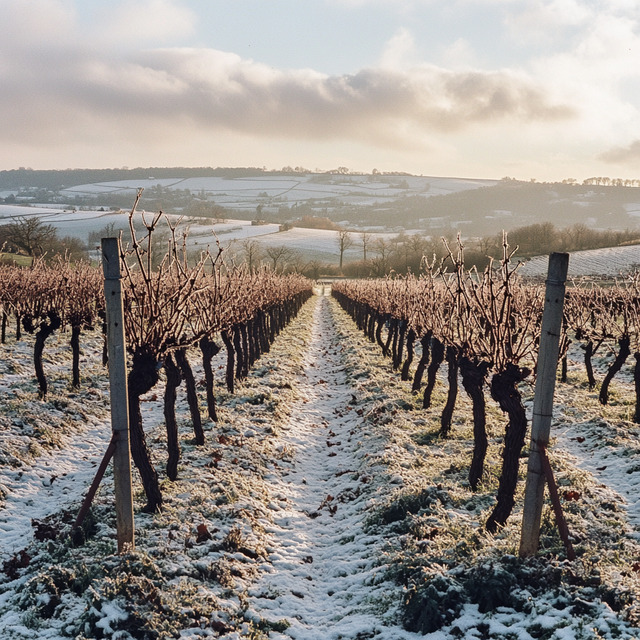
Chardonnay, one of the world's most versatile and beloved white grape varieties, showcases a remarkable spectrum of styles, from the lean, mineral-driven expressions of Chablis in France to the rich, buttery, and oak-aged versions from California's Napa Valley. Its adaptability extends to cooler climates such as Burgundy, where it achieves elegance and complexity, and to regions like Australia's Yarra Valley, known for producing vibrant and fruit-forward renditions. This grape's ability to reflect its terroir, coupled with winemaking techniques, results in a wide array of profiles, including unoaked, crisp varieties with apple and citrus notes, to full-bodied wines with tropical fruit flavors and creamy textures.