

Jade Gross Corza Beoda 2025
We have 4 in stock (Inventory is live and accurate)
Summer Shipping Advisory: Orders may be temporarily held during periods of extreme heat to ensure wine arrives in optimal condition.
View current shipping weather map →
The Land
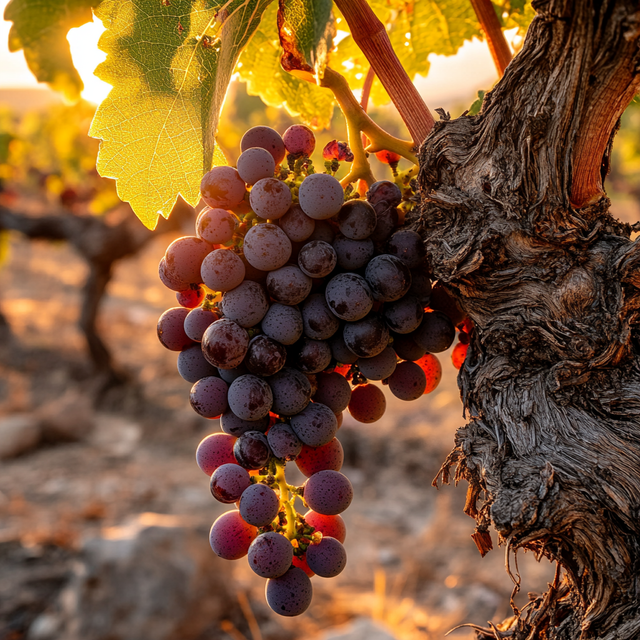
San Vicente de la Sonsierra, where Jade Gross works, is officially Rioja Alta, though it sits north of the Ebro as a tongue of land wedged between two halves of Rioja Alavesa. The fruit for Corza Beoda comes from the Alavesa side: La Cantera, a parcel in Labastida at 600 meters, under the limestone wall of the Sierra de Toloño. The vines are 37-year-old bush vines on clay and limestone. Altitude is the operative fact here. September nights run cold enough that the grapes hold acid while the skins finish ripening, so a wine that lands at 14 percent alcohol still tastes taut rather than warm. This is Rioja that behaves like a mountain red.
The Wine
Two harvests in one bottle, both Tempranillo, both from La Cantera. The 2024 portion was picked by hand on September 29, destemmed to 70 percent, fermented in small open vats with the remaining stems left whole, then aged twelve months in French oak. The 2025 portion came off the same parcel on September 27, went in as whole clusters with nothing destemmed, and saw stainless steel only. Corza Beoda is her laboratory label, where she varies whole-cluster ratios and ferments with press wine instead of free-run juice to study what extra tannin and pigment do to a wine over time. Crunchy red cherry and cranberry, violets, cracked pepper and stem spice, and a dry chalky grip on the finish. 1,890 individually numbered bottles.
The People
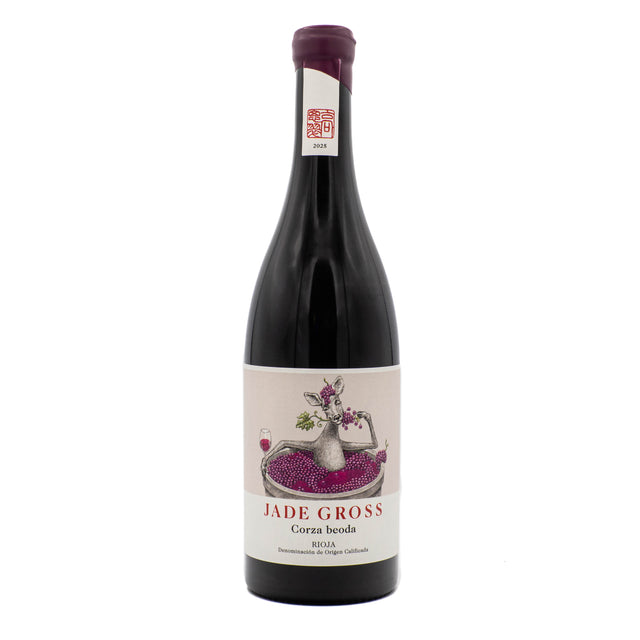
Corza Beoda means drunken roe deer. The name came out of a conversation with Javier Aramburu, the artist who draws all of Jade Gross's labels: she had remarked that roe deer strip the vines exactly when the fruit hits perfect ripeness, and joked that they must get drunk doing it. Aramburu drew a roe deer lounging in a jacuzzi that is actually a fermenter full of grapes. The label suits the wine, because this is the cuvée where Gross gives herself room to be wrong. She came out of a restaurant research kitchen with the habit of asking whether a standard procedure is actually necessary, and Corza Beoda is where she tests the answer: whole-cluster ratios moved year to year, press wine used in place of free-run, two harvests bottled together. She calls herself a perfectionist, and says the hardest part of leaving the kitchen was accepting how many variables in wine are outside her control.
Food Pairing
Give it twenty minutes in the fridge first. Grilled lamb chops rubbed with garlic and rosemary work because the tannin is fine-grained and the acidity cuts the fat. Lentejas with chorizo and pimentón meet the stem spice head on. Jamón ibérico with a wedge of aged Idiazábal makes the case for the saline finish. Or roast a chicken with smoked paprika and lemon. This is the bottle for a Tuesday when you want something with a pulse.
We ship wine to most states with a $100 minimum order for shipping. We don't ship spirits nor beer.
Weather shipping advisory: Orders placed during times of extreme heat or extreme cold will be held for no charge until more favorable weather returns.
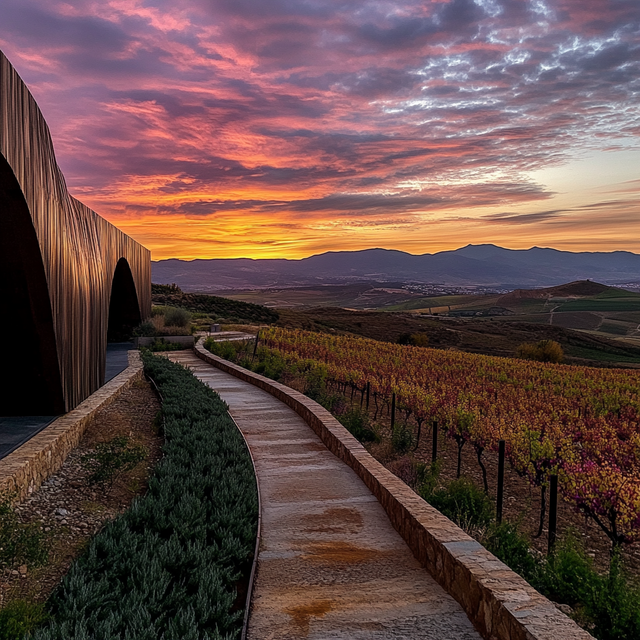
Rioja, Spain's iconic wine region nestled in the north-central part of the country, is defined by its diverse landscape and Tempranillo-based wines. The region is divided into three distinct subregions: Rioja Alta, Rioja Alavesa, and Rioja Oriental (formerly Rioja Baja), each contributing unique characteristics based on altitude, soil composition, and climate. While Tempranillo dominates, other important grapes include Garnacha, Graciano, and Mazuelo for reds, and Viura (Macabeo) for whites. Rioja's modern winemaking style was significantly shaped by the phylloxera epidemic of the late 19th century, which devastated vineyards across Europe. As French winemakers sought refuge and new sources of wine, they brought their techniques to Rioja, introducing oak aging and influencing the development of the region's distinctive, internationally recognized style.
Spain - Rioja

Tempranillo, Spain's most celebrated red grape, takes its name from the Spanish word "temprano," meaning "early," a reference to the variety's tendency to ripen earlier than other Spanish grapes. This versatility allows it to thrive across a range of climates and soil types. Though primarily associated with Spain, where it forms the backbone of Rioja, Ribera del Duero, and other prominent regions, Tempranillo also has a significant presence in Portugal. Here, it's known under various synonyms, including Tinta Roriz, Aragonez, and Tinto Fino, playing a crucial role in the production of both red and rosé wines. Its ability to produce wines with moderate acidity, balanced tannins, and complex flavors of red fruit, leather, and tobacco make it a favorite among winemakers and wine drinkers alike.