Jean-Marc Pillot Chassagne-Montrachet Rouge 1er Cru Clos Saint Jean 2019
We have 1 in stock (Inventory is live and accurate)
The Land
In Lavalle's 1855 classification of the Côte d'Or, Clos Saint-Jean was placed in the top tier for red wine, hors ligne, alongside Vosne-Romanée Les Beaux-Monts and Échézeaux. That surprises anyone who thinks of Chassagne-Montrachet as white-wine country, but the village was historically known for red. The premier cru sits just above the village and covers about 14 hectares in four parts, two above and two below the road that carries its name. According to Jasper Morris, the upper section has red soil closer to Côte de Nuits geology, while the lower section is classic Chassagne terroir resembling Les Vergers. Much of the clos now grows Chardonnay, which makes old Pinot Noir here a rarity.
The Wine
Jean-Marc Pillot Chassagne-Montrachet Rouge 1er Cru Clos Saint Jean 2019 is 100% Pinot Noir from vines Jasper Morris describes as mostly ancient. Pillot holds new oak to 30 percent or less, and in recent years he has followed about 12 months in barrel with further time in tank, which settles the wine without adding more wood. In past vintages this cuvée has shown red currant, dark cherry, and spice, a nose more restrained than his Morgeot or Macherelles reds, medium body, and fine, refined tannin. The 2019 season brought frosts on April 5 and 14, a June heat wave, and a hot, windy August that wilted some berries just before picking; Côte de Beaune red yields ran 15 to 20 percent below the five-year average. Seven years on, a well-stored bottle should be moving from fresh cherry toward darker fruit, forest floor, and spice, with the tannin softened.
The People
The Pillot name runs deep in Chassagne-Montrachet, and this branch dates its domaine to 1910, when Jean-Baptiste Pillot founded it. Jean-Marc is the fourth generation. He learned viticulture and winemaking from his father, Jean, while training as an enologist, joined him in 1985, and took over in 1991, running the estate with his wife, Nadine, and his sister. He has since rebuilt the cellar, expanded the vineyards, and reworked élevage. Since 2007 the entire production has been sold in bottle under the domaine label, and about 70 percent goes abroad. Roughly half of what the domaine makes is red, unusual in a village famous for Chardonnay, and the domaine calls Clos Saint-Jean the best red site in the village.
Food Pairing
Fine tannin and red fruit steer this wine toward roasted birds and lamb. Duck breast seared skin-side down and finished with a cherry and red wine reduction plays the fruit against the fat. Roast chicken with a morel cream sauce matches the forest-floor side that bottle age brings. Grilled lamb chops rubbed with rosemary and garlic work because the acidity cuts the fat while the tannin meets the char. For a lighter plate, try seared mushrooms on toasted country bread with thyme and a drizzle of walnut oil. Open it for a Sunday roast that runs long into the evening.
We ship wine to most states with a $100 minimum order for shipping. We don't ship spirits nor beer.
Weather shipping advisory: Orders placed during times of extreme heat or extreme cold will be held for no charge until more favorable weather returns.
Burgundy, in eastern France, encompasses several subregions, but it is the Côte d'Or that is home to many of the world's most expensive and revered wines. The region, primarily a single east-facing slope, has mixed limestone soils that vary dramatically from village to village and even vineyard to vineyard. White wines, crafted from Chardonnay, range from rich and opulent to lean and intensely mineral, while Pinot Noir produces silky, perfumed red wines of exceptional finesse and complexity. Centuries of winemaking tradition have resulted in every plot being meticulously recognized and scrutinized, making the Côte d'Or a true capital of terroir.
Burgundy - Cote d'Or

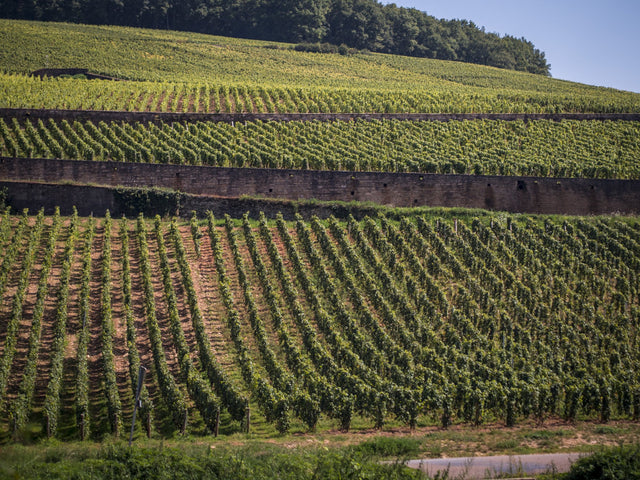
Pinot Noir is a thin-skinned, notoriously difficult-to-grow, low-yielding grape that finds its ancestral home in Burgundy, France, where it produces some of the world's most elegant and nuanced wines. While Burgundy remains its spiritual heartland, Pinot Noir has since traveled the globe, finding success in other cooler climates, notably in California, Oregon, New Zealand, and Germany. This grape is a challenge for any grower, as it requires specific conditions to show its best, and yet the wines it produces are capable of such a captivating and singular character.