

Maison Gautheron d'Anost Puligny-Montrachet 1er Cru La Garenne 2024
We have 2 in stock (Inventory is live and accurate)
Summer Shipping Advisory: Orders may be temporarily held during periods of extreme heat to ensure wine arrives in optimal condition.
View current shipping weather map →
The Land
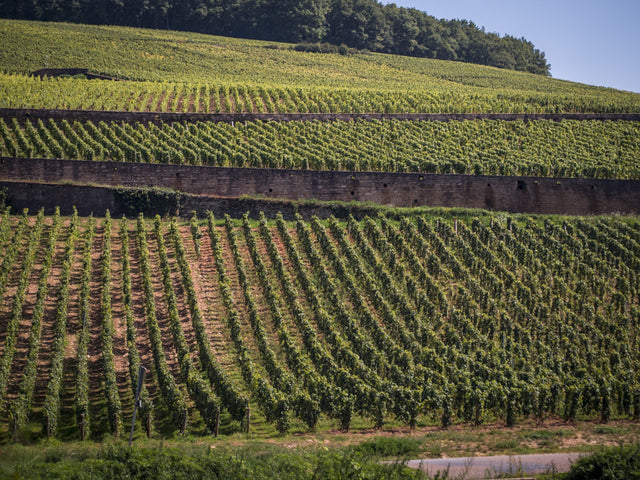
La Garenne is the cool corner of Puligny-Montrachet. It sits at the top of the slope near the hamlet of Blagny, on the Meursault border, well above and behind the famous mid-slope crus, facing southeast on limestone and scree. Where Les Pucelles and Les Combettes give breadth and richness, La Garenne gives tension, citrus and a chalky bite; fruit ripens later here and holds its acid longer. The name is old French for a walled wood kept by the lord of the manor for hunting small game, which tells you what this ground was before anyone planted it. There is a genuine oddity attached to it: Chardonnay from these parcels is sold as Puligny-Montrachet 1er Cru, but Pinot Noir grown on the identical land is sold as Blagny 1er Cru. Puligny overall runs 230 to 320 meters, 17 premier crus across 95.83 hectares, on brown limestone alternating with marl and limey clay.
The Wine
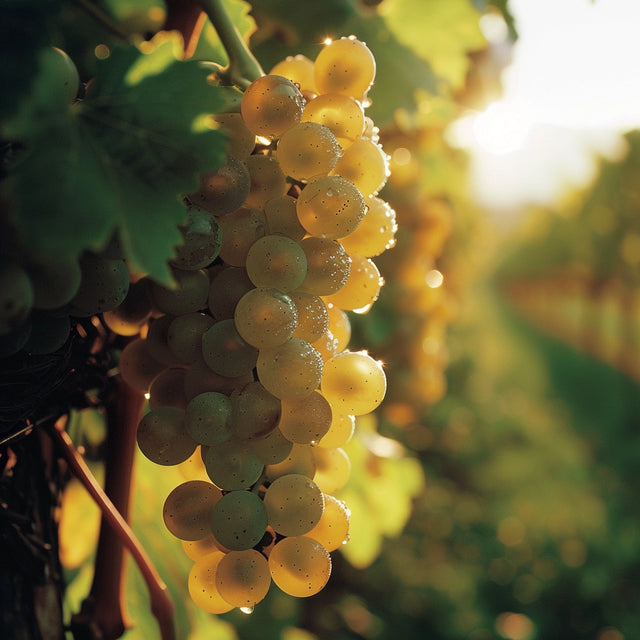
100% Chardonnay. Gautheron d'Anost raises his whites partly in 350-liter barrels rather than the standard 228-liter pièce, which slows the oak's contribution, and keeps élevage short. Ambient yeast. Sulfur is minimal: a small addition at the start of fermentation, then nothing until the wine is prepared for bottling. Expect the taut end of Puligny, citrus and white orchard fruit over a stony spine, oak well in the background, and an acid line built to carry it a decade. 2024 was the hardest white-wine vintage in a generation to farm and one of the better ones to drink. Rainfall from October 2023 through March ran near double average, May and June brought 38 days of rain, mildew pressure was relentless, and coulure and millerandage hit the Puligny premiers crus specifically, harder than Chardonnay elsewhere in the Côte de Beaune. August then delivered over 300 hours of sunshine, roughly 70 more than normal. The wines came in with pH between 3.2 and 3.35 and an acid structure Burgundy has not shown since 2014.
The People
Bastien Gautheron founded his house in 2020 with no family domaine behind him. The name comes from Anost, the Morvan village his mother's family is from. He started oenology at 15, trained at the Lycée Viticole de Beaune, and worked at Olivier Leflaive in Puligny-Montrachet until 2019, which is where the instinct for white Burgundy was formed. Around 20% of production comes from his own vines in Savigny-lès-Beaune and the Hautes Côtes de Beaune, certified organic since 2017; the rest is bought fruit from growers farming organically or close to it. He works from a converted warehouse in Dijon's Arsenal district and made roughly 12,000 bottles across 40 barrels in 2024. His stated strategy is to skip the famous names and work appellations nobody is bidding on, which is exactly what makes a Puligny premier cru at this address unusual. The cuvée debuted with the 2023.
Food Pairing
La Garenne's cut wants something with fat to push against. Sole meunière with brown butter and lemon is the classic and it is still right. Otherwise: lobster with drawn butter, scallops seared and set on a corn purée, or a roast chicken finished with tarragon. A wedge of Comté if you are drinking rather than eating. Serve at 11 to 12 degrees and no colder; over-chilling shuts down the aromatics you paid for. This is the Puligny you buy when you want the cool, high, mineral version rather than the rich one.
We ship wine to most states with a $100 minimum order for shipping. We don't ship spirits nor beer.
Weather shipping advisory: Orders placed during times of extreme heat or extreme cold will be held for no charge until more favorable weather returns.
Burgundy, in eastern France, encompasses several subregions, but it is the Côte d'Or that is home to many of the world's most expensive and revered wines. The region, primarily a single east-facing slope, has mixed limestone soils that vary dramatically from village to village and even vineyard to vineyard. White wines, crafted from Chardonnay, range from rich and opulent to lean and intensely mineral, while Pinot Noir produces silky, perfumed red wines of exceptional finesse and complexity. Centuries of winemaking tradition have resulted in every plot being meticulously recognized and scrutinized, making the Côte d'Or a true capital of terroir.
Burgundy - Cote d'Or

Chardonnay, one of the world's most versatile and beloved white grape varieties, showcases a remarkable spectrum of styles, from the lean, mineral-driven expressions of Chablis in France to the rich, buttery, and oak-aged versions from California's Napa Valley. Its adaptability extends to cooler climates such as Burgundy, where it achieves elegance and complexity, and to regions like Australia's Yarra Valley, known for producing vibrant and fruit-forward renditions. This grape's ability to reflect its terroir, coupled with winemaking techniques, results in a wide array of profiles, including unoaked, crisp varieties with apple and citrus notes, to full-bodied wines with tropical fruit flavors and creamy textures.