

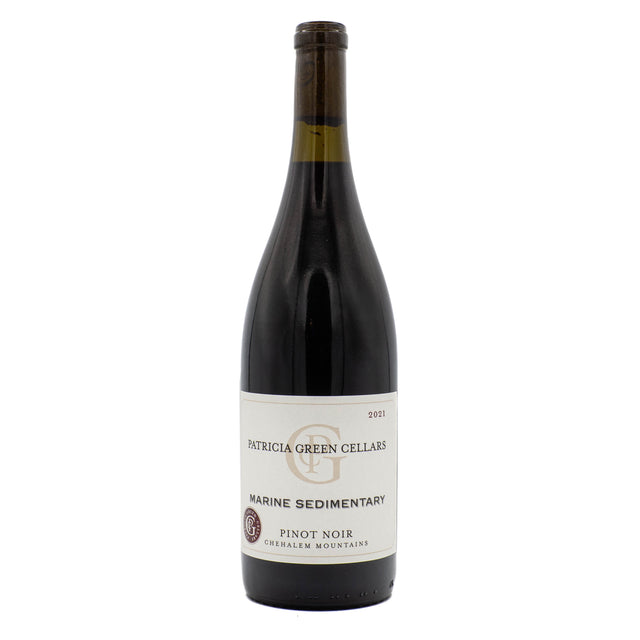
Patricia Green Marine Sedimentary Pinot Noir 2021
We have 12 in stock (Inventory is live and accurate)
Summer Shipping Advisory: Orders may be temporarily held during periods of extreme heat to ensure wine arrives in optimal condition.
View current shipping weather map →
The Land
The Willamette Valley's real dividing line is not the appellation map, it is what sits under the vine. Volcanic Jory, weathered basalt, red and iron-rich, makes one kind of Pinot Noir. Marine sedimentary Willakenzie, uplifted seabed, makes another. Patricia Green Cellars bottles both and lets them argue. This is the marine half, and not a single vineyard. It draws on six Chehalem Mountains sites within four miles of each other: the Estate Vineyard on Ribbon Ridge, Corrine, Lia's, Chehalem Mountain Vineyard, Wind Ridge and Ridgecrest. The soil is thin, sandy, talc-like, low in clay, over sandstone that drains nearly instantaneously. Every site is dry farmed. No irrigation in soil that holds no water is why this Pinot Noir comes out structured and mineral, not plush.
The Wine
Pinot Noir from a spread of clones tracking the plantings' ages: Wadensvil, Pommard, Dijon 114, the Coury selection and Mariafeld. Picking ran September 9 to October 1, at 2.2 to 3.3 tons per acre. Cold soaks of three to five days, fermentations of 16 to 20 days start to press. The Ridgecrest Pommard and Estate Wadensvil went in at 50% whole cluster; every other lot was destemmed. The wine filled 25 barrels, all neutral but two twice-filled on the Estate Wadensvil and five on the Ridgecrest, so there is no new oak and the soil gets to talk. 618 cases, 13.5% alcohol. Grenadine, dried flowers, crushed stone and taut red berry, then a linear, mineral middle and fine, drying tannin. Anderson's read: 2021's brightness meshes with this wine's inclination to be dark, sullen and structured. The season backs him: a June 26 to 28 heat dome hitting 117 degrees in Salem before veraison, bloom rain that cut yields by about a quarter, 92 days without rain, then a cool September that drew harvest out.
The People
The soil cuvees exist because Jim Anderson has enough sites to run the experiment. He and Patty Green founded the winery in 2000 and spent two decades assembling the largest collection of historic Oregon vineyard sites under one roof, bottling since 2012 from the plantings that matter to Oregon Pinot Noir's history. Thirty-six separate Pinot Noirs came out of 2021. Green died in 2017 and Anderson has continued without changing the terms. The vineyards are farmed organically, some still finishing conversion, some heading toward biodynamics. The winery runs on solar, recycles wastewater, ships lighter glass and dropped capsules years ago.
Food Pairing
Acid and mineral grip rather than plush fruit means this wants salt and iron. Sear duck breast, render the skin hard, serve it with roasted beets and a splash of sherry vinegar. Grilled king salmon with a fennel and citrus salad works for the reason it always works in Oregon. Braised lentils with bacon and a soft egg give the drying tannin something to hold. Give it thirty minutes in a decanter. At 13.5%, this is the bottle you open on a Wednesday and actually finish.
We ship wine to most states with a $100 minimum order for shipping. We don't ship spirits nor beer.
Weather shipping advisory: Orders placed during times of extreme heat or extreme cold will be held for no charge until more favorable weather returns.
The Willamette Valley, nestled in Oregon, is a region renowned for its cool-climate wines, particularly its Pinot Noir. While Pinot Noir is its most celebrated variety, the valley is also home to other cool climate varieties like Chardonnay and Riesling. The region's unique terroir, characterized by rolling hills, volcanic and sedimentary soils, and a maritime climate influence, contributes to the elegance and complexity of its wines. The wines of the Willamette Valley offer a delicate balance between fruit, acidity, and earthiness. Its increasingly growing reputation places it among the world’s top regions for Pinot Noir.
Oregon - Willamette Valley

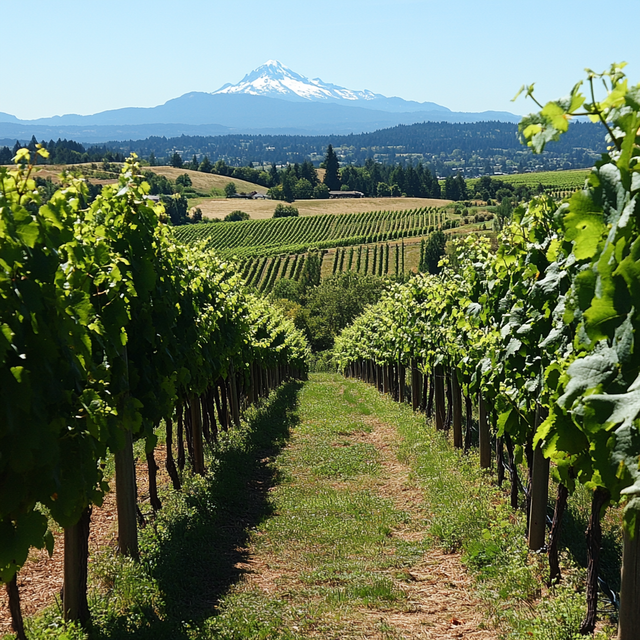
Pinot Noir is a thin-skinned, notoriously difficult-to-grow, low-yielding grape that finds its ancestral home in Burgundy, France, where it produces some of the world's most elegant and nuanced wines. While Burgundy remains its spiritual heartland, Pinot Noir has since traveled the globe, finding success in other cooler climates, notably in California, Oregon, New Zealand, and Germany. This grape is a challenge for any grower, as it requires specific conditions to show its best, and yet the wines it produces are capable of such a captivating and singular character.