

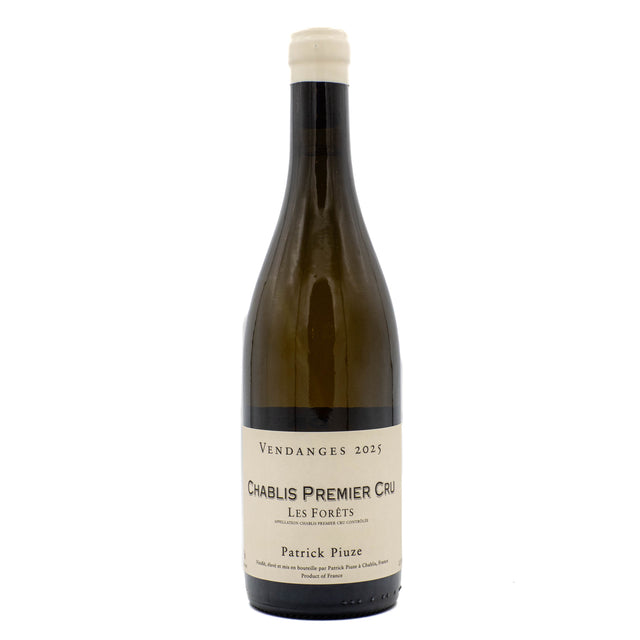
Patrick Piuze Chablis 1er Cru Les Forets 2025
We have 3 in stock (Inventory is live and accurate)
Summer Shipping Advisory: Orders may be temporarily held during periods of extreme heat to ensure wine arrives in optimal condition.
View current shipping weather map →
The Land
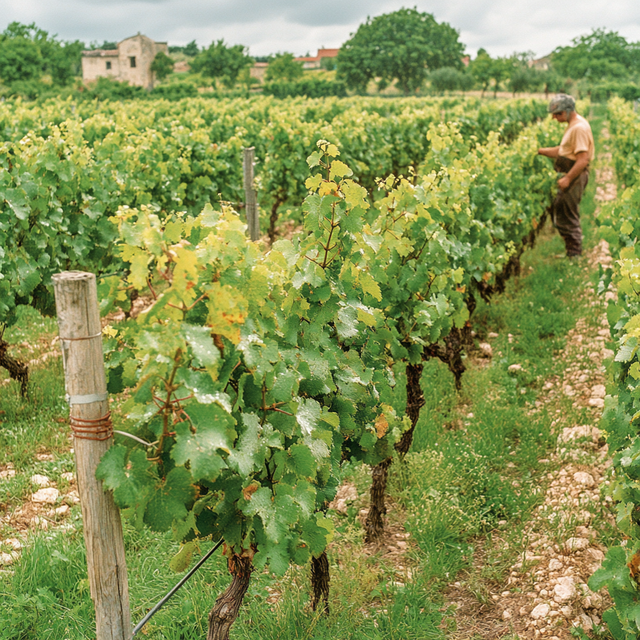
Montmains is the great left-bank premier cru hill of Chablis, running southwest from the town toward Courgis, and it contains three named sub-climats: Montmains itself, Butteaux, and Les Forêts. Forêts sits on the Kimmeridgian marl that underpins every serious Chablis site, but the specific character of this parcel is its topsoil, an unusually even mix of chalk and clay rather than the clay dominance found further along the left bank. That balance is the whole story. Enough clay for weight and slow ripening, enough limestone for cut. Piuze's block borders Vincent Dauvissat's vines, which is about as good a piece of geographic evidence as exists in Chablis. Forêts is famously poor ground, and poor ground here reads as stone in the glass.
The Wine
Chardonnay from a single parcel of vines over seventy years old, picked by hand. Fermentation is spontaneous and happens in used barrels, where the wine then rests ten months. Piuze buys his barrels only from high-acid vintages, on the theory that wood from a lean year carries less residual sweetness into the wine. Nothing new, ever. Malolactic completes naturally and bottling comes in late June or early July after a gentle clay filtration. The profile is savory before it is fruity: lemon oil, wet flint, oyster brine, crushed almond, old-vine density through the middle, and a finish that is salty and faintly bitter in the way good Chablis should be. 2025's two heatwaves concentrated the fruit while the early September weather shift preserved tension.
The People
Patrick Piuze inherited nothing. He grew up in Quebec, spent his late teens and twenties working harvests in Australia, South Africa and Israel, ran a wine bar in Montreal, then went to France and started over. He made the Chablis at Olivier Leflaive for four years, spent a year at Verget, then three as winemaker at Jean-Marc Brocard. That is roughly eight years of making other people's Chablis before he made any of his own, and it explains how a man with no family vineyards had immediate access to good fruit when he founded his label in 2008. He now works with seventeen growers farming sustainably, hand-harvests everything with a crew of seventy, and bottles more than twenty cuvées.
Food Pairing
Forêts has the structure for real cooking. Turbot or halibut roasted on the bone with brown butter and capers. Chicken poached in its own broth with leeks and tarragon. A plate of raw fish, hamachi crudo with olive oil, sea salt and lemon, where the wine's saline edge does more than any sauce would. Or veal sweetbreads, if you are that kind of cook. Give it two or three years in the cellar if you can stand to wait. This is a wine that gets more interesting, not less.
We ship wine to most states with a $100 minimum order for shipping. We don't ship spirits nor beer.
Weather shipping advisory: Orders placed during times of extreme heat or extreme cold will be held for no charge until more favorable weather returns.
Chablis, a village and region in northern Burgundy, is all about Chardonnay, making arguably the best unoaked versions in the world. The wines here are defined by a crisp acidity and a strong mineral backbone. The area's unique Kimmeridgian limestone soil, packed with marine fossils, gives the wines a distinctive flinty edge. One slope overlooking the village holds the seven Grand Cru vineyards, while Premier Cru sites are scattered along both sides of the Sereine River, which cuts the region in half. Chablis is the ultimate destination for highly mineral white wines.
Burgundy - Chablis


Chardonnay, one of the world's most versatile and beloved white grape varieties, showcases a remarkable spectrum of styles, from the lean, mineral-driven expressions of Chablis in France to the rich, buttery, and oak-aged versions from California's Napa Valley. Its adaptability extends to cooler climates such as Burgundy, where it achieves elegance and complexity, and to regions like Australia's Yarra Valley, known for producing vibrant and fruit-forward renditions. This grape's ability to reflect its terroir, coupled with winemaking techniques, results in a wide array of profiles, including unoaked, crisp varieties with apple and citrus notes, to full-bodied wines with tropical fruit flavors and creamy textures.
Chardonnay
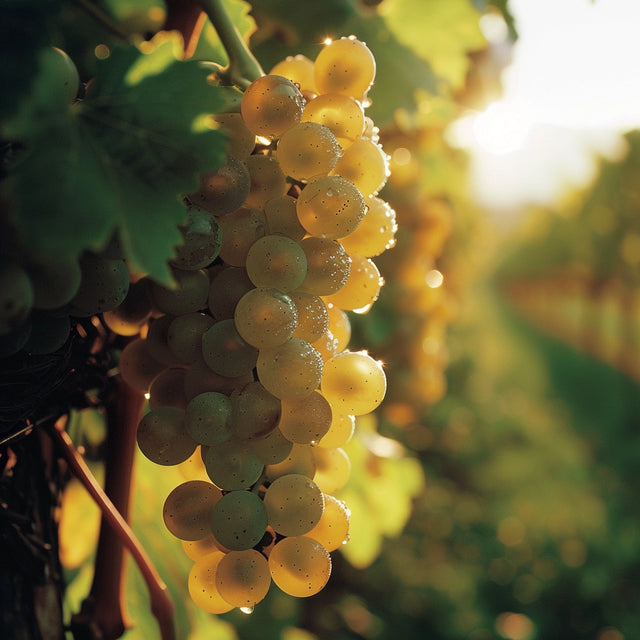
Practicing Organic vineyard farming involves growing grapes using organic methods—avoiding synthetic fertilizers, herbicides, pesticides, and fungicides—but without formal certification. Wineries adopting this approach prioritize environmental health, soil vitality, and biodiversity, using natural practices such as composting, cover cropping, and manual pest control. Many small wineries opt for practicing organic methods rather than pursuing official organic certification, primarily due to the significant cost, paperwork, and time commitment involved in certification processes. As a result, practicing organic is a popular choice among boutique and artisanal producers who remain committed to sustainable agriculture while managing budgetary constraints.