

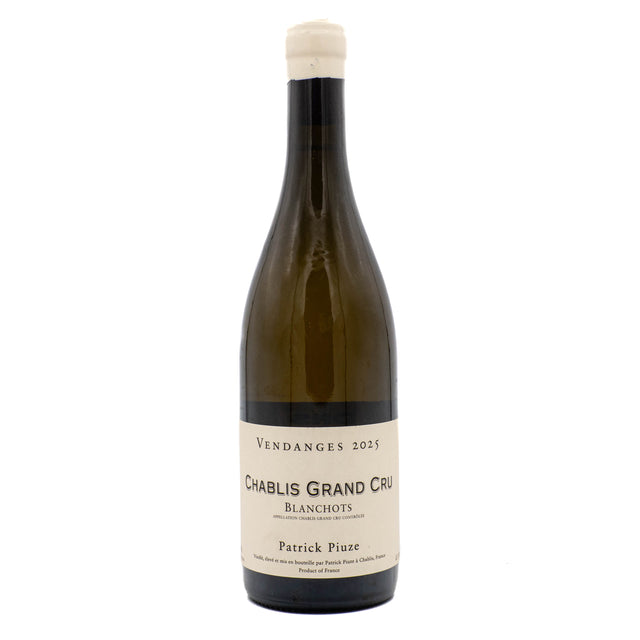
Patrick Piuze Chablis Grand Cru Blanchots 2025
We have 3 in stock (Inventory is live and accurate)
Summer Shipping Advisory: Orders may be temporarily held during periods of extreme heat to ensure wine arrives in optimal condition.
View current shipping weather map →
The Land
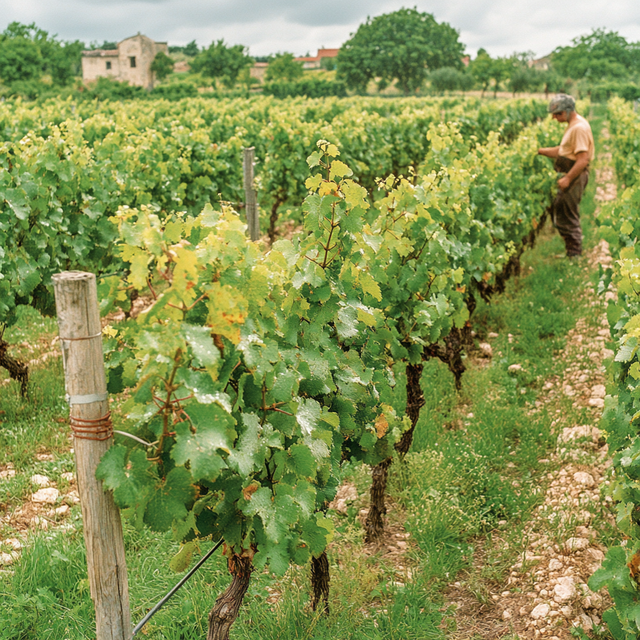
Blanchots is the odd one out. Six of the seven Chablis grand crus face southwest and take sun from noon until evening. Blanchots, at the far eastern end of the slope above the hamlet of Fyé, faces east and southeast and loses the light by early afternoon. It covers 12.7 hectares on a hillside steep enough that working it is genuinely difficult. The name comes from a Germanic root meaning pale, after the white clays found here. In places the Kimmeridgian limestone subsoil gives way to sticky blue and green draining clays studded with shells and stone, and ammonites the size of dinner plates turn up in the rows. All of it slows ripening, and Blanchots is routinely picked well after neighboring Les Clos. The appellation body calls it a paradoxically warm terroir despite the exposure, and the wines bear that out.
The Wine
Chardonnay, hand-harvested, fermented spontaneously and raised ten months in used barrels. Piuze buys no new oak at all, and sources his barrels from high-acid vintages so the wood contributes texture rather than flavor. Malolactic runs naturally and bottling follows in late June or early July after a light clay filtration. Blanchots is the most aromatic of the grand crus and the least imposing: white flowers, acacia, lemon verbena, then white peach and a mineral character that arrives as perfume more than as weight. Airy rather than broad, which is unusual at this level. 2025 was early and hot, rescued by heavy mid-August rain after weeks of drought. Small berries with thick skins gave aromatic intensity, and the early September cool-down kept the acidity taut.
The People
The cellar tells you as much about Piuze as the vineyards do. Fermentations start on their own and finish when they finish. Nothing is temperature-controlled. Every malolactic goes through naturally. There is no new oak anywhere in the range, and the used barrels he does buy come only from high-acid years, a small idea with real consequences for how his wines taste. Village wines are bottled in spring, crus in late June or early July, and everything passes through a very gentle clay filtration and nothing harsher. It is a deliberately hands-off protocol from a man who spent eight years making Chablis for Olivier Leflaive, Verget and Jean-Marc Brocard before founding his own house in 2008, and who still buys every grape from seventeen sustainably farming growers.
Food Pairing
Blanchots is aromatic enough to handle food that would bully a heavier white. Raw scallops sliced thin with olive oil and lemon zest. Steamed Dungeness crab with drawn butter. Sole or turbot in a light beurre blanc with chervil. Roast chicken with tarragon, if you would rather not fuss. Open it an hour before you pour and let the aromatics keep unfolding. This is a bottle for a night you have been looking forward to.
We ship wine to most states with a $100 minimum order for shipping. We don't ship spirits nor beer.
Weather shipping advisory: Orders placed during times of extreme heat or extreme cold will be held for no charge until more favorable weather returns.
Chablis, a village and region in northern Burgundy, is all about Chardonnay, making arguably the best unoaked versions in the world. The wines here are defined by a crisp acidity and a strong mineral backbone. The area's unique Kimmeridgian limestone soil, packed with marine fossils, gives the wines a distinctive flinty edge. One slope overlooking the village holds the seven Grand Cru vineyards, while Premier Cru sites are scattered along both sides of the Sereine River, which cuts the region in half. Chablis is the ultimate destination for highly mineral white wines.
Burgundy - Chablis


Chardonnay, one of the world's most versatile and beloved white grape varieties, showcases a remarkable spectrum of styles, from the lean, mineral-driven expressions of Chablis in France to the rich, buttery, and oak-aged versions from California's Napa Valley. Its adaptability extends to cooler climates such as Burgundy, where it achieves elegance and complexity, and to regions like Australia's Yarra Valley, known for producing vibrant and fruit-forward renditions. This grape's ability to reflect its terroir, coupled with winemaking techniques, results in a wide array of profiles, including unoaked, crisp varieties with apple and citrus notes, to full-bodied wines with tropical fruit flavors and creamy textures.
Chardonnay
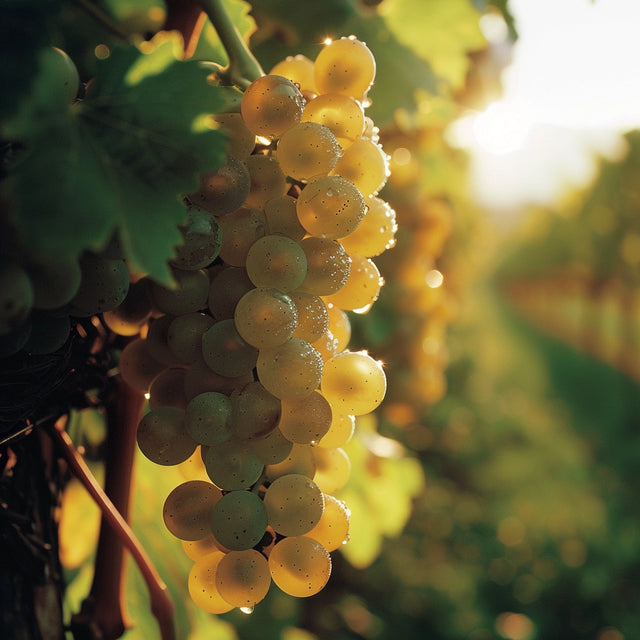
Practicing Organic vineyard farming involves growing grapes using organic methods—avoiding synthetic fertilizers, herbicides, pesticides, and fungicides—but without formal certification. Wineries adopting this approach prioritize environmental health, soil vitality, and biodiversity, using natural practices such as composting, cover cropping, and manual pest control. Many small wineries opt for practicing organic methods rather than pursuing official organic certification, primarily due to the significant cost, paperwork, and time commitment involved in certification processes. As a result, practicing organic is a popular choice among boutique and artisanal producers who remain committed to sustainable agriculture while managing budgetary constraints.