

Querciabella Mongrana 2022
We have 5 in stock (Inventory is live and accurate)
The Land
Querciabella built its name on the steep Chianti Classico hills of Ruffoli above Greve, but Mongrana comes from the opposite kind of place: flat, coastal Maremma, at 20 to 50 meters above sea level. The vineyards lie at Alberese and around Grosseto, just south of the city, between the Tyrrhenian Sea and the wild hills of the Uccellina Natural Park. Planted in 2000, the estate's 33 hectares sit on silt and alluvial sand with patches of gravel and surface pebbles, acidic and rich in iron. Sun and sea air ripen everything fully here, and those iron-tinged soils show up in the glass as a mineral, faintly bloody finish. This Maremma Toscana red wine trades Chianti's austerity for warmth and fruit.
The Wine
Querciabella Mongrana 2022 is 50% Sangiovese, 25% Cabernet Sauvignon and 25% Merlot. Grapes are picked by hand into 9-kilogram crates, each variety at its own moment of ripeness, and fermented in stainless steel. After malolactic, the wines age in steel and cement before blending and bottling, with no oak, so the fruit stays front and center and the tannin stays soft. Expect morello cherry, blackberry, blueberry and kirsch with ivy and pine needle, then leather, cocoa, ground coffee and licorice as it opens, a juicy, fresh middle and a savory finish with an iron, mineral edge. The 2022 season brought a dry, warm winter and spring and a long summer; rain on August 15 and 16 and again in early September extended ripening. Harvest ran August 24 to September 24, with slightly lower yields and small, concentrated berries.
The People
Querciabella pushed further on farming than almost any estate in Italy. Founded in 1974 by Giuseppe "Pepito" Castiglioni with a small property at Ruffoli, it passed to his son Sebastiano Cossia Castiglioni, who introduced biodynamics in 2000 and in 2010 moved every operation to a plant-based approach: no manure, no animal-derived preparations, no animal products in the cellar. The estate is certified organic and certified vegan, and the Maremma vineyards have been farmed this way since Mongrana's first vintage in 2005. Sebastiano expanded into the coast while keeping the Chianti Classico core, and South African winemaker Manfred Ing has led the cellar since 2010. Mongrana is the estate's everyday wine, and it shows that the most demanding farming ideas can still end up in an affordable bottle.
Food Pairing
Mongrana wants grilled meat and big flavors. Bistecca alla fiorentina, or any thick porterhouse charred over wood and finished with olive oil and rosemary, meets the Cabernet's structure while the Sangiovese acidity cuts the fat. Pappardelle with wild boar ragù is the Maremma classic. A mushroom and farro risotto with thyme picks up the earthy, leathery side, and a weeknight burger with caramelized onions and aged cheddar works just as well. This is the red to pour when friends come over and someone fires up the grill.
We ship wine to most states with a $100 minimum order for shipping. We don't ship spirits nor beer.
Weather shipping advisory: Orders placed during times of extreme heat or extreme cold will be held for no charge until more favorable weather returns.
Tuscany is one of Italy’s most iconic wine regions, anchored by historic regions like Chianti and Montalcino, where Sangiovese thrives in clay-limestone soils and varying elevations. Chianti Classico produces medium-bodied, savory reds, while Montalcino’s warmer, drier conditions give rise to the powerful and long-lived Brunello. Along the Tuscan coast, regions like Bolgheri emerged in the late 20th century with the rise of Super Tuscans—often blends of international varieties like Cabernet Sauvignon and Merlot grown in marine-influenced soils. While overwhelmingly known for red wines, Tuscany is also home to great classic whites grown in San Gimignano and modern whites often made with French grape varieties.
Italy - Tuscany

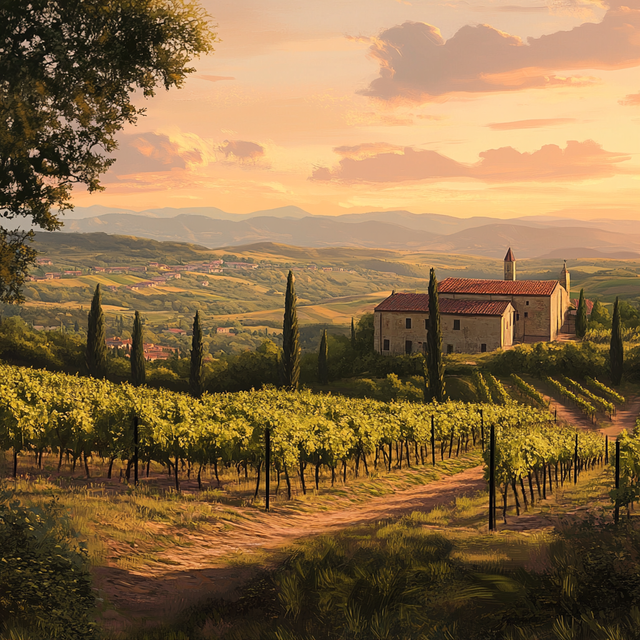
Sangiovese is Italy’s most widely planted red grape and the backbone of many of the country’s most renowned wines, including Chianti Classico, Brunello di Montalcino, and Vino Nobile di Montepulciano. Its name likely derives from the Latin “sanguis Jovis,” or “blood of Jupiter,” hinting at its ancient Roman roots. While native to central Italy, particularly Tuscany, it is also grown in regions like Umbria, Emilia-Romagna, and even scattered sites abroad. Sangiovese is known for its high acidity, firm tannins, and bright red fruit character, often showing notes of sour cherry, dried herbs, and earthy spice. Its structure and versatility make it a natural match for food and a compelling lens through which to explore regional terroirs.