

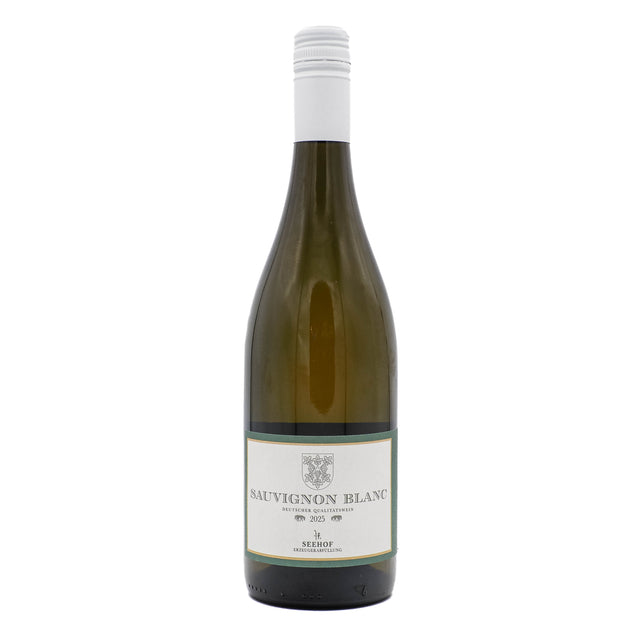
Seehof Sauvignon Blanc 2025
We have 0 in stock (Inventory is live and accurate)
Summer Shipping Advisory: Orders may be temporarily held during periods of extreme heat to ensure wine arrives in optimal condition.
View current shipping weather map →
The Land
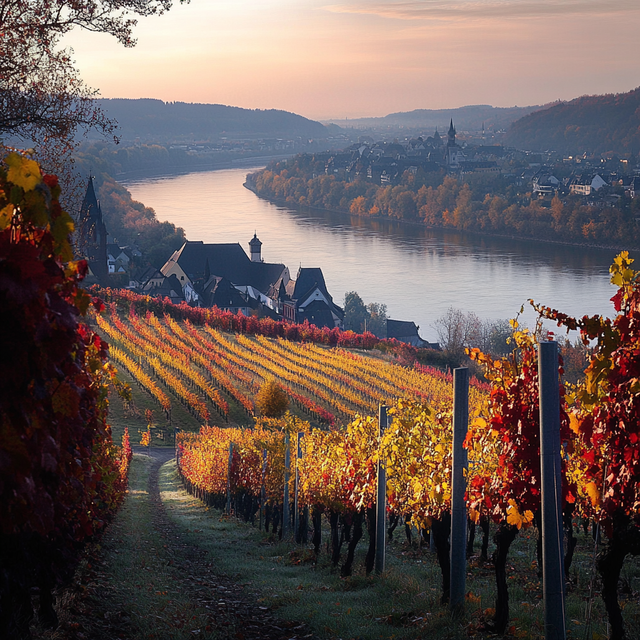
Germany is not where anyone expects to find serious Sauvignon Blanc, and Rheinhessen is not where anyone expects to find serious anything, given the region's decades as the source of Liebfraumilch. Westhofen has spent thirty years dismantling both assumptions. The village sits in the Wonnegau, the southern end of Rheinhessen, on ground that has nothing in common with the sandy flats further north: clay marl at the surface with limestone fragments through it, over massive limestone bedrock. That is a cool-toned, mineral soil, and it does something specific to Sauvignon Blanc, pulling the variety away from tropical fruit and toward citrus, herbs, and stone. Seehof farms roughly fifteen hectares here, with holdings in Morstein and Aulerde.
The Wine
Sauvignon Blanc grown on Westhofen limestone and made in the estate's direct, unadorned style: stainless steel, no oak, nothing added to the texture, bottled young to keep the aromatics intact. Cool-climate Sauvignon on chalky ground reads differently from the New Zealand template. Expect gooseberry, grapefruit, green apple, lemongrass, blackcurrant leaf, and a chalky, saline finish, with acidity that stays sharp and a distinctly savory rather than sweet fruit profile. There is no residual sugar propping it up. This is the estate's everyday white rather than its statement wine, and it is priced and built accordingly, which is precisely why it belongs in a fridge rather than a cellar.
The People
Seehof has been in the Fauth family for generations. Florian Fauth runs the cellar now, having trained at leading estates in the Pfalz before coming home, and what he brought back was a preference for classic varieties and more structure than Rheinhessen was known for. The estate's reputation is built on Riesling and Weissburgunder from Morstein, Westhofen's most prized site, but the same attention goes into the entry wines. Production is small, the wines are made without cosmetic intervention, and the pricing has not caught up to the quality.
Food Pairing
Sharp and herbal, so it goes with green things and goat cheese. A goat cheese salad with green apple, asparagus with lemon and olive oil, herbed white fish, or spring pea risotto. The acidity handles vinaigrette, which most whites cannot, and the herbal streak picks up dill, tarragon, and chervil rather than clashing with them. Serve it properly cold and pour it before dinner is ready.
We ship wine to most states with a $100 minimum order for shipping. We don't ship spirits nor beer.
Weather shipping advisory: Orders placed during times of extreme heat or extreme cold will be held for no charge until more favorable weather returns.
Rheinhessen, Germany's largest wine region by volume, is experiencing a quality revolution, led by producers like Weingut Keller. Once known for bulk wine, it's now gaining recognition for its dry Rieslings, particularly from the famed Roter Hang (Red Slope). This area, with its unique red clay and slate soils, is a source of intensely mineral and age-worthy wines. Rheinhessen, with its rolling hills and varied soils, also produces a diverse range of styles beyond the Roter Hang, often richer and broader than Mosel or Saar wines, while retaining vibrant acidity. The region is quickly establishing itself as a source of high-quality dry Riesling, showcasing a compelling and evolving side of German winemaking.
Germany - Rheinhessen

Sauvignon Blanc, a white grape of significant character, is believed to have originated in the Loire Valley of France, where it continues to produce some of the world’s most iconic and expressive examples. This variety has also found success in Bordeaux, where it is often blended with Sémillon, as well as in New Zealand, where it has become a signature grape, and many other regions across the globe. Known for its vibrant acidity and distinctive aromatic profile, Sauvignon Blanc often displays a pronounced greenness, with notes of fresh-cut grass, herbaceousness, and sometimes even a touch of jalapeño, depending on ripeness and region. These traits are often supported by citrus fruits like grapefruit and lime, leading to wines that are both refreshing and complex, ranging from steely and mineral-driven to more tropical and fruit-forward styles.