

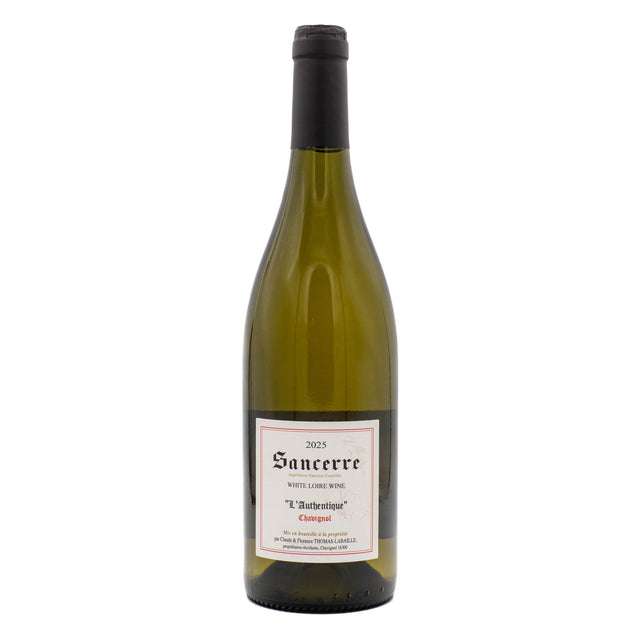
Thomas-Labaille Sancerre L'Authentique 2025
We have 12 in stock (Inventory is live and accurate)
Summer Shipping Advisory: Orders may be temporarily held during periods of extreme heat to ensure wine arrives in optimal condition.
View current shipping weather map →
The Land
Chavignol is better known in most American kitchens as a cheese than as a wine. The crottin carries the name. What the map does not show is that Chavignol sits in the steepest folds of Sancerre, where the slopes pitch hard enough that tractors are useless and the rows are worked by hand. The soil is Kimmeridgian limestone, the same fossil-packed marl that runs north to Chablis, and it holds water through dry summers and drains through wet ones. Thomas-Labaille farms eleven hectares in and around the village, including parcels on the Monts Damnes, the amphitheater slope whose name means the damned hills. L'Authentique draws on estate parcels across Chavignol rather than a single cru, which makes it the clearest annual snapshot of what this limestone tastes like.
The Wine
Sauvignon Blanc from Sancerre, one hundred percent, hand-harvested. Fermentation runs on native yeasts in fiberglass and cement, with no oak anywhere in the process, then the wine rests on its lees in stainless steel for four to six months and goes to bottle unfiltered. That lees contact keeps a wine this taut from turning shrill, laying a faint saline weight under the acid. The 2025 season in the Centre-Loire started early, budbreak on April 7, roughly ten days ahead of the decade average. May and June were the driest stretch in more than fifteen years, and coulure thinned the Sauvignon crop. A hailstorm on July 23 hit around 350 hectares across Sancerre, Menetou-Salon and Coteaux du Giennois. An August heatwave pushed sugars while acidity held. Picking began August 28 and wrapped by mid-September. Grapefruit pith, white currant and crushed chalk, then a dry, stony finish.
The People
Claude Thomas farmed old vines on the Monts Damnes by hand and made wine the way his family always had. His son-in-law Jean-Paul Labaille spent years as a civil servant, helping at harvest, until Thomas reached 73 and wanted to stop. Labaille left the job and took over full-time, and he has changed very little since. The cellar still runs on large concrete vats, stainless steel and second-hand barrels two to three years old, used to let wine evolve slowly on its lees rather than to add oak flavor. Farming is sustainable, and the steep parcels are worked without machines. Labaille also bottles Cuvee Buster, a single-barrel selection from old vines on the Monts Damnes, first made in 1997.
Food Pairing
Start with the obvious: a Crottin de Chavignol at room temperature, a little past fresh, with bread and good butter. The chalk in the wine and the chalk in the cheese come out of the same ground. Then asparagus roasted hard with olive oil and lemon, a dish that flattens most whites but not a Sauvignon carrying this much acid. Or a whole trout pan-fried in butter with parsley and capers, where the saline edge of the wine meets the browned butter. This is the Sancerre to keep cold in the door of the fridge for the nights when dinner is cheese, bread and whatever is in the crisper.
We ship wine to most states with a $100 minimum order for shipping. We don't ship spirits nor beer.
Weather shipping advisory: Orders placed during times of extreme heat or extreme cold will be held for no charge until more favorable weather returns.
The Loire Valley, often referred to as the "Garden of France," is a revered wine region that stretches along the Loire River, producing an array of distinct wines, including the crisp, sea-breeze influenced Muscadet near the Atlantic coast, the versatile and expressive Chenin Blanc in regions like Vouvray and Anjou, the elegantly fragrant Cabernet Franc from Chinon and Bourgueil, and the minerally complex Sauvignon Blanc-based Sancerre and Pouilly-Fumé from its eastern vineyards. This is a reflection of the valley's varied terroir and climate, which together foster the creation of wines that are celebrated for their finesse, diversity, and food-friendliness.
Loire Valley

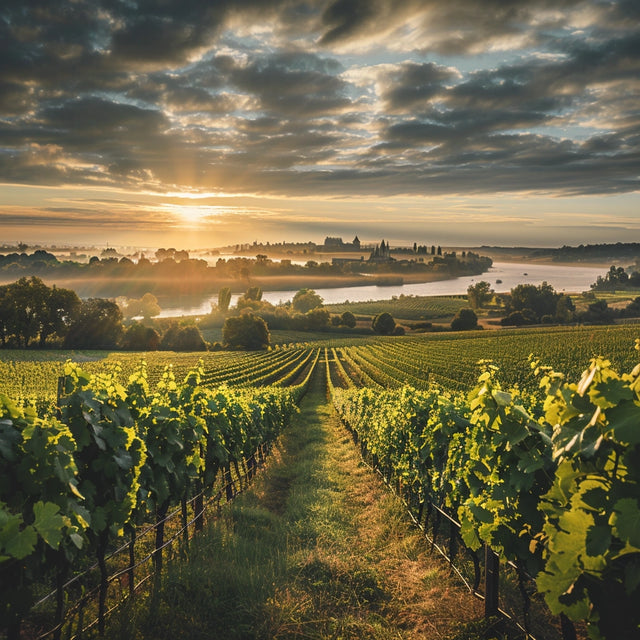
Sauvignon Blanc, a white grape of significant character, is believed to have originated in the Loire Valley of France, where it continues to produce some of the world’s most iconic and expressive examples. This variety has also found success in Bordeaux, where it is often blended with Sémillon, as well as in New Zealand, where it has become a signature grape, and many other regions across the globe. Known for its vibrant acidity and distinctive aromatic profile, Sauvignon Blanc often displays a pronounced greenness, with notes of fresh-cut grass, herbaceousness, and sometimes even a touch of jalapeño, depending on ripeness and region. These traits are often supported by citrus fruits like grapefruit and lime, leading to wines that are both refreshing and complex, ranging from steely and mineral-driven to more tropical and fruit-forward styles.